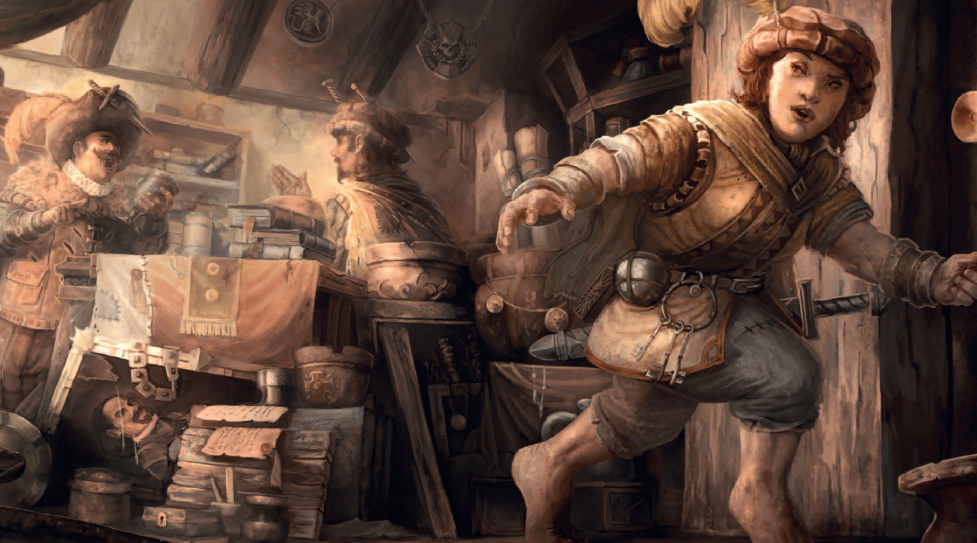
Leaving the solemn cold of the temple behind, the companions decide to aim high. Armed with the Church of Ulric’s pass and a hunger that the initiate’s rations could never satisfy, they head toward the Royal Gardens. Their destination is the Showboat, a floating metaphor for Middenheimer excess: a majestic river liner transported to the very top of the Ulricsberg and repurposed into a luxury tavern, now anchored placidly in the artificial lake at the center of the park.
Access is guarded by men in livery, but Paolino’s silver tongue knows no obstacles. Masquerading as a wealthy Tilean merchant seeking new markets, and emphatically waving the parchment stamped by the Ar-Ulric, the halfling manages to get the velvet rope opened for them.
Once on board, the impact is brutal. Amidst precious woods, crystal chandeliers, and Oriental rugs, the group appears like a mud stain on a silk robe. Their coarse wool cloaks and faces lined with the dust of the Drakwald immediately draw the glares of nobles and courtiers. Scornful laughter and jokes whispered behind feather fans accompany their progress toward a corner table.
Despite the palpable hostility, the staff is forced to serve the “protégés” of the Church. Before long, bottles of imported Bretonnian brandy and trays of Kislevite caviar, served on buttered toast, appear before the companions.
The brandy, strong and amber, does not take long to take effect. Paolino, seized by a surge of showmanship fueled by alcohol, decides that the silence of the room is an insult to his talent. Amidst the horrified gaze of Fredrich, who sinks into his seat imploring Sigmar to make him invisible, the halfling leaps onto the table.
With theatrical gestures and a voice that rises above the murmur of the nobility, he begins to narrate the group’s recent deeds. He speaks of ambushes in the mud, of fallen giants, and the heroic defense of the Grand Theogonist, mixing truth and hyperbole with an oratory skill that, incredibly, begins to pierce the cynicism of the bystanders. Though initially mocked, the little “merchant” enthralls the room, closing the tale to the amused applause of those present.
Among those clapping, a man detaches himself from the crowd and approaches the table with a sly smile. He introduces himself as Gotthard Goebels, President of the Middenheim Merchants’ Guild. He is a man of lascivious appearance, dressed in expensive silks and visibly devoted to the “good life.”
Paolino, maintaining his improbable Tilean accent, begins to “talk shop” regarding trade routes and exchange rates, successfully keeping Gotthard’s interest alive. Fascinated by the group’s eccentricity, Goebels extends an unexpected invitation:
“You are singular folk indeed. You must absolutely be my guests tomorrow evening at the Royal College of Music. There is an opera recital, ‘A Midsummer Knight’s Dream’. It will be the event of the season.”
The group accepts with feigned enthusiasm. Their true goal, whispered among themselves, is to seize the opportunity to get close to the Ar-Ulric, who will surely attend the event, and attempt to speak to him away from the inquisitive shadows of the temple.
Before taking his leave, a now completely tipsy Paolino decides to seal the friendship with an “exotic” gift. Signaling his companions to retrieve a package from the cart, he offers Goebels the stuffed bear stolen from Etelka Hertzen’s tower in Grissenwald. Gotthard, perhaps too drunk himself to find it disturbing, accepts the gift with a hearty laugh, promising to give it a place of honor in his collection.
The evening concludes with the group staggering toward the exit under the relieved gazes of the waiters. On the gangway, Paolino attempts one last, desperate business pitch to the owner of the Showboat, trying to convince him that a similar ship on the Reik, in the Reikland, would make millions. The owner dismisses him with an annoyed wave, while the companions drag the halfling away before he falls into the water.
Despite the abundance of liquor and caviar, the day is still long: “lunch” at the Showboat, which began with high-society pretensions, ended with the sun still high in the Middenheim sky. Shaking off the fumes of the Bretonnian brandy in the frosty air of the Royal Gardens, the group decides to continue visiting the Carnival events, heading toward the Square of Martials in the Palace districts.
The objective is to witness the legendary challenge against the Graf’s champion, Dieter Schmiedehammer.
Upon their arrival, the scene is that of a tournament from another age. In the center of the square, several brightly colored pavilions have been erected, delimiting a large circular combat area. In the middle of the arena stands Dieter: an imposing man whose muscles seem carved from the very iron of his own forge.
However, what strikes the companions is not just his strength, but his affability. Dieter fights with a brutal but fair grace; every time he downs an opponent, he extends a hand to help them up, congratulating them with a sincere smile. He is clearly well-liked by those present, even if the spectators are relatively few—perhaps because the result seems a foregone conclusion to anyone who reads the inscriptions on the silver cup displayed on a pedestal. Dieter has won the challenge uninterruptedly for four years.
Paolino and Waldemar begin to needle Wolfgang and Fredrich, trying to convince them to enter the arena to test the champion’s mettle.
“Come on, Fredrich! With that footwork, you’d have him lunging at shadows in an instant!” the halfling exclaims.
But both the soldier and the rogue shake their heads firmly, preferring to maintain their anonymity (and keep their bones intact) rather than risk ending up in the dust before half the city’s nobility. After watching yet another challenger collapse under a well-placed blow, the group decides to move on.
Crossing through the commoners’ quarters, the companions finally reach the Temple of Sigmar, hoping to find Yulevno. The initiate of the Order of the Anvil, who had been their traveling companion during the tragic transport of Father Luthor, welcomes them with a mixture of relief and concern.
Seated on a stone bench in a sheltered corner of the temple, the group questions the young monk regarding the Church’s position on the recent taxes. Yulevno, lowering his voice, confirms the darkest suspicions:
“The air here is unbreathable,” the initiate confides. “Father Werner Stolz, our bishop, is absolutely furious. He doesn’t see these taxes as a fiscal necessity, but as an orchestrated frontal assault.”
According to Yulevno, the position of the Church of Sigmar is clear: they consider the tax on dwarfs an unpardonable insult to their historic allies—those who forged Sigmar’s hammer itself. Inside the temple, it is openly rumored that the Cult of Ulric is secretly pushing for these laws, using them as a sledgehammer to weaken other faiths and consolidate their own absolute dominance over the city. The Sigmarite bishop, Werner Stolz, has already sent several official grievances to the Palace, accusing the Ar-Ulric of manipulating the Graf for his own clerical ends.
Bidding Yulevno farewell with the promise to meet again soon, the group crosses the Royal Gardens once more, heading toward a structure that contrasts sharply with the elegance of the Showboat and the solemnity of the surrounding palaces: the Bernabau Stadium.
The building is a massive construction made entirely of oak and resin, still smelling pungently of fresh lumber. It is a relatively recent work with an obvious populist feel; there are no noble marbles here, but solid bleachers designed to hold the screaming crowds from the lower districts. At that moment, there are no events in progress, and the arena is shrouded in an unusual silence, broken only by the cawing of a few crows on the roof beams.
However, beneath the stands, activity is humming. Several booths are manned by scribes and fixers intent on collecting registrations for two of the most brutal and popular events of the Carnival:
- The Minotaur’s Challenge: A brutal clash of endurance and courage where participants must survive in an enclosed area with a furious beast from the depths of the forest.
- The Snotbowl Tournament: The Empire’s most beloved sport, where teams are often stripped to the bone by injuries from previous rounds.
Numerous flyers are posted on the wooden boards: several local teams, decimated by injuries or tavern brawls, are desperately seeking mercenary players willing to fill the ranks for a few crowns and much glory (or many bruises).
“It’s pure madness,” Fredrich snaps, pointing to the Snotbowl regulations (which seem to consist primarily of a list of what is not considered murder). “We’re here to save the city from a Chaos plot, not to get trampled by a Minotauro or end up with broken ribs for a leather ball!”
Usciti dal freddo solenne del tempio, i compagni decidono di puntare in alto. Armati del lasciapassare della chiesa di Ulric e di una fame che il rancio dell’inizato non avrebbe mai colmato, si dirigono verso i Giardini Reali. La meta è lo Showboot, una metafora galleggiante dell’eccesso middenheimer: una maestosa nave di linea fluviale, trasportata fin sulla cima dell’Ulricsberg e riadattata a taverna di lusso, ora ancorata placidamente nel laghetto artificiale al centro del parco.
L’accesso è sorvegliato da guardie in livrea, ma la parlantina di Paolino non conosce ostacoli. Spacciandosi per un facoltoso mercante Tileano in cerca di nuovi mercati, e sventolando con enfasi la pergamena timbrata dall’Ar-Ulric, l’halfling riesce a farsi aprire il cordone di velluto.
Una volta a bordo, l’impatto è brutale. Tra legni pregiati, lampadari di cristallo e tappeti orientali, il gruppo appare come una macchia di fango su una veste di seta. I loro mantelli di lana grezza e le facce segnate dalla polvere del Drakwald attirano immediatamente gli sguardi di nobili e cortigiani. Risate di scherno e battute sussurrate dietro ventagli di piume accompagnano la loro avanzata verso un tavolo d’angolo.
Nonostante l’ostilità palpabile, il personale è costretto a servire i “protetti” della chiesa. In breve tempo, davanti ai compagni compaiono bottiglie di brandy bretone d’importazione e vassoi di caviale del Kislev, servito su crostini di burro.
Il brandy, forte e ambrato, non tarda a fare effetto. Paolino, in preda a uno slancio di protagonismo alimentato dall’alcol, decide che il silenzio della sala è un’offesa al suo talento. Tra lo sguardo inorridito di Fredrich, che sprofonda nel seggiolino implorando Sigmar di renderlo invisibile, l’halfling balza in piedi sul tavolo.
Con gesti teatrali e una voce che sovrasta il mormorio della nobiltà, inizia a narrare le recenti gesta del gruppo. Parla di agguati nel fango, di giganti abbattuti e della difesa eroica del Gran Teogono, mescolando verità e iperbole con un’abilità oratoria che, incredibilmente, inizia a fare breccia nel cinismo degli astanti. Sebbene inizialmente deriso, il piccolo “mercante” ammalia la sala, chiudendo il racconto tra gli applausi divertiti dei presenti.
Tra coloro che battono le mani, un uomo si stacca dalla folla e si avvicina al tavolo con un sorriso sornione. Si presenta come Gotthard Goebels, presidente della Gilda dei Mercanti di Middenheim. È un uomo dall’aria lasciva, vestito con sete costose e visibilmente dedito alla bella vita.
Paolino, mantenendo il suo improbabile accento tileano, inizia a “sparlare” di rotte commerciali e tassi di cambio, riuscendo però a mantenere vivo l’interesse di Gotthard. Affascinato dalla bizzarria del gruppo, Goebels lancia un invito inaspettato:
“Siete gente singolare. Dovete assolutamente essere miei ospiti domani sera al Royal College of Music. C’è un recital d’opera, ‘Sogno di un Cavaliere di Mezz’estate’. Sarà l’evento della stagione.”
Il gruppo accetta con entusiasmo simulato. Il vero obiettivo, sussurrato tra loro, è cogliere l’occasione per avvicinare l’Ar-Ulric, che sicuramente presenzierà all’evento, e tentare di parlargli lontano dalle ombre inquisitorie del tempio.
Prima di congedarsi, un Paolino ormai completamente alticcio decide di suggellare l’amicizia con un dono “esotico”. Facendo segno ai compagni di recuperare un pacco dal carretto, offre a Goebels l’orso impagliato trafugato dalla torre di Etelka a Grissenwald. Gotthard, forse troppo brillo a sua volta per trovarlo inquietante, accetta il regalo con una risata grassa, promettendo di dargli un posto d’onore nella sua collezione.
La serata si conclude con il gruppo che barcolla verso l’uscita sotto gli sguardi sollevati dei camerieri. Sulla passerella, Paolino tenta un ultimo, disperato approccio commerciale con il proprietario dello Showboat, cercando di convincerlo che una nave simile sul Reik, nel Reikland, renderebbe milioni. Il proprietario lo liquida con un cenno infastidito, mentre i compagni trascinano via l’halfling prima che finisca in acqua.
Nonostante l’abbondanza di liquori e caviale, la giornata è ancora lunga: il “pranzo” allo Showboat, iniziato con pretese di alta società, si è concluso con il sole ancora alto nel cielo di Middenheim. Smaltendo i fumi del brandy bretone nell’aria gelida dei Giardini Reali, il gruppo decide di proseguire la visita agli eventi del Carnevale, dirigendosi verso la Piazza d’Armi nei distretti del Palazzo.
L’obiettivo è assistere alla leggendaria sfida contro il campione del Graf, Dieter Schmiedehammer.
Al loro arrivo, la scena è quella di un torneo d’altri tempi. Al centro della piazza sono stati eretti diversi padiglioni dai colori sgargianti che delimitano un’ampia area circolare di combattimento. In mezzo all’arena spicca Dieter: un uomo imponente, la cui muscolatura sembra scolpita nel ferro della sua stessa fucina.
Tuttavia, ciò che colpisce i compagni non è solo la sua forza, ma la sua affabilità. Dieter combatte con una grazia brutale ma corretta; ogni volta che abbatte un avversario, gli tende la mano per rialzarlo, congratulandosi con un sorriso sincero. È palesemente benvoluto dai presenti, anche se gli spettatori sono relativamente pochi: forse perché il risultato appare scontato a chiunque legga le incisioni sulla coppa d’argento esposta su un piedistallo. Dieter vince la sfida ininterrottamente da quattro anni.
Paolino e Waldemar iniziano a punzecchiare Wolfgang e Fredrich, tentando di convincerli a scendere nell’arena per saggiare la tempra del campione.
“Forza, Fredrich! Con quel gioco di gambe lo manderesti a vuoto in un istante!” esclama l’halfling.
Ma sia il soldato che il bandito scuotono il capo con fermezza, preferendo mantenere l’anonimato (e le ossa intatte) piuttosto che rischiare di finire nella polvere davanti a metà della nobiltà cittadina. Dopo aver osservato l’ennesimo sfidante crollare sotto un colpo ben piazzato, il gruppo decide di cambiare aria.
Attraversando i quartieri popolari, i compagni raggiungono finalmente il tempio di Sigmar, sperando di ritrovare Yulevno. L’iniziato dell’Ordine dell’Incudine, che era stato loro compagno di viaggio durante il tragico trasporto di Padre Luthor, li accoglie con un misto di sollievo e preoccupazione.
Seduti su una panca di pietra in un angolo riparato del tempio, il gruppo interroga il giovane monaco riguardo alla posizione della chiesa sulle recenti tasse. Yulevno, abbassando la voce, conferma i sospetti più cupi:
“Qui l’aria è irrespirabile,” confida l’iniziato. “Padre Werner Stolz, il nostro vescovo, è assolutamente furibondo. Non vede queste tasse come una necessità fiscale, ma come un attacco frontale orchestrato.”
Secondo quanto riferito da Yulevno, la posizione della Chiesa di Sigmar è netta: Considerano la tassa sui nani un insulto imperdonabile ai loro alleati storici, coloro che forgiarono il martello di Sigmar stesso. All’interno del tempio si mormora apertamente che il Culto di Ulric stia spingendo segretamente per queste leggi, usandole come un maglio per indebolire le altre fedi e consolidare il proprio dominio assoluto sulla città .Il vescovo sigmarita,Werner Stolz, ha già inviato diverse rimostranze ufficiali al Palazzo, accusando l’Ar-Ulric di manipolare il Graf per i propri fini clericali.
Salutato Yulevno con la promessa di rivedersi presto, il gruppo attraversa nuovamente i Giardini Reali, dirigendosi verso una struttura che stride fortemente con l’eleganza dello Showboat e la solennità dei palazzi circostanti: lo Stadio Bernabau.
L’edificio è un’imponente costruzione interamente realizzata in legno di quercia e resina, dall’odore ancora pungente di legname fresco. Si tratta di un’opera relativamente recente e dal palese respiro popolare; non ci sono i marmi della nobiltà qui, ma solide gradinate pensate per accogliere la folla urlante dei quartieri bassi. In quel momento non ci sono eventi in corso e l’arena è avvolta in un silenzio insolito, interrotto solo dal gracchiare di qualche corvo sulle travi del tetto.
Tuttavia, sotto le tribune, l’attività ferve. Alcuni banchetti sono presidiati da scribi e faccendieri intenti a raccogliere le iscrizioni per due degli eventi più brutali e seguiti del Carnevale:
La Sfida al Minotauro: Un brutale scontro di resistenza e coraggio dove i partecipanti devono sopravvivere in un’area chiusa con una bestia furiosa proveniente dalle profondità della foresta.
Il Torneo di Snotbowl: Lo sport più amato dell’Impero, dove le squadre sono spesso ridotte all’osso dalle ferite dei turni precedenti.
Sulle bacheche di legno sono affissi numerosi volantini: diverse squadre locali, falciate dagli infortuni o dalle risse da taverna, stanno cercando disperatamente dei giocatori mercenari disposti a rimpinguare le fila per poche corone e molta gloria (o molti lividi).
“È pura follia,” sbotta Fredrich, indicando il regolamento dello Snotbowl (che sembra consistere principalmente in una lista di ciò che non è considerato omicidio). “Siamo qui per salvare la città da un complotto del Caos, non per farci calpestare da un Minotauro o finire con le costole rotte per una palla di cuoio!”


Leave a Reply