Reluctantly accepting Daffa’s offer, our companions are introduced to Urek, a Dolgan warrior tasked with acting as their guide inside the camp and along the perimeter.
Having taken leave of the fake shaman, Urek—followed by a sizable retinue of Dolgan curious and eager to see the “chosen ones” in action—leads the group on a tour around the walls of Chernozavtra. The nomad explains in a grave voice that the undead, called white-eyes by the Dolgan because of their glassy, spectral gaze, remain motionless on the walls most of the time.
“The assaults we’ve attempted so far have all been a pointless slaughter,” Urek recounts, pointing to the blackened merlons and chipped stones. “When we set up the ladders, those things pile up slowly but never stop right at that spot. Taking them down is exhausting: hitting them isn’t enough, you literally have to hack them to pieces. And whoever falls or gets too close gets dragged inside… and a few days later we’ve seen them back up there, staring into nothing with those white eyes.”
“And the main gate?” asks Fredrich, scrutinizing the massive timber-and-iron structure.
“Too solid,” replies Urek, shaking his head. “With our means, you couldn’t break it down even with a battering ram.”
Various theories and discussions follow: someone suggests setting the zombies on fire with oil, another proposes breaching the wall or detonating a mine. Yet every plan collides with harsh reality: proper tools are lacking, resources are scarce, the ground is a sheet of ice, and time is running out.
To get a sense of what the city looks like beyond the walls, Anatoly is hoisted up a ladder. Back on the ground, the Kossar reports what he saw: a stretch of nondescript houses and, a little further on, a central tower—a small keep leaning against the eastern walls.
“If there’s a necromancer pulling these puppets’ strings, the way to stop them is to blow his head off,” Drumin mutters, crossing his arms. “And if there’s a place where a rat like that hides, it’s that very tower.”
With two ladders and a fair amount of ingenuity, the group devises a daring plan: use the Dolgan to draw the zombies on the eastern ramparts away from the entry point, then use a second ladder to climb onto the roof of the lone tower.
“And how do we get out of there alive?” Paolino murmurs, shrugging his shoulders. No one answers: the situation is so desperate and reckless that nobody stops to think about it.
Once the Dolgan are gathered—enthusiastic at the prospect of helping those they believe were sent by the gods—the signal to begin is given. The nomads launch a feigned assault along the eastern walls, drawing the attention of the white-eyes toward the diversion. Taking advantage of the commotion and working in coordination, our companions position the ladders and, in a few swift, tense maneuvers, haul themselves up onto the roof of the keep.
From the roof, our companions quickly retrieve the ladder they used to climb up, pulling it up and getting under cover. As soon as the Dolgan break off the feigned assault and pull back, the white-eyes return to their posts along the ramparts, though they soon begin crowding toward the base of the walls. Some of them even start descending the walkway stairs, moving with unnatural slowness toward the base of the keep: it seems the presence of warm, beating, living creatures is drawing them in like flies to honey.
Without wasting a second, the group opens the hatch on the roof and lowers itself inside, finding themselves in what immediately appears to be the laboratory of the tower’s master—an oppressive, chaotic place saturated with a sickening stench of rotting flesh, chemical reagents, and old paper.
From the ceiling and walls hangs a cluttered, garish profusion of objects of every kind, dangling like macabre trophies in a bazaar of horror. Down the center of the room sit four tables on which lie several partially dismantled zombies, laid out for procedures and dissections. The floor around the tables is barely visible, and narrow paths wind through heaps of apparatus, bizarre tools, piles of notes, stacked reference books, and trunks, crates, and cases piled along the edges of the room.
The air is heavy with a wealth as immense as it is cursed: if tidied up, disinfected, organized, and catalogued, the entire contents of this room would be worth between 20,000 and 50,000 gold crowns to another necromancer. On the open market, however, those same things might fetch barely 500 gold crowns… and a one-way ticket to the gallows.
“By all the gods… look at what a bloody mess this is,” Fredrich mutters, holding a cloth to his nose as his gaze darts from the anatomical tables to the mountains of papers and flasks.
“There’s stuff here that would make an entire guild pale,” Drumin grumbles, eyeing the piles of crates and volumes packed against the walls with a mix of suspicion and calculation, while from below, through the stairs and walls, the shuffling, inexorable tread of the undead feeling their way toward warm flesh can already be heard.
Peering cautiously through one of the narrow embrasures of the laboratory, Paolino spots a large pack of zombies gathering at the foot of the tower, led by a strange hobgoblin with pale, cadaverous skin barking orders in broken Kislevite. The moment the creature notices movement on the upper levels, it begins shouting at the top of its lungs: “Master!! Master!!”, before dashing inside a large adjacent building.
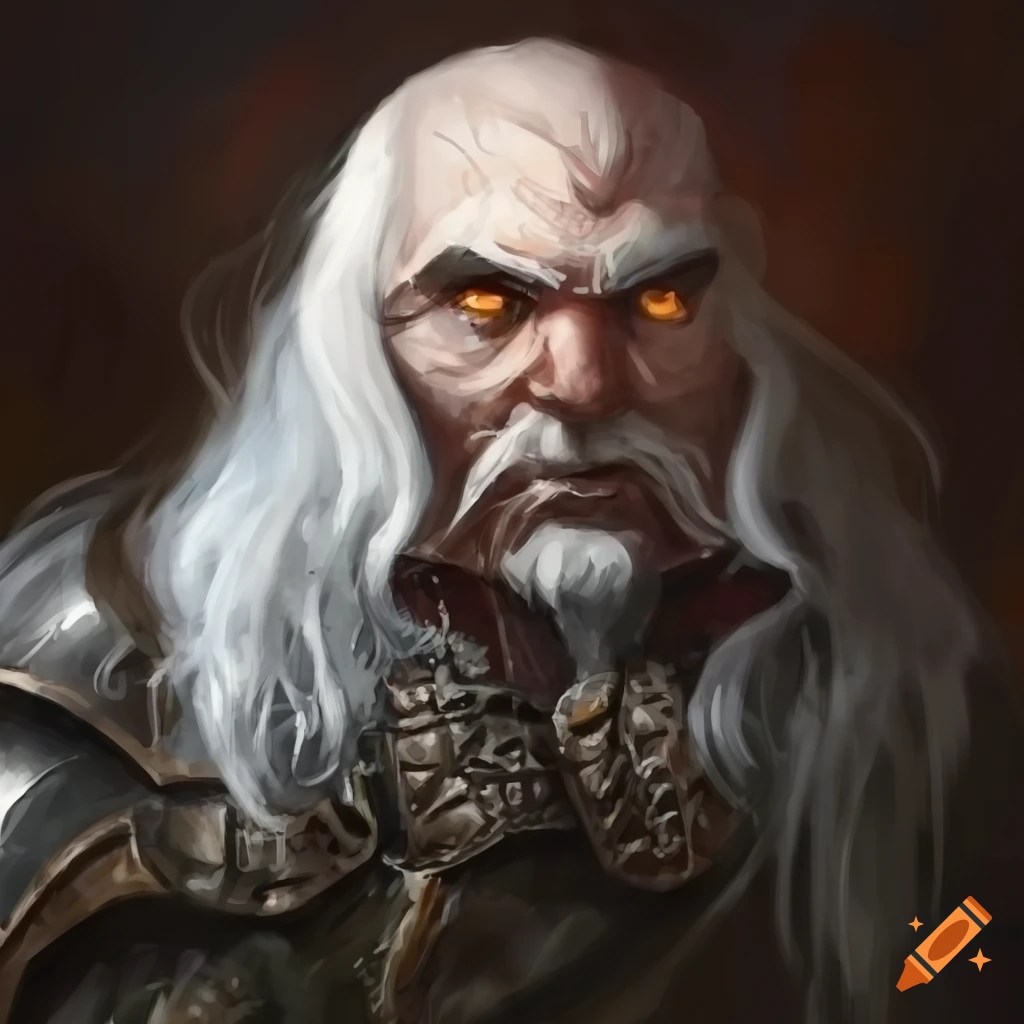
Moments later, the hobgoblin reappears accompanied by a small figure: a dwarf with glowing orange eyes, like two burning embers in the twilight. With hands tucked into his pockets and a completely unbothered air, the dwarf looks up toward the window from which Paolino’s head is poking.
“Is it really necessary to resort to violence to resolve this unpleasant intrusion?” he asks in a calm, almost bored tone.
“One more step from your dead and I’ll turn this lovely laboratory of yours into ash and shards!” Paolino shoots back, trying to mask his tension with bravado.
The dwarf doesn’t bat an eye or show the slightest sign of worry. “Go right ahead,” he replies coldly. “It will only mean you’ll suffer a great deal more before you die.”
At that point Drumin steps forward, leaning out the window to address the newcomer with a curt phrase in Khazalid. The other answers him in the same language, but the dwarf in the group immediately frowns: the pronunciation is grammatically flawless, yet there is a subtle inflection, an accent alien to stone and mountains. Drumin has no doubt: that being has the shape of a dwarf, but he is not one at all.
Intrigued by the presence of a true son of the mountains among the intruders, Anudil asks where they come from. “From the Empire,” our companions answer, deciding to risk everything on a single throw. Paolino asks for a temporary truce in the siege and explains that their presence there is not an act of war against him, but a leg of a hunt: they are on the trail of a certain Sulrig-something.
At that name, Anudil’s glacial calm suddenly cracks. The small being stiffens, the embers in his eyes flare with a sinister light, and in a much tenser voice he proposes speaking face to face. Our companions accept the meeting, but make it clear right away that they will not set foot outside the tower.
There is no need for them to open any door: with a simple, crisp snap of his fingers, Anudil vanishes into thin air from the courtyard and materializes instantaneously in the middle of the laboratory, amid the anatomical tables and stacks of tomes, displaying terrifying arcane power.
Our companions are stunned, petrified by the display of magic and deeply worried by the turn the encounter has taken. Looking at him up close, moreover, a deeper chill settles into the room: both Drumin and Waldemar clearly perceive the truth behind that figure. Anudil is not merely corrupted by magic: he is plainly dead.
Paying no heed to drawn weapons or tense stares, Anudil settles calmly onto a stool cluttered with papers, lacing his fingers together. “Well then,” he begins, fixing them with his burning eyes. “What business do you have with Sulrig? Do you happen to work in his service?”
Drumin spits to the side and cuts straight to the point with his usual brutality: “We’re here to skin him.”
The blunt statement seems to surprise and at the same time deeply please Anudil, across whose waxy face the shadow of a smile passes. The undead leans slightly forward and offers them a pact: he will spare all their lives if they truly attempt to kill Sulrig. Then, letting out a sigh heavy with centuries, he decides to reveal the reason for such hatred, telling his sad story.
In a distant time, Anudil recounts, he and Sulrig Durgul—an elven necromancer who lived back in the days of Sigmar—were friends. Both, however, ended up falling madly in love with the same elf woman. Their rivalry in love sparked a violent quarrel between the two: at the height of the clash, Sulrig cursed Anudil, condemning him to live for eternity in the tormented state of a wraith.
Desperate and driven mad by that sentence, Anudil committed a terrible act: he killed the elf woman he loved in the hope of turning her into a wraith as well so he could stay by her side forever in undeath. His mad plan, however, failed miserably: he could not bind her soul as a wraith and, rather than lose her completely, was forced to reanimate her remains, making her live ever since as a mere zombie.
It is Anudil himself who now spends his non-existence obsessed with the conviction that he can track down the elf’s soul in the Aethyr to bring her back to the earth. Meanwhile, Sulrig Durgul—who knows full well what Anudil did to the woman—remains his bitterest enemy, against whom his former friend desperately seeks vengeance.
Having heard that timeless tale, unsettling questions begin crowding into our companions’ minds: how did the servants of the Purple Hand manage to learn where Sulrig is? And, above all… is Anudil in league with Tzeentch?
Knowing full well that voicing that suspicion aloud would lead to nothing good, the companions follow Anudil out of the laboratory and through a passage into a room in a nearby house, grotesquely set up as if for a banquet. There, seated or motionless like a wax figure, is his undead bride: she wears a white dress, now worn and stained by time, and stares into nothingness with dead eyes. The impression is clear and chilling: Anudil has been mad for centuries, consumed by his obsession to track down his beloved’s soul in the Aethyr.
He explains with almost clinical matter-of-factness that, every so often, he is forced to change bodies by possessing a new vessel, because the ethereal nature of a wraith prevents him from manipulating objects, tools, and rituals as he would like. He chose a dwarf’s body precisely because the natural magic resistance of the kin makes those remains slower to yield to the degeneration caused by a wraith’s presence.
“I will tell you where Sulrig is,” he declares in a sharp voice, without taking his eyes off the figure in white. “Provided you truly try to kill him. And when you do… give him Anudil’s regards.”
He does not hide, however, that he places very little faith in their abilities: Sulrig is enormously powerful and, as far as Anudil knows, has lately begun dabbling with the Chaos Gods as well.
As for Chernozavtra, Anudil is immovable. The city is his, as are its inhabitants, already struck down by a plague years ago. Here the perennial frost preserves his beloved’s body intact, and he has no intention whatsoever of leaving. Over the millennia he has already seen Dolgan sieges and Greenskin raids come and go, and he shows not the slightest concern.
Accettata a malincuore l’offerta di Daffa, i nostri vengono presentati a Urek, un guerriero Dolgan incaricato di far loro da guida all’interno dell’accampamento e lungo il perimetro.
Congedato il finto santone, Urek — seguito da un nutrito codazzo di Dolgan curiosi e impazienti di vedere gli “eletti” all’opera — conduce il gruppo a fare il giro delle mura di Chernozavtra. Il nomade spiega con voce grave che i non morti, chiamati occhi bianchi dai Dolgan per via dello sguardo vitreo e spettrale, restano immobili sulle mura per la maggior parte del tempo.
«Gli assalti che abbiamo tentato finora sono stati tutti un massacro inutile» racconta Urek, indicando i merli anneriti e le pietre scheggiate. «Quando appoggiamo le scale, quei cosi si ammassano lentamente ma senza fermarsi mai nel punto esatto. Abbatterli è sfiancante: non basta colpirli, bisogna farli letteralmente a pezzi. E chi è caduto o si è avvicinato troppo è stato trascinato dentro… e qualche giorno dopo l’abbiamo rivisto lassù, a fissare il vuoto con quegli occhi bianchi.»
«E la porta principale?» chiede Fredrich, scrutando la massiccia struttura in legno e ferro.
«Troppo solida» replica Urek scuotendo il capo. «Con i nostri mezzi non si sfonda nemmeno a colpi d’ariete.»
Si susseguono varie ipotesi e discussioni: c’è chi propone di dare fuoco agli zombie con l’olio, chi suggerisce di aprire una breccia o far saltare una mina. Ma ogni piano si scontra con la dura realtà: mancano strumenti adeguati, le risorse sono scarse, il terreno è una lastra di ghiaccio e il tempo stringe.
Per capire come sia fatta la città oltre le mura, Anatoly viene issato su una scala. Tornato a terra, il Kossaro riferisce ciò che ha visto: una distesa di case anonime e, poco più in là, una torre centrale — un piccolo mastio addossato alle mura orientali.
«Se c’è un negromante che muove questi burattini, il modo per fermarli è fargli saltare la testa» borbotta Drumin, incrociando le braccia. «E se c’è un posto dove si nasconde un topo del genere, è proprio quella torre.»
Con due scale e una buona dose d’ingegno, il gruppo mette a punto un piano audace: sfruttare i Dolgan per attirare gli zombie degli spalti orientali lontano dal punto d’ingresso, per poi usare una seconda scala e arrampicarsi fino al tetto della torre solitaria.
«E come usciamo vivi da lì dentro?» mormora Paolino, stringendosi nelle spalle. Nessuno risponde: la situazione è talmente disperata e temeraria che nessuno si ferma a pensarci.
Radunati i Dolgan, entusiasti all’idea di dare una mano a quelli che credono inviati dagli dei, viene dato il segnale d’inizio. I nomadi lanciano un finto assalto lungo le mura orientali, attirando verso il diversivo l’attenzione degli occhi bianchi. Approfittando del trambusto e lavorando in coordinazione, i nostri posizionano le scale e, in poche manovre rapide e tese, si issano fino sul tetto del mastio.
Dal tetto, i nostri recuperano con rapidità la scala usata per salire, tirandola su e mettendosi al riparo. Non appena i Dolgan interrompono il finto assalto e tornano indietro, gli occhi bianchi riprendono le loro posizioni lungo gli spalti, ma ben presto iniziano ad accalcarsi verso la base delle mura. Alcuni di essi cominciano persino a scendere lungo le scale della passerella, muovendosi con lentezza innaturale verso la base del mastio: sembra proprio che la presenza di creature vive, calde e pulsanti li stia attirando come mosche sul miele.
Senza perdere un attimo, il gruppo apre la botola sul tetto e si cala all’interno, ritrovandosi in quello che appare subito come il laboratorio del padrone della torre — un ambiente opprimente, caotico e saturo di un odore nauseabondo di carne putrida, reagenti chimici e vecchia carta.
Dal soffitto e dalle pareti pende una profusione disordinata e sgargiante di oggetti d’ogni sorta, ciondolando come macabri trofei in un bazar dell’orrore. Al centro della stanza si allineano quattro tavoli su cui giacciono diversi zombie parzialmente smembrati, esposti a interventi e sezioni. Il pavimento intorno ai tavoli è appena visibile, e stretti sentieri si snodano tra cumuli di apparecchiature, strumenti bizzarri, pile di appunti, libri di consultazione accatastati e bauli, casse e cassette ammassati lungo i margini della sala.
L’aria è greve di una ricchezza tanto immensa quanto maledetta: se venisse ripulito, disinfettato, ordinato e catalogato, l’intero contenuto di questo laboratorio varrebbe tra le 20.000 e le 50.000 monete d’oro per un altro negromante. Sul mercato aperto, invece, quelle stesse cose frutterebbero appena 500 monete d’oro… e un biglietto di sola andata per la forca.
«Per tutti gli dei… guarda che razza di macello» mormora Fredrich, stringendo un panno sul naso mentre lo sguardo corre dai tavoli anatomici alle montagne di carte e ampolle.
«C’è roba da far impallidire un gilda intera» borbotta Drumin, osservando con un misto di sospetto e calcolo i cumuli di casse e volumi stipati lungo i muri, mentre dal basso, attraverso le scale e le mura, si avverte già il passo strascicato e inesorabile dei non morti che cercano la strada verso la loro carne viva
Affacciandosi con cautela da una delle strette feritoie del laboratorio, Paolino scorge un folto drappello di zombie radunarsi ai piedi della torre, guidato da uno strano hobgoblin dalla pelle pallida e cadaverica che sbraita ordini in un kislevita sgangherato. Non appena nota movimenti ai piani alti, la creatura inizia a chiamare a squarciagola: «Padrone!! Padrone!!», per poi sparire di corsa dentro un grosso edificio adiacente.
Pochi istanti dopo, l’hobgoblin ricompare accompagnato da una figura minuta: un nano dagli occhi arancioni accesi, quasi fossero due braci ardenti nel crepuscolo. Con le mani sprofondate nelle tasche e un’aria del tutto imperturbabile, il nano alza lo sguardo verso la finestra da cui spunta la testa di Paolino.
«È davvero necessario ricorrere alla violenza per risolvere questa spiacevole intrusione?» chiede con tono calmo, quasi annoiato.
«Un altro passo dei tuoi morti e riduco questo tuo bel laboratorio in cenere e cocci!» ribatte Paolino, cercando di mascherare la tensione con la spavalderia.
Il nano non batte ciglio né mostra il minimo segno di preoccupazione. «Fai pure» risponde gelido. «Significherà soltanto che soffrirete molto di più prima di morire.»
A quel punto si fa avanti Drumin, che sporgendosi dalla finestra rivolge al nuovo arrivato una frase secca in Khazalid. L’altro gli risponde nella stessa lingua, ma il nano del gruppo aggrotta immediatamente le sopracciglia: la pronuncia è perfetta nella grammatica, ma c’è un’inflessione sottile, un accento estraneo alla pietra e alle montagne. Drumin non ha dubbi: quell’essere ha le fattezze di un nano, ma non lo è affatto.
Incuriosito dalla presenza di un vero figlio delle montagne tra gli intrusi, Anudil chiede da dove provengano. «Dall’Impero» rispondono i nostri, decidendo di giocarsi il tutto per tutto. Paolino chiede una tregua momentanea all’assedio e spiega che la loro presenza lì non è un atto di guerra contro di lui, ma la tappa di una caccia: sono sulle tracce di un certo Sulrig-qualcosa.
A quel nome, la calma glaciale di Anudil si incrina di colpo. Il piccolo essere si irrigidisce, le braci nei suoi occhi guizzano d’una luce sinistra, e con voce ben più tesa propone di parlare de visu. I nostri accettano il confronto, ma mettono subito in chiaro che non metteranno piede fuori dalla torre.
Non serve che aprano alcuna porta: con un semplice, secco schiocco di dita, Anudil svanisce nel nulla dal cortile e si materializza istantaneamente al centro del laboratorio, tra i tavoli anatomici e le cataste di tomi, sfoggiando un potere arcano spaventoso.
I nostri restano allibiti, impietriti dalla dimostrazione di magia e profondamente preoccupati per la piega che ha preso l’incontro. Osservandolo da vicino, poi, il gelo cala ancora di più nella stanza: sia Drumin che Waldemar percepiscono chiaramente la verità dietro quella figura. Anudil non è semplicemente corrotto dalla magia: è palesemente morto.
Senza curarsi delle armi sguainate né degli sguardi tesi, Anudil si accomoda con calma su uno sgabello ingombro di carte, incrociando le dita. «Ebbene» esordisce, fissandoli con i suoi occhi ardenti. «Cosa avete a che fare voi con Sulrig? Per caso lavorate al suo servizio?»
Drumin sputa di lato e taglia corto con la sua consueta brutalità: «Siamo qui per fargli la pelle.»
L’affermazione diretta sembra sorprendere e al tempo stesso aggradare profondamente Anudil, sul cui volto cereo affiora l’ombra di un sorriso. Il non morto si sporge leggermente in avanti e propone loro un patto: risparmierà la vita a tutti loro se davvero tenteranno di uccidere Sulrig. Poi, lasciandosi andare a un sospiro greve di secoli, decide di svelare il perché di tanto odio, raccontando la sua triste storia.
Un tempo remoto, racconta Anudil, egli e Sulrig Durgul — un elfo negromante vissuto addirittura ai tempi di Sigmar — erano amici. Entrambi, però, finirono per innamorarsi perdutamente della stessa elfa. La rivalità in amore fece esplodere tra i due un violento litigio: al culmine dello scontro, Sulrig maledisse Anudil, condannandolo a vivere per l’eternità nella tormentata condizione di uno spettro.
Disperato e reso folle da quella condanna, Anudil compì un gesto terribile: uccise l’elfa amata nella speranza di trasformarla a sua volta in uno spettro e poter restare per sempre al suo fianco nella non morte
Il suo folle piano, però, fallì miseramente: non riuscì a legarne l’anima come spettro e, pur di non perderla del tutto, fu costretto a rianimarne le spoglie, facendola vivere da allora come una semplice zombie.
Proprio Anudil passa ora la propria non-esistenza ossessionato dalla convinzione di poter rintracciare l’anima dell’elfa nell’Aethyr per riportarla sulla terra.. Nel frattempo, Sulrig Durgul — che sa bene ciò che Anudil ha fatto alla donna — continua a essere il suo acerrimo nemico, contro cui l’ex amico cerca disperatamente vendetta.
Ascoltato quel racconto fuori dal tempo, nella testa dei nostri iniziano ad affollarsi interrogativi inquietanti: come sono riusciti i servi della Mano Purpurea a farsi rivelare dove si trovi Sulrig? E, soprattutto… Anudil è in combutta con Tzeentch?
Pur sapendo benissimo che formulare ad alta voce quel sospetto non porterebbe a nulla di buono, i compagni seguono Anudil fuori dal laboratorio e attraverso un passaggio fino a una sala di una casa vicina, allestita in modo grottesco come per un banchetto. Lì, seduta o immobile come una figura di cera, c’è la sua sposa non morta: indossa un abito bianco, ormai logoro e macchiato dal tempo, e fissa il vuoto con occhi spenti. L’impressione è netta e agghiacciante: Anudil è impazzito da secoli, consumato dall’ossessione di rintracciare l’anima dell’amata nell’Aethyr.
image_ca1c56.png
Spiega con naturalezza quasi clinica che, di tanto in tanto, è costretto a cambiare corpo prendendo possesso di un nuovo involucro, perché la natura eterea di uno spettro gli impedisce di manipolare oggetti, strumenti e rituali come vorrebbe. Ha scelto il corpo di un nano proprio perché la naturale resistenza magica della stirpe rende quei resti più duri a cedere alla degenerazione provocata dalla presenza spettrale.
image_ca1c56.png
«Vi dirò dove si trova Sulrig» dichiara con voce tagliente, senza distogliere lo sguardo dalla figura vestita di bianco. «A patto che proviate davvero ad ucciderlo. E quando lo farete… portategli i saluti di Anudil.»
Non nasconde, però, di riporre pochissima fiducia nelle loro capacità: Sulrig è enormemente potente e, per quanto ne sa Anudil, negli ultimi tempi ha iniziato a trafficare anche con gli Dei del Caos.
Quanto a Chernozavtra, Anudil è irremovibile. La città è sua, così come lo sono i suoi abitanti, già stroncati da una peste anni addietro. Qui il gelo perenne conserva intatto il corpo della sua amata, ed egli non ha alcuna intenzione di andarsene. Nei millenni ha già visto passare assedi di Dolgan e scorrerie di Pelleverde, e non mostra la minima preoccupazione.


Leave a Reply