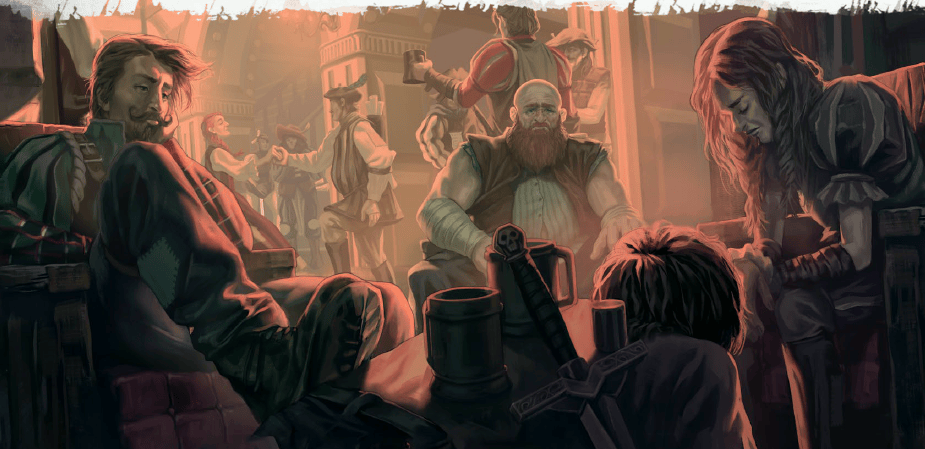
The afternoon slips away slowly within the walls of “The Templar’s Arms,” spent in dense conversations on how to navigate this incredibly tangled web of accusations, suspicions, and palace intrigue. The general and most urgent plan remains to get to the bottom of the Josef Sparsam matter in the Ostwald district, but first, there is an opportunity that cannot be passed up: the invitation to the Royal Gardens to attend the elven light show (an event that no one in the group has the slightest clue what it actually entails). The objective is clear: intercept the Graf’s concubine.
After grabbing a quick bite to stave off hunger, the companions leave the inn and stride toward the Palace District. As they have now learned to notice, the boundary between the quarters is stark: the air becomes cleaner, there is a radical shift in the quality of the people encountered—who flaunt silks and haughty gazes—coupled with a noticeable and reassuring increase in the city watch.
Upon reaching the beautiful, meticulously kept gardens behind the imperial residence, our heroes, by now accustomed to moving in such a high-society environment without looking out of place, immediately spot Emmanuelle Schlagen. The woman is busy conversing with one of the high-born court ladies, laughing behind a feathered fan. With smooth affability and a silver tongue worthy of a diplomat, Waldemar steps into the conversation with a deep bow, breaking the ice and inviting the Graf’s favorite for a brief, separate stroll along the tree-lined paths. Having already crossed paths with them the previous evening at Pavarotti’s concert, the woman accepts with a formal smile, entirely unaware of what she will be asked shortly.
Strolling at dusk through the narrow paths of the perfectly manicured gardens, as the first lanterns begin to be lit, Waldemar decides there is no time for courtly pleasantries. He goes straight for the jugular on the burning issue: the Ar-Ulric and the blackmail over the love letters.
The effect is instantaneous. Emmanuelle stiffens, the smile dies on her lips, and her pale green eyes narrow into icy slits. In a single moment, the mask of the bored noblewoman crumbles, revealing a fierce, sharp, and guarded character that Wolfgang and Fredrich recognize immediately. This is not the typical demeanor of a woman born and raised amidst the comforts of the court, but that of someone who has had to fight tooth and nail to survive; someone who, in her soul, is far more like them than she cares to let on.
The woman cuts to the chase, looking around to ensure no one is eavesdropping:
“Listen closely, messers,” she says in a low, sharp voice. “I care absolutely nothing for the politics of this city. And if you want my opinion on the taxes, I have strong suspicions about Sparsam, just like anyone with half a brain at court.”
Then, pressed about the letters, she clenches her fists beneath her fur cloak:
“The letters were stolen directly from my private chambers. A few weeks ago, I returned to find the room strangely in disarray, as though someone had been searching for something in a desperate rush. I have no direct suspicions as to who it might have been… but I want one thing to be as clear as day.”
Emmanuelle stares Waldemar straight in the eye, without a shred of hesitation:
“I respect the Ar-Ulric. I am bound to him, yes. But I have absolutely no intention of sacrificing my position, my safety, and everything I have painstakingly won in this court just for his infatuation. If those letters come to light, I will do whatever it takes to save myself.”
By now seasoned in these kinds of subplots and accustomed to palace double-dealing, the companions are certainly not discouraged by Schlagen’s cynicism. Before the show begins—revealing itself to be a sort of classical concert featuring a small orchestra and an elven tenor with an incredibly crystalline, powerful voice—our heroes discreetly have Emmanuelle point out the other prominent figures of the court present in the garden.
Amidst powdered wigs and arrogant stares, the only ones who catch the group’s investigative interest are two heavyweights of city politics: Hoflich, one of the three incredibly powerful Law Lords, and the general of Middenheim’s army, Johann Schwermutt.
Determined to make use of every second, our heroes sit through the first part of the show, which passes amidst mortal boredom and repeated yawns from Wolfgang and Drumin (decidedly unaccustomed to elven lyricism) and genuine interest from Fredrich, who is fascinated by the elf’s vocal talents.
At the musicians’ first intermission, the companions close ranks around General Johann Schwermutt. The man, proud in appearance but visibly weighed down by responsibility, answers questions about the taxes with a certain caution, but lets slip a concern of a purely military nature:
“The taxes themselves are none of my business,” the general confesses, smoothing his mustache. “But the consequences are. I am terrified by the threat from the Dwarfen Guild: they have sworn to abandon Middenheim if these edicts are confirmed. The walls and the complex tunnels of the Fauschlag are under their exclusive purview. If they leave, the quality of the city’s defenses will plummet vertically, leaving us vulnerable.”
When Waldemar asks him who could have birthed such a reckless idea, the general’s response is almost a Pavlovian reflex: Sparsam. He considers him a cynical, cold man, incapable of seeing past the accounting ledgers. However, Schwermutt makes things clear right away: his duty is to obey Graf Boris. If the Graf signs the decrees, the army will fall into line, despite the catastrophic risks to security.
During the concert’s second intermission, the group approaches the Law Lord, Hoflich. The impression is radically different: Hoflich appears cheerful, extremely self-assured, and completely impervious to the historical and economic complaints brought forward by Fredrich regarding the damage these gabelle taxes are causing the populace.
The man of the law dismisses the matter with a shrug and an almost mocking smile:
“Messers, taxes always hurt someone; that is the very nature of the exchequer. If you have economic grievances, you should speak with Chancellor Sparsam; it is certainly not my job to make budgetary assessments.”
Waldemar attempts to dig deeper, trying to understand how it was possible for the council to approve such reforms. Hoflich, without losing his composure, reveals a crucial political detail: the only one of the three Law Lords to firmly oppose it from the very beginning was Karl-Heinz Wasmeier. He and his colleague, Reiner Ehrlich, on the other hand, immediately declared themselves in favor, creating the necessary majority to pass the decrees.
Incapable of denting Hoflich’s monolithic and irritating confidence, and thoroughly annoyed by his total disregard for the citizens’ fate, our heroes decide they have had quite enough of high-society diplomacy.
Before leaving the Royal Gardens, utterly heedless of any etiquette and under the horrified stares of the liveried vallets, the companions raid the complimentary refreshment table. Wolfgang and Drumin stuff their pockets and bellies with meat pies, delicate tartlets, and rivers of fine wine, almost as if wanting to make up for the hours of musical torture they endured.
As they head toward the exit under a sky that grows darker by the minute, the political picture is now clearly outlined: Sparsam controls the finances, Hoflich and Ehrlich go along with it out of cynicism or calculation, the General obeys blindly, and the Ar-Ulric is neutralized by blackmail. Only Wasmeier seems to have attempted to resist.
Leaving the Palace District behind, the companions slip away into the evening shadows and head back to The Templar’s Arms for a quick but necessary change of identity. Away went the silks, brocades, and scented lace that would have turned them into walking targets; in their place, our heroes don weathered leather armor, sturdy boots, and heavy black cloaks, their hoods ready to conceal their faces.
It is already past eleven in the evening when the group reaches the boundary of the infamous Ostwald district. Here, the air is thick, heavy, and impregnated with a rancid stench of peat smoke and open sewers that erases any residue of the lavender perfume from the Royal Gardens. The street encircling the quarter, Ost Strasse, looks like a no-man’s-land: the pavements are equally shared between groups of obvious troublemakers warming themselves around makeshift braziers, prostitutes with hollow gazes, and heavily reinforced city watch patrols. The latter roam in groups of four to six, armed to the teeth and sporting faces so ugly, scarred, and sinister that they are indistinguishable from the cutthroats lingering in the dead-end alleys.
Guided by Wolfgang, who seems to move through this human squalor with the natural ease of someone who knows the rules of the street all too well, the companions avoid the riskiest alleys and quickly arrive under the weathered sign of “The Last Drop.”
The environment that opens up before their eyes is a true microcosm of degradation, a parallel world that seems to ignore the Graf’s laws and even the existence of the Carnival. Outside, in front of the door and along the damp stone walls, scammers of the worst kind, women of ill repute, and even a few off-duty watchmen converse and brawl, downing few-penny beers as if tomorrow did not exist.
Once the heavy, grease-soaked wooden door is pushed open, our heroes are hit by a wave of stifling heat, cheap pipe smoke, and a deafening racket. It is a filthy tavern, with the floor covered in sawdust stained with spit and cheap wine, where Middenheim’s most desperate humanity gathers to drown its sorrows.
The companions elbow their way to the bar, where a grim-faced innkeeper is wiping mugs with a rag that has seen better days. Waldemar leans forward and, putting the weight of his gaze on the counter, asks in a low voice if a fellow named Joseph was seen the previous evening, cautiously omitting the Chancellor’s surname.
The innkeeper pauses, spits on the floor, and shakes his head with an indifferent grunt.
“Joseph? In here, one out of three men is named Joseph or Johann, pal. Doesn’t ring a bell. If you are looking for someone from out of town, you’d better ask the girls out there on the pavement; they keep track of new faces.”
Paolino, however, does not let himself be dismissed. Remembering Sparsam’s delusional, lewd acts in the theater box and his obvious sexual overexcitement, he has a flash of intuition. He practically climbs onto the stool and stares into the innkeeper’s eyes:
“And what if this Joseph was looking for some… special entertainment? Who sells that kind of amusement around here?”
The innkeeper’s face changes instantly. A crooked, malicious grin puckers his lips and, with a slow nod of his head, he points to a heavy, dark wooden door at the back of the room, guarded by two massive brutes with crossed arms and biceps that look like hams.
“Ah, that kind of entertainment…” the barkeep winks malevolently, lowering his voice. “Then it’s not me you need to talk to. Go through that door. Bruno is the man for you.”
Il pomeriggio scorre lento tra le mura de “Le Braccia del Templare”, consumato in un fitto parlottare su come muoversi in quel dedalo intrigatissimo di accuse, sospetti e giochi di palazzo. L’idea generale e più urgente resta quella di andare in fondo alla questione di Josef Sparsam nel quartiere Ostwald, ma prima c’è un’opportunità che non si può calpestare: l’invito ai Giardini Reali per assistere allo spettacolo di luci elfiche (un evento che nessuno del gruppo ha la minima idea di cosa consista in realtà). L’obiettivo è chiaro: intercettare la concubina del Graf.
Mangiato qualcosa al volo per spezzare la fame, i compagni lasciano la locanda e si dirigono a grandi passi verso il distretto di palazzo. Come ormai hanno imparato a notare, il confine tra i quartieri è netto: l’aria si fa più pulita, c’è un radicale cambio nella qualità delle persone incontrate — che sfoggiano sete e sguardi superbi — unito a un sensibile e rassicurante incremento della ronda cittadina.
Raggiunti i graziosi e curatissimi giardini alle spalle della residenza imperiale, i nostri eroi, oramai avvezzi a muoversi in quell’ambiente d’alto borgo senza sfigurare, individuano subito Emmanuelle Schlagen. La donna è intenta a intrattenersi con una delle altolocate dame di corte, ridendo dietro a un ventaglio piumato. Con abile affabilità e una parlantina degna di un diplomatico, Waldemar subentra nella discussione con un inchino profondo, rompendo il ghiaccio e invitando la favorita del Graf a una breve passeggiata separata lungo i viali alberati. Avendoli già incrociati la sera prima al concerto di Pavarotti, la donna accetta con un sorriso di circostanza, del tutto ignara di ciò che le verrà chiesto da lì a breve.
Passeggiando al crepuscolo tra le viuzze dei giardini perfettamente potati, mentre le prime lanterne iniziano ad accendersi, Waldemar decide che non c’è tempo per i ricami cortigiani. Entra subito a gamba tesa sulla questione scottante: l’Ar-Ulric e il ricatto delle lettere amorose.
L’effetto è immediato. Emmanuelle si irrigidisce, il sorriso le muore sulle labbra e gli occhi verde pallido si stringono in due fessure gelide. In un istante, la maschera della nobildonna annoiata crolla, sfoderando un carattere battagliero, aspro e guardingo che Wolfgang e Fredrich riconoscono al volo. Non è l’atteggiamento tipico di una donna nata e cresciuta tra gli agi della corte, ma quello di qualcuno che ha dovuto lottare con le unghie e con i denti per sopravvivere; qualcuno che, nell’anima, è molto più simile a loro di quanto voglia far credere.
La donna taglia corto, guardandosi attorno per assicurarsi che nessuno orecchi:
“Sentite bene, messeri,” dice con voce bassa e tagliente. “Della politica di questa città non mi interessa assolutamente nulla. E se volete sapere la mia sulle tasse, nutro forti sospetti su Sparsam, come chiunque abbia un briciolo di cervello a palazzo.”
Poi, incalzata sulle lettere, stringe i pugni sotto il mantello di pelliccia:
“Le lettere mi sono state rubate direttamente dalla mia camera privata. Qualche settimana fa sono rientrata e ho trovato la stanza stranamente in disordine, come se qualcuno avesse cercato qualcosa in fretta e furia. Non ho sospetti diretti su chi possa essere stato… ma una cosa voglio che sia chiara come il sole.”
Emmanuelle fissa Waldemar dritto negli occhi, senza un briciolo di esitazione:
“Io rispetto l’Ar-Ulric. Gli sono legata, sì. Ma non ho la minima intenzione di sacrificare la mia posizione, la mia sicurezza e tutto ciò che ho faticosamente conquistato in questa corte solo per la sua infatuazione. Se quelle lettere saltano fuori, io farò di tutto per salvare me stessa.”
Oramai svezzati da questo genere di sotto-trame e abituati ai doppi giochi di palazzo, i compagni non si lasciano certo scoraggiare dal cinismo della Schlagen. Prima che lo spettacolo abbia inizio — rivelandosi una specie di concerto classico con una piccola orchestra e un tenore elfico dalla voce incredibilmente cristallina e potente — i nostri si fanno indicare con discrezione da Emmanuelle gli altri esponenti di spicco della corte presenti nel giardino.
Tra parrucche incipriate e sguardi superbi, gli unici che catturano l’interesse investigativo del gruppo sono due pesi massimi della politica cittadina: Hoflich, uno dei tre potentissimi Signori della Legge (Law Lords), e il generale dell’esercito di Middenheim, Johann Schwermutt.
Decisi a sfruttare ogni secondo, i nostri assistono alla prima parte dello spettacolo, che si consuma tra la noia mortale e i ripetuti sbadigli di Wolfgang e Drumin (decisamente poco avvezzi al lirismo elfico) e il genuino interesse di Fredrich, affascinato dalle doti canore dell’elfo.
Alla prima pausa dei musicisti, i compagni stringono il cerchio attorno al generale Johann Schwermutt. L’uomo, dall’aspetto fiero ma visibilmente appesantito dalle responsabilità, risponde alle domande sulle tasse con una certa prudenza, ma lascia trapelare una preoccupazione di natura prettamente militare:
“Le tasse in sé non sono affar mio,” confessa il generale, lisciandosi i baffi. “Ma le conseguenze sì. Sono terrorizzato dalla minaccia della Gilda dei Nani: hanno giurato di abbandonare Middenheim se questi editti verranno confermati. Le mura e i complessi cunicoli del Fauschlag sono di loro esclusiva competenza. Se se ne vanno, la qualità delle difese della città crollerà verticalmente, lasciandoci vulnerabili.”
Quando Waldemar gli chiede chi possa aver partorito un’idea tanto scellerata, la risposta del generale è quasi un riflesso pavloviano: Sparsam. Lo ritiene un uomo cinico, freddo, incapace di vedere oltre i registri contabili. Tuttavia, Schwermutt mette subito le cose in chiaro: il suo dovere è obbedire al Graf Boris. Se il Graf firma i decreti, l’esercito si adeguerà, nonostante i rischi catastrofici per la sicurezza.
Durante la seconda pausa del concerto, il gruppo avvicina il Signore della Legge, Hoflich. L’impatto è radicalmente diverso: Hoflich si mostra solare, estremamente sicuro di sé e del tutto impermeabile alle rimostranze storiche ed economiche portate avanti da Fredrich riguardo ai danni che queste gabelle stanno arrecando alla popolazione.
L’uomo di legge liquida la questione con un’alzata di spalle e un sorriso quasi canzonatorio:
“Messeri, le tasse fanno sempre male a qualcuno, è la natura stessa del fisco. Se avete rimostranze economiche dovreste parlarne con il Cancelliere Sparsam, non è certo il mio lavoro fare valutazioni di bilancio.”
Waldemar tenta di scavare più a fondo, cercando di capire come sia stato possibile che il consiglio approvasse tali riforme. Hoflich, senza scomporsi, rivela un dettaglio politico cruciale: l’unico dei tre Signori della Legge a opporsi fermamente fin dall’inizio è stato Karl-Heinz Wasmeier. Lui e il collega Reiner Ehrlich, invece, si sono dichiarati immediatamente favorevoli, creando la maggioranza necessaria per far passare i decreti.
Incapaci di scalfire la granitica e fastidiosa sicurezza di Hoflich, e decisamente irritati dalla sua totale noncuranza per le sorti dei cittadini, i nostri decidono che ne hanno abbastanza della diplomazia d’alto borgo.
Prima di lasciare i Giardini Reali, incuranti di qualsiasi etichetta e sotto gli sguardi inorriditi dei valletti in livrea, i compagni prendono d’assalto il tavolo del rinfresco gratuito. Wolfgang e Drumin si riempiono le tasche e la pancia di pasticci di carne, tartine delicate e fiumi di vino pregiato, quasi a voler compensare le ore di tortura musicale subite.
Mentre si avviano verso l’uscita sotto il cielo che si fa sempre più scuro, il quadro politico è ormai delineato: Sparsam ha il controllo delle finanze, Hoflich ed Ehrlich lo assecondano per cinismo o calcolo, il Generale obbedisce ciecamente e l’Ar-Ulric è neutralizzato dal ricatto. Solo Wasmeier sembra aver tentato di opporsi.
Abbandonato il distretto di palazzo, i compagni scivolano via tra le ombre della sera e fanno ritorno a Le Braccia del Templare per un rapido ma necessario cambio di identità. Via le sete, i broccati e i pizzi profumati che li avrebbero trasformati in bersagli ambulanti; al loro posto, i nostri indossano armature di cuoio vissute, stivali rinforzati e pesanti mantelli neri, i cui cappucci sono pronti a celare i volti.
È ormai l’undici di sera passata quando il gruppo raggiunge il confine del famigerato quartiere di Ostwald. Qui l’aria è densa, pesante, impregnata di un odore rancido di fumo di torba e scarichi a cielo aperto che cancella ogni residuo del profumo di lavanda dei Giardini Reali. La via che cintura il quartiere, la Ost Strasse, si presenta come una terra di nessuno: i marciapiedi sono equamente spartiti tra gruppi di evidenti cercaguai che si scaldano attorno a bracieri improvvisati, prostitute dagli sguardi spenti e pattuglie della ronda cittadina notevolmente rinforzate. Queste ultime girano in gruppi da quattro o sei elementi, armate fino ai denti e con facce talmente brutte, segnate da cicatrici e sguardi biechi, da renderle indistinguibili dai tagliagole che popolano i vicoli ciechi.
Guidati da Wolfgang, che in mezzo a quel putridume umano sembra muoversi con la naturalezza di chi conosce fin troppo bene le regole della strada, i compagni evitano i vicoli più rischiosi e arrivano rapidamente sotto l’insegna logora de “L’Ultimo Goccio”.
L’ambiente che si spalanca davanti ai loro occhi è un vero e proprio microcosmo di degradazione, un mondo parallelo che sembra ignorare le leggi del Graf e persino l’esistenza del Carnevale. All’esterno, davanti alla porta e lungo i muri di pietra umida, truffatori della peggior specie, donne di malaffare e persino qualche guardia della ronda fuori servizio confabulano e sbraitano, tracannando birre da pochi penny come se il domani non esistesse.
Una volta aperta la porta di legno massiccio e impregnato di grasso, i nostri vengono investiti da un’ondata di calore asfissiante, fumo di pipe economiche e un chiasso assordante. È una taverna sporca, con il pavimento coperto di segatura lorda di sputi e vino scadente, dove l’umanità più disperata di Middenheim si ritrova per affogare i propri dispiaceri.
I compagni si fanno largo a gomitate fino al bancone, dove un oste dal grugno truce sta asciugando i boccali con uno straccio che ha visto tempi migliori. Waldemar si sporge in avanti e, mettendo sul bancone il peso del suo sguardo, chiede a bassa voce se la sera precedente sia stato visto un uomo di nome Joseph, omettendo cautamente il cognome del Cancelliere del Tesoro.
L’oste si ferma, sputa per terra e scuote la testa con un grugnito indifferente.
“Joseph? Qui dentro un uomo su tre si chiama Joseph o Johann, amico. Non mi dice niente. Se cercate qualcuno venuto da fuori, vi conviene chiedere alle ragazze là fuori sul marciapiede, loro tengono il conto delle facce nuove.”
Paolino, tuttavia, non si lascia liquidare. Ricordando i farneticanti atti osceni di Sparsam nel palco del teatro e la sua evidente sovreccitazione sessuale, ha un’intuizione fulminea. Si arrampica quasi sullo sgabello e fissa il locandiere negli occhi:
“E se questo Joseph cercasse del… divertimento speciale? Chi è che vende quel genere di svago da queste parti?”
Il volto del locandiere muta all’istante. Un sorriso storto e malizioso gli increspa le labbra e, con un cenno lento del capo, indica una pesante porta di legno scuro situata sul retro della sala, presidiata da due enormi energumeni con le braccia conserte e i bicipiti che sembrano prosciutti.
“Ah, quel tipo di divertimento…” ammicca malevolmente l’oste, abbassando la voce. “Allora non è con me che dovete parlare. Oltrepassate quella porta. Bruno è l’uomo che fa per voi.”


Leave a Reply