Dawn rises grey and freezing over the ruins of what was once the Wittgenstein domain. The forest, shrouded in a mist that tastes of sulfur and stone dust, seems to hold its breath. Around a guttering fire, the group tries to pull themselves together after a night spent in the open, tormented by nightmares and the bone-chilling cold.
The landscape is desolate: where the tower of madness once soared, there is now only a heap of smoking rubble. The village of Wittgendorf no longer exists, buried by the collapse of the hill. The tyranny has ended, but the price was the total obliteration of that place from the map of the Empire.
Waldemar watches his companions with growing concern. His herbs and prayers are no longer enough; they need the hand of an expert surgeon, and they need it fast.
Drumin: The dwarf chews tobacco to keep from swearing, but his face is a mask of suffering. The hand crushed by Julius is in critical condition: the broken fingers have turned blackish, and the smell emanating from them bodes ill. Gangrene is an enemy that even a dwarven hammer cannot strike down.
Paolino: The halfling has fallen into a restless sleep. His body, usually so vital, is ravaged by wounds that struggle to close. A high fever is beginning to consume him from within—perhaps a side effect of that glowing green potion or the toxic Skaven smoke.
The most subtle concern, however, regards Fredrich. After being forced awake from a sleep so deep it seemed lethargic, the soldier looked up, chilling his companions. His eyes are now two different colors.
Sigrid, the former priestess of Rhya, examines him at length under the faint morning light.
“It does not seem like demonic possession… at least not in the strict sense of the term,” she declares with a trembling voice. “But the touch of warpstone is unpredictable. Something has changed in you, Fredrich. Your soul or your flesh has reacted to yesterday’s exposure.”
Fredrich snaps to his feet, furious and defensive: “I’m the same as before! I just overslept! Don’t you dare look at me as if I were one of those monsters we just killed!” Despite his protests, the seed of suspicion has already sprouted in the heart of the group.
Sigrid is a broken woman. Of her Black Arrows, only ten survivors remain—men and women with vacant stares, shattered by the final horror.
“There is no sense in staying here anymore,” Sigrid says, looking at the warped forest. “The earth is tainted. The roots drink poison and the birds no longer sing. Redemption for this county is a dead dream. We will escort you to Kemperbad; it is the nearest city where you can find doctors worthy of the name. Then, our paths will part.”
The agreement is sealed in silence. The group sets out, leaving behind a landscape that seems branded by the fires of Chaos. Every step away from the valley is a relief, but the journey to civilization will be long, and the sick are worsening by the hour.
The navigation to Kemperbad is slow and silent, but fortunately free of surprises. The rhythmic sound of water against the ship’s hull—miraculously ignored by the Wittgenstein guards, perhaps too busy dying or going mad—cradles the wounded. When the lights of the Freistadt of Kemperbad appear on the horizon at twilight, relief fills everyone’s hearts.
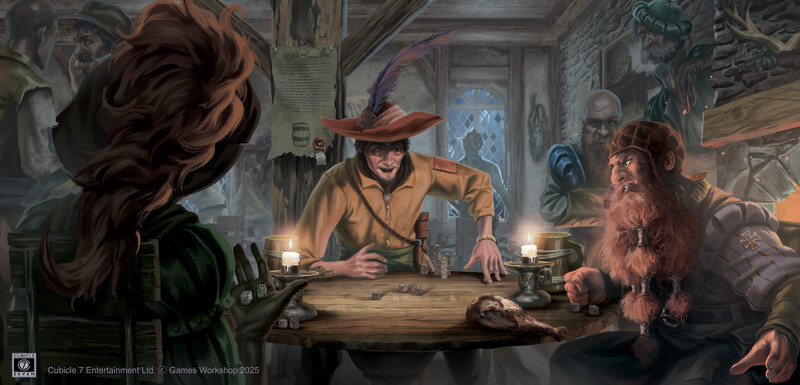
The scent of beer and good food replaces the smell of sulfur and formalin inhaled in that terrible castle. Our heroes eat and drink with the desperation of those who have seen the end of the world: roasted meat, rivers of ale, and warm bread disappear in a whirlwind of hysterical laughter and toasts to the health of those who are gone. One by one, they collapse. It isn’t just the wine; it’s the weight of weeks of terror finally sliding away, making room for total exhaustion.
The awakening is late and accompanied by a headache that rivals a blow from a dwarven hammer, but health remains the priority. They track down Herr Otto Hilwitz, a luminary of the renowned Physicians’ Guild of Kemperbad.
The operation on Drumin’s hand is a masterpiece of brutal but effective surgery: amidst dwarven curses that would make a pirate of Sartosa blush and rivers of brandy to anesthetize the patient, Hilwitz manages to reset the shattered bones. Miraculously, Drumin recovers the use of the limb, though he swears he will “feel the rain coming before anyone else” for the rest of his days.
Days pass. The group rids themselves of rags encrusted with blood and mud. Sturdy clothes, lined cloaks, and treated leather boots are purchased. Under Hilwitz’s care, the halfling’s fever breaks and his wounds begin to heal, though the spirit of the little thief-entrepreneur seems to have had quite enough of subterranean adventures.
As summer approaches, the horror of Castle Wittgenstein begins to fade like a bad dream, but the shadows of the future remain long. Evening discussions over a tankard grow intense:
Gotthard von Wittgenstein, the depraved follower of Slaanesh, is in Middenheim. In that same city pulses the heart of the Purple Hand, the Tzeentch cult that continues to hunt Fredrich, convinced he is Kastor Lieberung.
Paolino is categorical: he no longer wants to risk his skin in the frozen North. His dream is to turn the ship into a mobile trading business. Waldemar, for his part, feels the call of nature and wants to deepen his studies to become a true Druidic priest. Conversely, Wolfgang, Drumin, and Fredrich want to set out for Middenheim immediately.
Reaching the City of the White Wolf is a feat. The forest road starting from Altdorf is infested with outlaws and worse creatures; doing it on foot is suicide (as a somber Fredrich confirms), and a coach is a luxury their purses cannot yet afford.
In the end, pragmatism prevails. The group decides to stay for a couple of months in the Altdorf area. They will use the boat and Wolfgang’s knowledge of the region for small trades and transport, accumulating the gold crowns needed for the northern expedition.
It will be a period of “returning to life.” There is a morbid curiosity for firearms—those imperial technological marvels that could make the difference against mutants—and everyone, Paolino first and foremost, seems attracted to them. The decision is made: the Reikland will be their training ground and (hopefully) their gold mine before they face the fate that awaits them in Middenheim…
L’alba sorge grigia e gelida sopra le rovine di quello che un tempo era il dominio dei Wittgenstein. La foresta, avvolta in una nebbia che sa di zolfo e polvere di pietra, sembra trattenere il respiro. Attorno a un fuoco stentato, il gruppo cerca di ricomporsi dopo una notte passata all’addiaccio, tormentati da incubi e dal freddo che morde le ossa.
Il panorama è desolante: dove svettava la torre della follia ora c’è solo un cumulo di macerie fumanti. Il villaggio di Wittgendorf non esiste più, sepolto dal collasso della collina. La tirannia è finita, ma il prezzo è stato la cancellazione totale di quel luogo dalla mappa dell’Impero.
Waldemar osserva i suoi compagni con crescente preoccupazione. Le sue erbe e le sue preghiere non bastano più: serve la mano di un cerusico esperto, e serve in fretta.
- Drumin: Il nano mastica tabacco per non imprecare, ma il suo volto è una maschera di sofferenza. La mano stritolata da Julius è in condizioni critiche: le dita rotte hanno assunto un colorito nerastro e l’odore che emana non lascia presagire nulla di buono. La cancrena è un nemico che nemmeno un martello nanico può abbattere.
- Paolino: L’halfing è sprofondato in un sonno agitato. Il suo corpo, solitamente così vitale, è martoriato da ferite che faticano a rimarginarsi. Una febbre alta sta iniziando a divorarlo dall’interno; forse un effetto collaterale di quella pozione verde brillante o del fumo tossico degli Skaven.
La preoccupazione più sottile, però, riguarda Fredrich. Dopo essere stato scosso a forza da un sonno talmente profondo da sembrare letargico, il soldato ha sollevato lo sguardo, raggelando i compagni. I suoi occhi hanno ora due colori diversi.
La ex-sacerdotessa di Rhya, Sigrid, lo esamina a lungo sotto la luce fioca del mattino.
“Non sembra una possessione demoniaca… almeno non nel senso stretto del termine,” sentenzia con voce tremante. “Ma il tocco della mutapietra è imprevedibile. Qualcosa è cambiato in te, Fredrich. La tua anima o la tua carne hanno reagito all’esposizione di ieri.”
Fredrich scatta in piedi, furioso e sulla difensiva: “Sono lo stesso di prima! Ho solo dormito troppo! Non osate guardarmi come se fossi uno di quei mostri che abbiamo appena ucciso!”
Nonostante le sue proteste, il sospetto è un seme che è già germogliato nel cuore del gruppo.
Sigrid è una donna distrutta. Delle sue Frecce Nere rimangono solo dieci sopravvissuti, uomini e donne dagli sguardi vacui, spezzati dall’orrore finale.
“Non ha più senso restare qui,” dice Sigrid, guardando la foresta deforme. “La terra è infetta. Le radici bevono veleno e gli uccelli non cantano più. La redenzione per questa contea è un sogno morto. Vi scorteremo fino a Kemperbad, è la città più vicina dove potrete trovare medici degni di questo nome. Poi, le nostre strade si divideranno.”
L’accordo è siglato nel silenzio. Il gruppo si mette in marcia, lasciandosi alle spalle un paesaggio che sembra marchiato a fuoco dal Chaos. Ogni passo lontano dalla valle è un sollievo, ma il viaggio verso la civiltà sarà lungo e i malati peggiorano a vista d’occhio.
La navigazione verso Kemperbad è un lenta e sileziosa,ma fortunatamente priva di soprese. Il rumore ritmico dell’acqua contro lo scafo della nave — miracolosamente ignorata dalle guardie dei Wittgenstein, forse troppo impegnate a morire o a impazzire — culla i feriti. Quando le luci del Freistadt di Kemperbad appaiono all’orizzonte nel crepuscolo, il sollievo riempie i cuori di tutti
Il profumo di birra e buon cibo sostituisce l’odore di zolfo e formalina respirato nel terribile castello.I nostri Mangiano e bevono con la disperazione di chi ha visto la fine del mondo: carne arrostita, fiumi di birra e pane caldo spariscono in un vortice di risate isteriche e brindisi alla salute di chi non c’è più.
Uno alla volta, crollano. Non è solo il vino; è il peso di settimane di terrore che finalmente scivola via, lasciando spazio a uno sfinimento totale.
Il risveglio è tardivo e accompagnato da un mal di testa che rivaleggia con un colpo di martello nanico, ma la priorità resta la salute. Viene rintracciato Herr Otto Hilwitz, un luminare della rinomata Corporazione dei Dottori di Kemperbad.
L’intervento sulla mano di Drumin è un capolavoro di chirurgia brutale ma efficace: tra imprecazioni naniche che farebbero arrossire un pirata di Sartosa e fiumi di acquavite per anestetizzare il paziente, Hilwitz riesce a ricomporre le ossa frantumate. Miracolosamente, Drumin recupera l’uso dell’arto, anche se giura che “sentirà la pioggia arrivare prima di chiunque altro” per il resto dei suoi giorni.
Passano i giorni. Il gruppo si libera dei cenci incrostati di sangue e fango: Vengono acquistati abiti robusti, mantelli foderati e stivali di cuoio trattato . Sotto le cure di Hilwitz, la febbre dell’halfing cala e le ferite iniziano a rimarginarsi, anche se lo spirito del piccolo ladro-imprenditore sembra averne abbastanza di avventure sotterranee.
Con l’avvicinarsi dell’estate, l’orrore di Castel Wittgenstein inizia a sbiadire come un brutto sogno, ma le ombre del futuro restano lunghe. Le discussioni serali davanti a un boccale si fanno fitte:
Gotthard von Wittgenstein, il depravato seguace di Slaanesh, è a Middenheim. Nella stessa città pulsa il cuore del culto di Tzeentch che continua a dare la caccia a Fredrich, convinti che sia Kastor Lieberung.
Paolino è categorico: non vuole più rischiare la pelle nel gelido Nord. Il suo sogno è trasformare la nave in un’attività commerciale itinerante. Waldemar, dal canto suo, sente il richiamo della natura e vuole approfondire i suoi studi per diventare un vero prete druidico.Viceversa, Wolfgang ,Drumin e Fredrich invece vorrebbero partire subito alla volta di Middenheim.
Raggiungere la Città del Lupo è un’impresa. La via nella foresta che parte da Altdorf è infestata da fuorilegge e creature peggiori; farla a piedi è un suicidio (come conferma un cupo Fredrich), e la carrozza è un lusso che le loro borse non possono ancora permettersi.
Alla fine, prevale il pragmatismo. Il gruppo decide di fermarsi per un paio di mesi nelle zone di Altdorf. Sfrutteranno la barca e le conoscenze della zona di Wolfgang per piccoli commerci e trasporti, accumulando le corone d’oro necessarie per la spedizione a Nord.
Sarà un periodo di “ritorno alla vita”: C’è una curiosità morbosa per le armi da fuoco, le meraviglie tecnologiche imperiali che potrebbero fare la differenza contro i mutanti e tutti ,in primis Paolino,ne sembrano attratti. La decisione è quindi presa: il Reikland sarà la loro palestra e la loro (si spera) miniera d’oro prima di affrontare il destino che li attende a Middenheim.


Leave a Reply