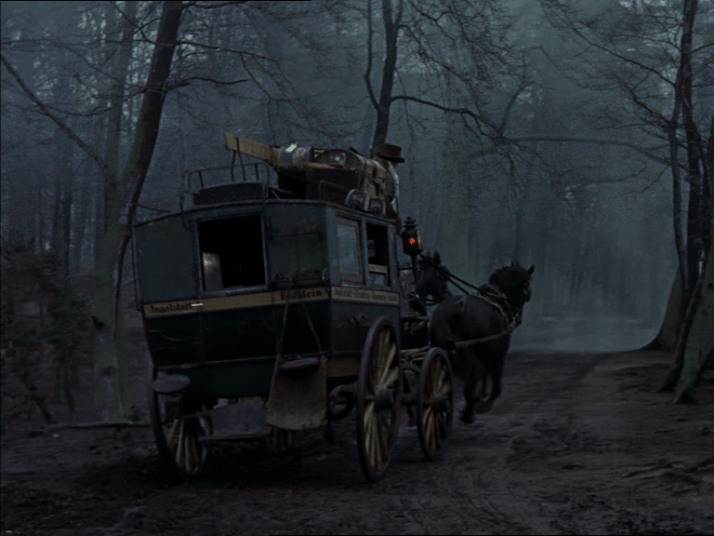
Ecco il riassunto romanzato della prima seduta! / Here is the fictionalized summary of the first session!
ITA:
Anno Imperiale 2512 , 24 Jahrdrung , Delbertz.
Cinque anime in viaggio verso la scintillante promessa di Altdorf si trovano, quasi per ironia del fato, strette attorno a un tavolo traballante nella locanda “Il Porco e il Barile”. Il locale, un crocevia brulicante di vetturini stanchi e mercanti frettolosi, pulsa di un’energia grezza, amplificata dal continuo andirivieni di diligenze imperiali che qui fanno sosta, rigettando nell’osteria nuovi flussi di umanità infreddolita.
Gustav, il corpulento proprietario, con un sorriso mellifluo che promette calore e ristoro, li accoglie con la sua parlantina untuosa. “Signori, signore,” esordisce, la voce un baritono robusto che sovrasta il chiacchiericcio, “siete fortunati! Il Porco e il Barile ha ancora qualche angolo di paradiso asciutto per voi, e udite udite, una carrozza sta per lasciare il mio umile albergo diretta proprio al cuore del Reikland! Per voi, viaggiatori provati, un prezzo di favore, un vero affare!”
Tra il vapore denso di zuppa calda e l’odore acre della birra, i cinque si studiano con la cautela di chi condivide una barca in mezzo alla tempesta. Fredrich, un uomo di mezza età con rughe profonde incise attorno agli occhi come mappe di antiche battaglie, scruta Waldemar. Una vaga sensazione, un’eco lontana di un incontro passato, gli sfiora la mente, ma la stanchezza del viaggio è un velo pesante che offusca i ricordi.
Drumin, un individuo avvolto in un silenzio quasi palpabile, osserva l’ambiente con occhi penetranti, il suo passato, celato come una lama nel fodero, trapela solo da un’aria di navigata prudenza.
Paolino, con la sua loquacità vivace, e Wolfgang, con un tono più riflessivo ma non meno curioso, tentano di rompere il ghiaccio, tessendo fili di conversazione attorno al loro comune destino: Altdorf e la magione dei Von Tassenick. Un obiettivo condiviso, un fragile ponte gettato tra sconosciuti.
Alzando lo sguardo sulla folla eterogenea, due figure spiccano come fiori rari in un campo di grano. In un angolo appartato, una nobildonna, Lady Isolde, circondata da un piccolo seguito di servitori discreti, mantiene una distanza regale dal brusio popolare. Gustav, con un inchino ossequioso, sussurra il suo nome, aggiungendo che anche lei è diretta alla capitale. L’altra figura degna di nota è un giocatore d’azzardo, le cui mani agili tamburellano nervosamente sul tavolo, gli occhi guizzanti di una febbrile anticipazione.
Le ore scivolano via, scandite dal vento ululante e dal crepitio del fuoco nel camino. A mezzanotte, la stanchezza ha la meglio. Uno ad uno, i cinque viaggiatori si ritirano nella stanza comune, un ambiente umido e fresco ma stranamente accogliente nel suo offrire un riparo dalla furia esterna. Si abbandonano ai loro giacigli, il sonno che sopraggiunge rapido, portando con sé la promessa di un nuovo giorno e l’avvicinarsi, lento ma inesorabile, alle porte di Altdorf.
Le prime luci dell’alba tingono di grigio il cielo plumbeo quando l’involontaria compagnia di avventurieri scende le scale scricchiolanti della locanda. L’aroma invitante della colazione promessa da Gustav a Paolino la sera precedente aleggia nell’aria, ma i cocchieri, figure burbere avvolte in pesanti mantelli, non ne vogliono sapere. I loro visi scavati esprimono una chiara ansia: il tempo minaccia un peggioramento e ogni minuto guadagnato sulla strada verso Altdorf è prezioso.
Paolino, con la sua proverbiale faccia tosta, riesce comunque a sgraffignare un paio di salami extra dalla dispensa, promettendo alla giovane e ingenua cameriera un improbabile aiuto per raggiungere le soleggiate contrade di Tilea. La menzogna gli scivola dalle labbra con la naturalezza di un ruscello di montagna.
I loro compagni di viaggio si materializzano nel cortile fangoso: Lady Isolde, avvolta in pellicce preziose e circondata da un piccolo esercito di bauli e servitori sussurranti, e un uomo esile e taciturno di nome Ernst. Quest’ultimo, con una borsa di cuoio stretta al petto, rivela di essere diretto ad Altdorf per affrontare i temuti esami di ammissione alla Facoltà di Medicina. Quando Waldemar tenta di intavolare una conversazione sull’argomento, Ernst taglia corto con monosillabi e un’espressione che non lascia spazio a repliche.
Pochi minuti per ingoiare una colazione frugale e i nostri si ritrovano catapultati su un precario trespolo in cima alla carrozza, esposti alla furia degli elementi. Presto si rendono conto dell’amara verità: Lady Isolde ha evidentemente elargito un generoso sovrapprezzo per assicurare un viaggio asciutto alle sue ingombranti valigie, relegando gli altri passeggeri al ruolo di ornamenti bagnati sul tetto. Senza la voglia di intraprendere una battaglia persa in partenza, il gruppo accetta la scomoda sistemazione.
Fredrich, i cui occhi esperti scrutano i cavalli e il carro con un cipiglio preoccupato, nota con crescente inquietudine che la carrozza è ben oltre il suo carico massimo. I due cocchieri, con fare furtivo, hanno fatto aggiungere due cavalli extra al tiro, un’aggiunta che puzza lontano un miglio di una losca combine tra loro e l’affabile Gustav.
Sotto una pioggia che si fa sempre più battente, trasformando la strada in un pantano scivoloso, la sgangherata comitiva si mette in moto, sobbalzando e scricchiolando verso Altdorf e l’enigmatica magione dei Von Tassenick. Il viaggio, già iniziato all’insegna della scomodità, promette di essere lungo e, forse, ben più avventuroso di quanto i cinque sventurati compagni di viaggio potessero immaginare.
Le prime ore di viaggio si rivelano un calvario. La pioggia si abbatte con furia crescente, rendendo difficile persino tenere gli occhi aperti. Come se non bastasse, la fretta indiavolata dei cocchieri trasforma ogni buca in un salto scomposto per chi siede sul tetto, proiettandoli di qua e di là. Superato quello che sembra essere Mittelweg, la carrozza sfreccia lungo la strada fangosa, inghiottita dall’ombra minacciosa della nera Drakenwald. Non un’anima viva si avvista lungo il percorso desolato.
All’improvviso, i cocchieri tirano bruscamente le redini, arrestando la carrozza con uno stridio di legno e cuoio. “Qualcosa” giace immobile in mezzo alla strada. Un’ansia fredda serpeggia nello stomaco di Fredrich, uomo di strada avvezzo ai pericoli, e si dipinge sui volti tesi dei cocchieri. Qualcosa non va, e “qualcosa che non va” nelle strade dell’Impero è quasi sempre presagio di guai seri.
Gunnar, il cocchiere con la balestra appesa alla spalla, chiede di essere accompagnato. Scende cauto nel fango denso e si avvicina al corpo misterioso, seguito a ruota da Waldemar e Drumin. Paolino si guarda bene dal lasciare il suo precario trespolo sul tetto, mentre Fredrich arma la sua balestra, scrutando l’ombra degli alberi circostanti con il timore di un agguato imminente.
Giunti a pochi passi dal corpo, un coro di urla agghiaccianti squarcia il silenzio della foresta. Non è un solo corpo, ma due. E uno di essi è una creatura abominevole, un mutante con bocche fameliche e tentacoli pulsanti che spuntano orribilmente dal fianco del volto, intento a nutrirsi del cadavere sottostante! Gunnar fugge a gambe levate, urlando come un ossesso verso la carrozza, mentre Waldemar rimane paralizzato dal terrore.
Drumin, nonostante il disgusto che gli si attorciglia nello stomaco, mantiene un controllo di nervi sorprendente. Si getta contro il mutante che si è rialzato, i suoi occhi iniettati di una feroce determinazione a non diventare il prossimo pasto di quella aberrazione. Armati solo dei loro miseri coltelli, i tre ingaggiano una lotta disperata. Wolfgang, con cautela, scende dalla carrozza e inizia ad avvicinarsi allo scontro, il volto contratto in un’espressione guardinga. Fredrich impreca contro Sigmar, frustrato dall’impossibilità di inquadrare un bersaglio nel corpo a corpo confuso e sotto la pioggia battente: un tiro maldestro potrebbe colpire i suoi compagni.
Fortunatamente, il mutante disarmato manca un fendente diretto a Drumin, e grazie alla prontezza di riflessi di Wolfgang, che si è ripreso dallo shock iniziale, la sua esistenza innaturale termina con un fendente preciso del coltello allo sterno. La creatura crolla a terra con un orribile barrito gutturale.
Quando gli altri raggiungono il luogo dello scontro, una discussione animata si accende tra Drumin, Fredrich e Wolfgang, accusati velatamente di codardia da chi è rimasto sulla carrozza. Questi ultimi ribattono con veemenza che nell’Impero, in certe situazioni, non si tratta di codardia, ma di semplice e saggia prudenza. La disputa si spegne rapidamente, lasciando nell’aria un retrogusto amaro.
Un esame sommario rivela che il mutante indossa solo stracci logori e ordinari. Probabilmente uno sventurato nato deforme e fuggito nella follia della foresta. L’altro corpo, una volta girato e liberato dal quadrello di balestra conficcato nella schiena che ne ha decretato la morte, getta un’ombra di inquietudine ancora più profonda sui presenti. È l’esatta copia di Fredrich! Ogni minimo difetto fisico, ogni cicatrice, ogni ruga è riprodotta con una precisione sconcertante. Non ci sono dubbi: è un suo doppio perfetto.
Più di uno si fa il segno del martello di Sigmar, mentre Waldemar, ancora scosso, borbotta preghiere confuse a Ryha. Nella mano rigida del cadavere, stretto con una forza sorprendente, giace un tubolare in cuoio impermeabile. Al suo interno, due fogli. Il primo sembra essere un atto notarile che attesta che il defunto si chiamerebbe Kastor Aloysius Lieberung e sarebbe l’erede di una piccola baronia a Ubersreik. Il secondo foglio è un documento firmato da Ingrid Zicherman, Sacerdotessa di Sigmar a Middenheim, e Gotthard Goebbels, Presidente del Corpo Direttivo della Gilda dei Mercanti a Middenheim, che ne giurano l’identità. Gli occhi di Fredrich brillano di una luce improvvisa, già proiettato in un futuro da baronetto. Ma una parte oscura di sé rimane profondamente turbata da quella somiglianza inquietante.
I corpi vengono trascinati a bordo della carrozza. Non appena Gunnar annuncia con voce tremante la ripresa del viaggio, il silenzio della foresta e il sordo tamburellare della pioggia vengono squarciati da un vagito acuto e disperato di un neonato. Sembra provenire da dietro la curva della strada, poco più avanti, nell’ombra fitta degli alberi….
ENG
Imperial Year 2512, 24th of Jahrdrung, Delbertz.
Five souls journeying towards the glittering promise of Altdorf find themselves, almost as a twist of fate, huddled around a wobbly table in the “The Pig and Barrel” inn. The place, a bustling crossroads of weary coachmen and hurried merchants, pulses with a raw energy, amplified by the constant coming and going of imperial coaches making their stop here, disgorging fresh streams of chilled humanity into the tavern.
Gustav, the portly owner, with a honeyed smile that promises warmth and refreshment, greets them with his unctuous patter. “Lords and ladies,” he begins, his voice a robust baritone that rises above the chatter, “you are in luck! The Pig and Barrel still has a few dry corners of paradise for you, and listen to this, a coach is about to leave my humble establishment heading straight for the heart of the Reikland! For you, seasoned travelers, a special price, a real bargain!”
Between the thick steam of hot soup and the acrid smell of beer, the five study each other with the caution of those sharing a boat in the middle of a storm. Fredrich, a middle-aged man with deep wrinkles etched around his eyes like maps of ancient battles, scrutinizes Waldemar. A vague sensation, a distant echo of a past encounter, brushes his mind, but the weariness of the journey is a heavy veil that obscures memories.
Drumin, an individual enveloped in an almost palpable silence, observes the surroundings with piercing eyes, his past, concealed like a blade in its sheath, only hinted at by an air of seasoned prudence.
Paolino, with his lively loquacity, and Wolfgang, with a more reflective but no less curious tone, attempt to break the ice, weaving threads of conversation around their common destination: Altdorf and the Von Tassenick mansion. A shared goal, a fragile bridge thrown between strangers.
Looking around at the heterogeneous crowd, two figures stand out like rare flowers in a field of wheat. In a secluded corner, a noblewoman, Lady Isolde, surrounded by a small retinue of discreet servants, maintains a regal distance from the common rabble. Gustav, with an obsequious bow, whispers her name, adding that she too is heading for the capital. The other noteworthy figure is a gambler, whose agile hands drum nervously on the table, his eyes gleaming with a feverish anticipation.
The hours slip away, punctuated by the howling wind and the crackling of the fire in the hearth. At midnight, weariness prevails. One by one, the five travelers retire to the common room, a damp and cool but strangely welcoming environment in its offering of shelter from the external fury. They abandon themselves to their bunks, sleep coming quickly, bringing with it the promise of a new day and the slow but inexorable approach to the gates of Altdorf.
The first light of dawn tinges the leaden sky grey as the unwilling company of adventurers descends the creaking stairs of the inn. The inviting aroma of the breakfast Gustav promised Paolino the previous evening hangs in the air, but the coachmen, surly figures wrapped in heavy cloaks, want none of it. Their gaunt faces express a clear anxiety: the weather threatens to worsen, and every minute gained on the road to Altdorf is precious.
Paolino, with his proverbial audacity, still manages to pilfer a couple of extra salamis from the pantry, promising the young and naive serving girl an improbable help in reaching the sunny lands of Tilea. The lie slips from his lips with the naturalness of a mountain stream.
Their fellow travelers materialize in the muddy courtyard: Lady Isolde, swathed in precious furs and surrounded by a small army of trunks and whispering servants, and a slender and taciturn man named Ernst. The latter, with a leather bag clutched to his chest, reveals that he is heading to Altdorf to face the dreaded admission exams for the Faculty of Medicine. When Waldemar attempts to strike up a conversation on the subject, Ernst cuts him short with monosyllables and an expression that leaves no room for reply.
A few minutes to gulp down a frugal breakfast, and our group finds themselves catapulted onto a precarious perch atop the coach, exposed to the fury of the elements. They soon realize the bitter truth: Lady Isolde has evidently paid a generous extra fee to ensure a dry journey for her bulky luggage, relegating the other passengers to the role of wet ornaments on the roof. Without the will to undertake a battle lost before it begins, the group accepts the uncomfortable arrangement.
Fredrich, whose experienced eyes scrutinize the horses and the carriage with a worried frown, notes with growing unease that the coach is well beyond its maximum load. The two coachmen, with furtive movements, have had two extra horses added to the team, an addition that reeks a mile off of a shady deal between them and the affable Gustav.
Under a rain that grows increasingly heavy, turning the road into a slippery swamp, the ramshackle company sets off, jolting and creaking towards Altdorf and the enigmatic Von Tassenick mansion. The journey, already begun under the sign of discomfort, promises to be long and, perhaps, far more adventurous than the five unfortunate fellow travelers could have imagined.
The first hours of the journey prove to be an ordeal. The rain lashes down with increasing fury, making it difficult even to keep one’s eyes open. To make matters worse, the coachmen’s frantic haste transforms every pothole into a jarring leap for those sitting on the roof, throwing them from side to side. Having passed what seems to be Mittelweg, the coach speeds along the muddy road, swallowed by the menacing shadow of the black Drakenwald. Not a living soul is sighted along the desolate path.
Suddenly, the coachmen abruptly pull the reins, stopping the carriage with a screech of wood and leather. “Something” lies motionless in the middle of the road. A cold anxiety creeps into the stomach of Fredrich, a streetwise man accustomed to dangers, and is painted on the tense faces of the coachmen. Something is wrong, and “something wrong” on the roads of the Empire is almost always a harbinger of serious trouble.
Gunnar, the coachman with the crossbow slung over his shoulder, asks to be accompanied. He cautiously descends into the thick mud and approaches the mysterious body, followed closely by Waldemar and Drumin. Paolino wisely refrains from leaving his precarious perch on the roof, while Fredrich arms his crossbow, scanning the shadows of the surrounding trees with the fear of an imminent ambush.
Having reached a few steps from the body, a chorus of chilling screams tears through the silence of the forest. It is not just one body, but two. And one of them is an abominable creature, a mutant with ravenous mouths and pulsating tentacles sprouting horribly from the side of its face, intent on feeding on the corpse below! Gunnar flees at full speed, screaming like a madman towards the carriage, while Waldemar remains paralyzed by terror.
Drumin, despite the disgust churning in his stomach, maintains a surprising control of his nerves. He throws himself at the mutant that has risen, his eyes injected with a fierce determination not to become the next meal of that abomination. Armed only with their meager knives, the three engage in a desperate struggle. Wolfgang cautiously descends from the carriage and begins to approach the fight, his face contracted in a wary expression. Fredrich curses Sigmar, frustrated by the impossibility of framing a target in the confused melee and under the driving rain: a clumsy shot could hit his companions.
Fortunately, the unarmed mutant misses a direct blow at Drumin, and thanks to Wolfgang’s quick reflexes, who has recovered from the initial shock, its unnatural existence ends with a precise thrust of the knife into its sternum. The creature collapses to the ground with a horrible guttural bellow.
When the others reach the scene of the fight, a heated discussion breaks out between Drumin, Fredrich, and Wolfgang, subtly accused of cowardice by those who remained on the carriage. The latter vehemently retort that in the Empire, in certain situations, it is not cowardice, but simple and wise prudence. The dispute quickly dies down, leaving a bitter aftertaste in the air.
A cursory examination reveals that the mutant wears only tattered and ordinary rags. Probably an unfortunate soul born deformed and fled into the madness of the forest. The other body, once turned over and freed from the crossbow bolt lodged in its back that seems to have caused its death, casts an even deeper shadow of unease over those present. It is the exact copy of Fredrich! Every minimal physical defect, every scar, every wrinkle is reproduced with a disconcerting precision. There is no doubt: it is his perfect double.
More than one makes the sign of Sigmar’s hammer, while Waldemar, still shaken, mutters confused prayers to Ryha. In the stiff hand of the corpse, clenched with surprising strength, lies a waterproof leather tube. Inside it, two sheets of paper. The first appears to be a notarized deed attesting that the deceased is named Kastor Aloysius Lieberung and is the heir to a small barony in Ubersreik. The second sheet is a document signed by Ingrid Zicherman, Priestess of Sigmar in Middenheim, and Gotthard Goebbels, Chairman of the Governing Body of the Merchants’ Guild in Middenheim, swearing to the identity of the bearer. Fredrich’s eyes gleam with a sudden light, already envisioning himself as a baronet. But a dark part of him remains deeply troubled by that unsettling resemblance.
The bodies are dragged aboard the carriage. As soon as Gunnar announces in a trembling voice the resumption of the journey, the silence of the forest and the dull drumming of the rain are shattered by the sharp and desperate wail of a newborn baby. It seems to come from behind the bend in the road, a little further ahead, in the dense shadow of the trees…


Leave a Reply