Gathered in silence around Janna’s motionless body, the companions clutched their fists in the blackest despair. Maximilian made the sign of Ulric on his chest with stiff fingers, gazing with a mixture of horror and pity at the sorceress’s remains. “By the Wolf…” Maximilian whispered in a broken voice, his hand trembling as he pointed at the corpse. “Look… There is no trace of the Aethyr left. It is… completely drained.”
Janna’s body appeared tragically shriveled, almost semi-mummified. The Chaos Warrior’s blade, steeped in Khorne’s mephitic mark, had not merely killed her: it had devoured her magical essence, extinguishing every glimmer of life and draining the young woman’s very soul.
Paolino was shattered. The halfling, secretly infatuated with her since their very first meeting, dropped to his knees beside the body, gripping the muddy earth with his hands while barely holding back his tears. “No… no, Janna, damn it…” he muttered, his voice choked by sobs. “It wasn’t supposed to end like this… not like this…”
Drumin approached slowly, resting a heavy hand on his small companion’s shoulder, while Anatoly and Fredrich helped retrieve the weapons and decapitate the slain Beastmen, gathering the macabre evidence to present to the boyar of Voltsara.
Meanwhile, Waldemar consulted in a low voice with Maximilian. “We must bury the Chaos armaments and artifacts here,” the druid decreed with a grim expression. “Only thus will their dark power be confined and trapped by the primordial force of the Old Faith that permeates this sacred clearing.”
While a grave was hastily dug to bury Janna, the cursed artifacts were lowered deep into the earth and covered with stones. Afterward, the survivors stepped aside, watching Waldemar initiate the ritual of reconsecrating the stone circle.
Ten minutes of muffled chants and solemn gestures passed, until the air suddenly grew crisp. A warm wind, anomalous for those latitudes, rose abruptly, swelling and growing steadily more violent. In a few moments, a furious downpour broke over the clearing: a torrential, lashing rain that swept away the bodies of the beastmen, washed the congealed blood from the stones, and dispersed the skulls and even the snow accumulated in previous days.
Terrified by that frightening and sudden manifestation of nature’s force, the companions scrambled backward, taking shelter helter-skelter under the low branches of a large fir tree.
At the exact center of the stone circle, buffeted by the fury of the elements, Waldemar raised his arms to the sky. A few paces from him, a blinding bolt of lightning tore through the bark of an ancient pine, incinerating it in a flash of fire and smoke. Everyone leaped back in fear, but the druid now seemed a stranger to this world: an otherworldly force pervaded him to the point that the man, incredibly, began to levitate a few centimeters off the ground, shouting words in an ancient and unknown tongue toward the stormy sky.
“By all the gods…” shouted Maximilian, clinging to a branch with eyes wide with terror. “I think something is going terribly wrong here! This isn’t a blessing, this is… pure fury!”
Just as the storm reached its deafening peak, with a dull thud, Waldemar collapsed heavily to his knees on the muddy ground. And, just as abruptly as it had begun, the downpour ceased within a few seconds.
Silence reigned once more, broken only by the dripping of water. The clearing was now a muddy morass, but the air was clean, unnaturally clear: there was no longer any visible or perceptible trace of Chaos corruption.
Anatoly and Fredrich stepped forward into the ankle-deep freezing water and offered their arms to help their companion. Waldemar rose with difficulty, his face marked by a dazed but deeply, disturbingly satisfied expression. He placed a heavy hand on Fredrich’s shoulder.
“It is over…” Waldemar murmured, his gaze lost in the void. “I have atoned for my fault. Now I understand clearly… now I am officially a priest of the Old Faith.”
For the druid, the truth had unfolded in all its grandiosity and cruelty. To his eyes, everything was clear now: the Old Faith had shown him that, in its purest essence, he had been too bound to human miseries and concerns. But the path indicated by nature brooked no compromises. Primordial purity required the relentless abandonment of everything that hindered the natural evolution and eternal cycle of life and death.
As they walked toward the village, a freezing realization crept into Waldemar’s mind, making him shiver more than the mountain wind. Human settlements, healing wounds, studying, reading, the very structure of society… even affectionate relationships and love for one’s neighbor were radically called into question. To the Old Faith, all of this was nothing more than artifice, an unnatural construct blocking the spontaneous flow of the world.
Walking with his gaze fixed on the mud, Waldemar felt an overwhelming weight on his chest, wondering in silent terror: Is this truly a sustainable religion for humankind… or is it asking us to renounce what makes us human?
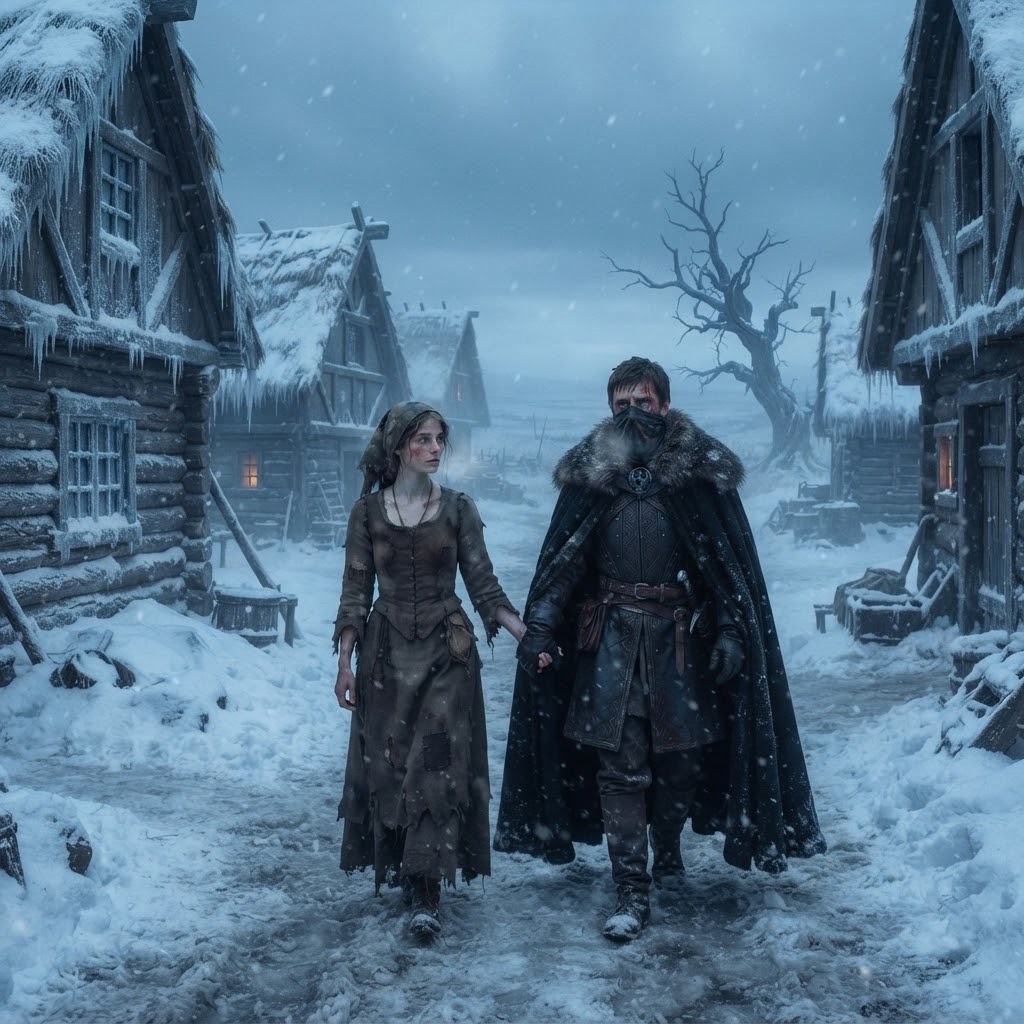
During the silent march, our companions noticed the absence of Georgy: there was no trace of the boy, who had likely fled back into the depths of the taiga to escape a world that could not accept him. The reception in Voltsara, however, was triumphal. At the sight of the gruesome Beastman heads dangling from poles, the local boyar and his militia sergeants welcomed the group with warmth and jubilation, quickly and providentially sweeping away all the tensions and threats of the previous days.
Not only were the citadel gates wide open, but the boyar once more invited the entire party to lodge in the comforts of his own home. A lavish banquet and even the priceless luxury of a hot bath were offered. And it was precisely amid the steam of the tub that Fredrich, after long months of hardship, mud, and solitude, made the intimate acquaintance of Miska, the boyar’s young daughter.
Despite an unbridgeable language barrier that prevented them from exchanging more than a few halting words, nature took its course. Amid complex glances and the desperate search for sincere human contact, the two grew closer, finding temporary comfort against the ugliness of life.
While Fredrich lived this unexpected moment of tenderness, in the main hall Waldemar received the necessary treatment for the nasty wound sustained against the demon. Taking advantage of the quiet, the druid engaged in a long, dark chat with Maximilian. The two men of faith, though divided by dogmas and temples, arrived at a cold and ruthless conclusion: there was no sense in going back to look for Georgy. The beast-boy’s fate was sealed; for the orthodoxy of Ulric and the rigid purity of the Old Faith, that tainted blood represented an irremediable abomination. So as not to formally break the promise made to Piotr, they simply chose not to hunt him down, leaving him inexorably to his fate in the forest.
During their stay, however, a discordant note caught everyone’s eye: the great defensive palisade, whose construction had been laboriously started days earlier, was now completely abandoned. “Look at it…” muttered Drumin with a bitter smirk, pointing to the wooden posts left to rot in the snow. “It is the emblem of this land.”
A land so harsh and ruthless—the companions agreed—seemed to have rooted in the inhabitants of Kislev a visceral fatalism, a gloomy resignation driving them to live solely day-to-day, heedless of tomorrow.
But the real storm broke that very evening during the banquet. With unexpected courage, Fredrich stepped forward and presented the boyar with an audacious proposal: he wanted to take Miska with him to the capital of the Empire.
The local nobleman was caught completely off guard. At first, he burst into a disdainful refusal, red in the face; then, looking around the grand hall and exchanging a long, silent private consultation with his wife, he grasped the reality of the situation. That was the one and only opportunity to offer his daughter an escape from Voltsara and a life far from that wasteland of ice and despair.
The boyar consented to Miska’s departure, but laid down a mandatory condition: “You’re taking her away? So be it. But on one condition: you marry her before you return south.”
With no imperial priests in the village, all eyes fell upon an embarrassed Waldemar. The druid, though troubled by the recent inner dogmas of his faith, consented to officiate a simple, austere yet solemn rite. The frugal ceremony took place that same evening in the flickering torchlight: the destinies of Fredrich and the Kislevite girl were indissolubly joined, formally blessed in the name of Ursun and the Earth.
The following morning, horses were saddled and provisions loaded for the long journey back to the capital. Resting in the leather saddlebags was the official letter drafted the very night before by the boyar, addressed directly to the Prime Minister to confirm the eradication of the mutant threat and invoke an immediate resumption of productive activities.
Maximilian made one last desperate attempt to engage with the local authorities: he tried to strike up a broader discussion about the tragic death of Janna, the urgent need to finish the defensive palisade, and the forgotten fate of Piotr and his son Georgy. But the boyar showed not the slightest interest. He was completely absorbed in the charcoal burners’ accounting, happy only to have gotten rid of the Beastmen and secured his daughter’s future.
Disconsolate, the young priest of Ulric shrugged, clenched his teeth, and mounted his saddle. With a final glance at Voltsara’s weary palisades, the group spurred their horses, leaving behind the freezing cold of Kislev and taking the long road home.
The return journey to the great city of Kislev proved to be an exhausting march, a daily duel against an obstinate, cruel winter that seemed unwilling to loosen its grip on the land. Leaving Voltsara behind, the group spurred their horses along the snowy track bordering the river, well aware that stopping in the open would mean freezing to death within hours.
The caravan’s first stop was the village of Smonya. Here, our travelers found shelter from the lashing wind in a smoky, cramped inn, where the warmth of a wood stove and a bowl of hot soup restored a minimum of vigor to their numbed limbs. Fredrich, caught up in his thoughts and his new, unexpected marital responsibility, huddled close to Miska, who, though disoriented and far from home, sought comfort in the warmth of the young soldier from Ostwald.
Resuming the march at dawn, amid desolate lands and silent woods, the caravan headed resolutely northwest, reaching their next stop at Mirka. The small settlement appeared gloomy and isolated, protected by rough wooden palisades upon which snow piled in heavy drifts. The villagers, distrustful and tested by the relentless season, reluctantly welcomed the wanderers, offering them a bed of straw in the common stable in exchange for a few clinking coins and the promise of bringing no trouble.
The journey continued, following the meandering course of the river westward. The cold was so biting that breath froze instantly on cloak collars, and even the horses struggled to push through deep snow. After another day spent battling biting frost, our companions arrived at Suzdal, a somewhat more structured fortified hamlet offering shelter behind smoke-blackened stone walls. Within the walls of Suzdal, while Waldemar meditated in silence on the revelations of the Old Faith and Maximilian consumed his candles reading old devotional texts, the group granted themselves a few hours of deep sleep before the final, decisive push.
The last stretch of road ran safely toward the final destination. And finally, on the horizon, through a thick freezing fog and the white glare of the plain, the majestic and proud towers of the capital, Kislev, stood out.
Here, after a good three weeks, our companions were not welcomed as heroes, but once again escorted with suspicion into rooms prepared for them in an isolated tower, watched over vigilantly by royal guards. Doubt began to dawn in many minds that perhaps no one truly trusted them. In the evening, confined to rooms that were at least dry and warm, a royal page informed them that Prime Minister Sokolov would summon them for an audience the following morning and delivered a letter to them. The seal was broken, a sign that it had been opened and read… making it painfully obvious to everyone that the level of paranoia and intrigue at the Tsar’s court rivaled that of the imperial courts…
Dear Janna,
I am writing these few lines with a heavy heart, hoping this message reaches you intact and that the Expedition of Light is proceeding under the best auspices. Please let me have a detailed report as soon as possible on your progress, any losses suffered, and the outcome of your research so far. I hope with all my heart that the difficulties encountered have been overcome and that everything is going for the best.
For our part, here in Middenheim, the situation is extremely tense. The Council of Light is pursuing investigations into the plots of the Purple Hand cult with every means at our disposal. Recently, there has been a series of high-profile trials against prominent figures of high society involved in the conspiracy orchestrated by Wasmeir. Among them, I can confirm that Gotthard has been found guilty and burned alive by the Ulrican witch hunters. Unfortunately, from the seized papers and documents, an internal compartmentalization of Tzeentch’s cult emerges at a very high level—a compartmentalization that is making our investigations damnedly complicated and insidious.
The ramifications of this threat seem to extend well beyond our borders. Varian Quintus has decided to travel to Altdorf, firmly convinced that the cult has also taken deep roots in the capital and is plotting to assassinate the Emperor’s son, the potential heir to the throne. Meanwhile, Emil Vugen and I are trying to cross-reference our knowledge and studies to grasp a few more details on what exactly the Hinge of the Ages might be, but for now, we must admit we are completely in the dark.
Pending news from you, I place my total and unconditional trust in you and the members of the expedition. The entire Empire is going through a tumultuous and gloomy period. Furthermore, Heinrich Todbringer is assisting his father behind the scenes, moving cautiously to politically prepare for a possible departure of the Emperor and the consequent, inevitable new imperial election. These are dark times, Janna, and the very future of our world hangs in the balance.
May the light of Aqshy guide and protect you.
With esteem and affection, Albrecht Helseher
Radunatisi in silenzio attorno al corpo immobile di Janna, i compagni stringono i pugni nella disperazione più nera. Maximilian si fa il segno di Ulric sul petto, le dita rigide, mentre osserva con orrore misto a pietà le spoglie della maga.
«Per il Lupo…» sussurra Maximilian con voce rotta, la voce che trema mentre indica il cadavere. «Guardate… Non vi è rimasta alcuna traccia di Aethyr. È… è completamente prosciugata.»
Il corpo di Janna appare tragicamente raggrinzito, quasi semi-mummificato. La lama del Guerriero del Chaos, intrisa del marchio mefitico di Khorne, non si è limitata a ucciderla: ha divorato la sua essenza magica, annullando ogni barlume di vita e prosciugando l’anima stessa della giovane donna.
Paolino è distrutto. L’halfling, segretamente invaghito di lei fin dal loro primo incontro, si lascia cadere in ginocchio accanto al corpo, stringendo la terra fangosa con le mani mentre trattiene a stento le lacrime.
«No… no, Janna, maledizione…» mormora, la voce soffocata dai singhiozzi. «Non doveva finire così… non così…»
Drumin si avvicina lentamente, posando una pesante mano sulla spalla del piccolo compagno, mentre Anatoly e Fredrich aiutano a recuperare le armi e a tagliare le teste degli Uomini Bestia abbattuti, raccogliendo le macabre prove da mostrare al boiardo di Voltsara.
Nel frattempo, Waldemar si consulta a bassa voce con Maximilian. «Dobbiamo seppellire qui gli armamenti e gli artefatti del Chaos,» sentenzia il druido con espressione cupa. «Solo così il loro potere oscuro verrà confinato e intrappolato dalla forza primordiale dell’Antica Fede che permea questa radura sacra.»
Mentre una fossa viene frettolosamente scavata per dare sepoltura a Janna, i manufatti maledetti vengono calati in profondità e coperti di pietre. Dopodiché, i superstiti si fanno da parte, osservando Waldemar dare inizio al rituale di riconsacrazione del circolo di pietre.
Passano dieci minuti di cantilene soffocate e gesti solenni, finché l’aria non si fa improvvisamente frizzante. Un vento caldo, anomalo per quelle latitudini, si leva d’improvviso, gonfiandosi e facendosi via via più violento. In pochi istanti, un acquazzone furioso si scatena sulla radura: una pioggia torrenziale e sferzante che spazza via i corpi degli uomini bestia, lava via il sangue rappreso dalle pietre, disperde i teschi e persino la neve accumulata nei giorni precedenti.
Terrorizzati da quella spaventosa e improvvisa manifestazione della forza della natura, i compagni arretrano di corsa, riparandosi alla rinfusa sotto le fronde basse di un grande abete.
Al centro esatto del cerchio di pietre, investito dalla furia degli elementi, Waldemar erge le braccia al cielo. A pochi passi da lui, un fulmine accecante squarcia la corteccia di un pino secolare, incenerendolo in un lampo di fuoco e fumo. Tutti fanno un salto all’indietro per la paura, ma il druido sembra ormai estraneo a questo mondo: una forza ultraterrena lo pervade al punto che l’uomo, incredibilmente, inizia a lievitare a qualche centimetro di altezza dal suolo, urlando a gran voce verso il cielo tempestoso parole in un idioma antico e sconosciuto.
«Per tutti gli dei…» urla Maximilian, aggrappandosi a un ramo con gli occhi sbarrati dal terrore. «Secondo me qui qualcosa non sta andando per il verso giusto! Non è una benedizione, questo è… è furore puro!»
Proprio mentre la tempesta tocca il suo apice assordante, con un tonfo sordo, Waldemar crolla pesantemente in ginocchio sul terreno fangoso. E, altrettanto improvvisamente com’era iniziata, l’acquazzione cessa nel giro di pochi secondi.
Il silenzio torna a regnare, rotto solo dallo stillicidio dell’acqua. La radura è ora un acquitrino fangoso, ma l’aria è pulita, innaturalmente tersa: non vi è più alcuna traccia visibile o percepibile della corruzione del Chaos.
Anatoly e Fredrich si fanno avanti nell’acqua gelida che arriva fino alle caviglie e porgono le braccia per aiutare il compagno. Waldemar si alza a fatica, il volto segnato da un’espressione stravolta ma profondamente, inquietantemente soddisfatta. Poggia una mano pesante sulla spalla di Fredrich.
«È finita…» mormora Waldemar, con lo sguardo perso nel vuoto. «Ho espiato la mia colpa. Ora capisco chiaramente… ora sono ufficialmente un prete dell’Antica Fede.»
Per il druido, la verità si è dischiusa in tutta la sua magniloquenza e crudeltà. Ai suoi occhi ora è tutto limpido: l’Antica Fede gli ha mostrato che, nella sua essenza più pura, egli è stato troppo legato alle miserie e alle questioni umane. Ma la via indicata dalla natura non contempla compromessi. La purezza primordiale passa attraverso un inesorabile abbandono di tutto ciò che ostacola la naturale evoluzione e il ciclo eterno della vita e della morte.
Mentre si incamminano verso il villaggio, una gelida consapevolezza si insinua nella mente di Waldemar, facendolo rabbrividire più del vento di montagna. Insediamenti umani, la cura delle ferite, lo studio, la lettura, la stessa struttura della società… persino le relazioni affettive e l’amore per il prossimo vengono messi radicalmente in discussione. Per l’Antica Fede, tutto ciò non è che un artificio, un costrutto innaturale che blocca il fluire spontaneo del mondo.
Mentre cammina con lo sguardo fisso nel fango, Waldemar avverte un peso schiacciante sul petto, domandandosi con terrore silenzioso: È davvero una religione sostenibile per il genere umano… o ci sta chiedendo di rinunciare a ciò che ci rende umani?
Durante la marcia marcia silenziosa , i nostri notano l’assenza di Georgy: del ragazzo non c’è traccia, probabilmente fuggito di nuovo nella profondità della taiga per sottrarsi a un mondo che non può accettarlo. L’accoglienza a Voltsara, tuttavia, è trionfale. Alla vista delle teste truculente degli Uomini Bestia appese ai bastoni, il boiardo locale e i suoi sergenti della milizia accolgono il gruppo con calore ed esultanza, passando un rapido e provvidenziale colpo di spugna su tutte le tensioni e le minacce dei giorni precedenti.
Non solo le porte della cittadella sono spalancate, ma il boiardo invita nuovamente l’intero gruppo a dimorare negli agi della sua stessa casa. Vengono offerti un banchetto sfarzoso e persino il lusso inestimabile di un bagno caldo. Ed è proprio tra i vapori della tinozza che Fredrich, dopo lunghi mesi di stenti, fango e solitudine, fa la conoscenza intima di Miska, la giovane figlia del boiardo.
Nonostante un’incolmabile barriera linguistica che impedisce loro di scambiare più di qualche parola stentata, la natura fa il suo corso. Tra sguardi complessi e la ricerca disperata di un contatto umano sincero, i due si avvicinano, trovando un temporaneo conforto alle brutture della vita.
Mentre Fredrich vive questo inatteso momento di tenerezza, nel salone principale Waldemar riceve le cure necessarie per la brutta ferita rimediata contro il demone. Approfittando della quiete, il druido si intrattiene in una lunga e cupa chiacchierata con Maximilian. I due uomini di fede, pur divisi dai dogmi e dai templi, giungono a una fredda e spietata conclusione: non ha senso tornare a cercare Georgy. Il destino del ragazzo-bestia è segnato; per l’ortodossia di Ulric e per la rigida purezza dell’Antica Fede, quel sangue corrotto rappresenta un abominio insanabile. Per non infrangere formalmente la promessa fatta a Piotr, si sceglie semplicemente di non braccarlo, lasciandolo inesorabilmente al proprio destino nella foresta.
Nei giorni di permanenza, tuttavia, una nota stonata salta all’occhio di tutti: la grande palizzata difensiva, i cui lavori erano stati faticosamente avviati giorni prima, è ora completamente abbandonata. «Guardatela…» mormora Drumin con un ghigno amaro, indicando i pali di legno lasciati a marcire nella neve. «È l’emblema di questa terra.»
Una terra così dura e spietata — concordano i compagni — sembra aver radicato negli abitanti di Kislev un fatalismo viscerale, una rassegnazione cupa che li spinge a vivere esclusivamente alla giornata, incuranti del domani.
Ma la vera tempesta scoppia la sera stessa, durante il banchetto. Con un coraggio inaspettato, Fredrich si fa avanti e presenta al boiardo una proposta a dir poco audace: vuole portare con sé Miska nella capitale dell’Impero.
Il nobile locale viene preso totalmente alla sprovveduta. Dapprima sbotta in un rifiuto sdegnato, rosso in volto; poi, guardandosi attorno nella grande sala e scambiandosi un lungo, silenzioso confronto privato con la moglie, comprende la realtà dei fatti. Quella è l’unica, irripetibile occasione per offrire a sua figlia una fuga da Voltsara e una vita lontana da quella landa di ghiaccio e disperazione.
Il boiardo acconsente alla partenza di Miska, ma pone una condizione tassativa: «La porti via con te? E sia. Ma a un patto: la sposi prima che facciate ritorno a sud.»
Non essendoci preti imperiali nel villaggio, gli occhi di tutti cadono su un imbarazzato Waldemar. Il druido, pur turbato dai recenti dogmi interiori della sua fede, acconsente a officiare un rito semplice, scarno ma solenne. La funzione frugale si svolge la sera stessa, alla luce tremolante delle torce: i destini di Fredrich e della ragazza kislevita vengono indissolubilmente uniti, benedetti formalmente nel nome di Ursun e della Terra.
La mattina seguente, i cavalli vengono sellati e le scorte caricate per il lungo viaggio di ritorno verso la capitale. Nelle sacche di cuoio riposa la lettera ufficiale stilata la notte stessa dal boiardo, indirizzata direttamente al primo ministro per confermare l’avvenuta estirpazione della minaccia mutante e invocare un’immediata ripresa delle attività produttive.
Maximilian tenta un ultimo disperato tentativo di confronto con le autorità locali: cerca di intavolare un discorso ampio sulla tragica morte di Janna, sulla necessità impellente di ultimare la palizzata difensiva, sulla sorte dimenticata di Piotr e di suo figlio Georgy. Ma il boiardo non mostra il minimo interesse. È completamente assorto nella contabilità dei carbonai, felice solo di essersi sbarazzato degli Uomini Bestia e di aver sistemato il futuro di sua figlia.
Sconsolato, il giovane prete di Ulric fa spallucce, stringe i denti e monta in sella. Con un ultimo sguardo alle stanche palizzate di Voltsara, il gruppo sprona i cavalli, lasciandosi alle spalle il freddo gelido di Kislev e imboccando la lunga strada di casa.
Il viaggio di ritorno verso la grande città di Kislev si rivela una marcia estenuante, un duello quotidiano contro un inverno ostinato e crudele che sembra non voler mollare la presa sulla terra. Lasciata alle spalle Voltsara, il gruppo sprona i cavalli lungo la pista innevata che costeggia il fiume, ben conscio che fermarsi all’aperto significherebbe morire assiderati in poche ore.
La prima tappa della carovana è il villaggio di Smonya. Qui, i nostri trovano riparo dal vento sferzante in una locanda affumicata e angusta, dove il calore di una stufa a legna e una ciotola di zuppa calda restituiscono un minimo di vigore alle membra intirizzite. Fredrich, stretto nei suoi pensieri e nella nuova e inaspettata responsabilità coniugale, si stringe accanto a Miska, la quale, pur spaesata e lontana dalla sua casa, cerca conforto nel calore del giovane soldato di Ostwald.
Ripresa la marcia all’alba, tra lande desolate e boschi silenti, la carovana punta decisa verso nord-ovest, raggiungendo la sosta successiva a Mirka. Il piccolo insediamento appare cupo e isolato, protetto da palizzate di legno grezzo su cui la neve si accumula in pesanti cortine. I paesani, diffidenti e provati dalla stagione implacabile, accolgono a fatica i viandanti, offrendo loro un giaciglio di paglia nella stalla comune in cambio di qualche moneta sonante e della promessa di non portare guai.
Il tragitto prosegue seguendo il corso serpeggiante del fiume verso ovest. Il freddo è così tagliente che il fiato si ghiaccia all’istante sui colli dei mantelli e persino i cavalli faticano a procedere nella neve alta. Dopo un’altra giornata trascorsa a combattere contro il gelo pungente, i nostri arrivano a Suzdal, un borgo fortificato un po’ più strutturato che offre riparo dietro a muretti di pietra anneriti dal fumo. Tra le mura di Suzdal, mentre Waldemar medita in silenzio sulle rivelazioni dell’Antica Fede e Maximilian consuma le sue candele leggendo vecchi testi devozionali, il gruppo si concede qualche ora di sonno profondo prima dell’ultimo, decisivo sforzo.
L’ultimo tratto della strada corre sicuro verso la meta finale. E finalmente, all’orizzonte, attraverso una fitta nebbia gelida e il riverbero bianco della pianura, si stagliano le maestose e fiere torri della capitale Kislev.
Qui, i nostri, dopo tre settimane abbondanti, non vengono accolti come eroi, ma, nuovamente, vengono scortati con sospetto nelle stanze preparate per loro in una torre isolata, guardati a vista dalle guardie reali. A molti inizia a sorgere il dubbio che effettivamente nessuno si fidi di loro. Alla sera, confinati nelle stanze almeno asciutte e calde, un paggio reale li informa che il primo ministro Sokolov li convocherà ad udienza l’indomani mattina e consegna loro una lettera. Il sigillo risulta rotto, segno che è stata aperta e letta… a tutti pare evidente che il grado di paranoia e sotterfugi alla corte dello Tsar rivaleggi con le corti imperiali..
Cara Janna,
ti scrivo queste poche righe con l’animo sospeso, sperando che questo messaggio ti raggiunga integro e che la Spedizione della Luce stia procedendo sotto i migliori auspici. Ti prego di farmi avere al più presto un resoconto dettagliato sui vostri progressi, sulle eventuali perdite subite e sull’esito delle vostre ricerche finora. Spero con tutto il cuore che le difficoltà incontrate siano state superate e che tutto stia andando per il meglio.
Dal canto nostro, qui a Middenheim, la situazione è estremamente tesa. Il Concilio della Luce sta portando avanti le indagini sulle trame del culto della Mano Purpurea con ogni mezzo a nostra disposizione. Di recente vi è stata una serie di processi eccellenti contro personalità di spicco dell’alta società cittadina, coinvolte nella congiura ordita da Wasmeir. Tra questi, ti confermo che Gotthard è stato giudicato colpevole e arso vivo dai cacciatori di streghe ulrichtiani. Purtroppo, dalle carte e dai documenti sequestrati, emerge una compartimentazione interna al culto di Tzeentch di un livello altissimo, una compartimentazione che sta rendendo le nostre indagini maledettamente complicate e insidiose.
Le ramificazioni di questa minaccia sembrano estendersi ben oltre i nostri confini. Varian Quintus ha deciso di recarsi ad Altdorf, fermamente convinto che il culto abbia messo radici profonde anche nella capitale e che stia tramando per attentare alla vita del figlio dell’Imperatore, il potenziale erede al trono. Nel frattempo, io ed Emil Vugen stiamo tentando di incrociare le nostre conoscenze e i nostri studi per carpire qualche dettaglio in più su cosa possa essere esattamente il Cardine delle Ere, ma al momento dobbiamo ammettere di brancolare nel buio più assoluto.
In attesa di ricevere tue notizie, ripongo la mia totale e incondizionata fiducia in te e nei membri della spedizione. L’Impero intero sta attraversando un periodo tumultuoso e cupo. Per giunta, Heinrich Todbringer sta assistendo suo padre dietro le quinte, muovendosi con cautela per prepararsi politicamente a un’eventuale dipartita dell’Imperatore e alla conseguente, inevitabile nuova elezione imperiale. Sono tempi bui, Janna, e il futuro stesso del nostro mondo è in bilico.
Che la luce di Aqshy ti guidi e ti protegga.
Con stima e affetto,
Albrecht Helseher


Leave a Reply