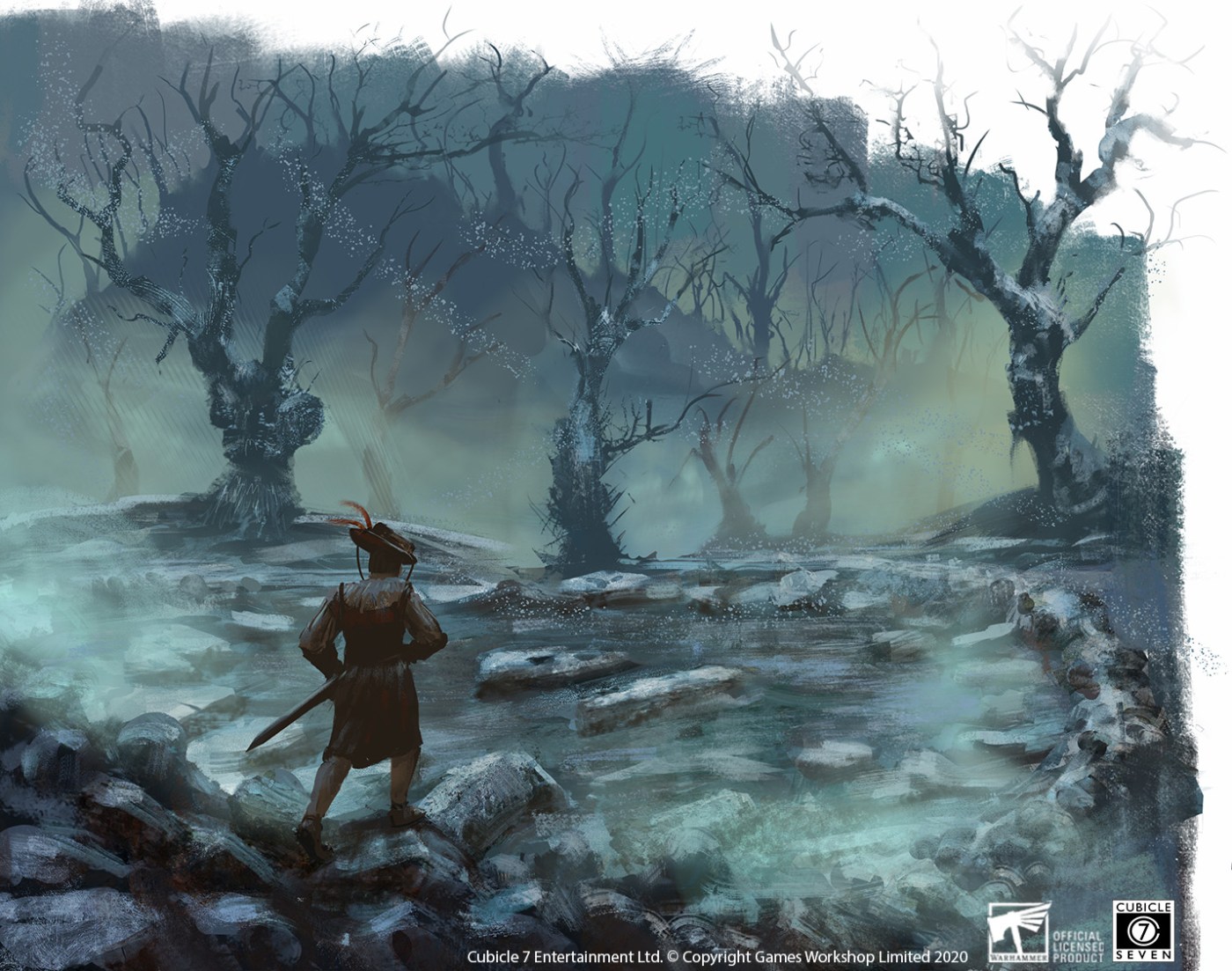
Three long and feverish weeks have passed since the events of the final night of Carnival. Three weeks in which Middenheim has tried to regain its normal rhythm, unaware of how close it came to the abyss. In the streets of the City of the White Wolf, the people are still celebrating the thwarted threat, convinced that the prevented massacre and the salvation of Graf Boris Todbringer are merely another triumph of the city watch. But for those who stepped into the shadows, the truth remains an unbearable burden.
During this time, while in the subterranean chambers the Conclave of Light defined the outlines of the threat, the four companions prepared themselves in the shadows. Arch-Chancellor Wasmeier’s plot was merely the first tile in a terrifying domino effect, and each of them spent these three weeks carrying the weight of that discovery:
Fredrich feels the icy breath of the Aethyr on the back of his neck. The marks of chaotic infection imprinted upon his soul by the Lord of Change are a death sentence with the hourglass already running. The only faint glimmer of hope lies in that name whispered by the tormented remains of Wasmeier’s spirit: the Purifying Fire of Zuvassin. A legend, a forgotten myth, or perhaps the final desperate remedy before mutation or madness consumes him.
Drumin spent his days in the forges, walking with his head low, jaw clenched, and fists tight around the straps of his new tailored plate armor. The idea that Anadil, a Dwarven runesmith, could have fallen into Chaos corruption by creating a tainted Khazalid is an unspeakable dishonor—an indelible stain of shame revealed during the conclave that weighs upon his shoulders like a mountain. If Anadil is truly a traitor to the Dwarven race, his beard must be shorn and his existence erased.
Waldemar and Paolino spent most evenings studying maps and taking basic lessons in the Kislevite language, fully aware that the enemy is not merely a cult lurking in the shadows of a single city, but a vast and incomprehensible entity moving mortal pawns toward a single, dark artifact: the Hinge of Ages. Throughout this entire period of waiting, the only member of the Conclave to visit them regularly with updates was Varian Quintus.
The days before departure were also marked by a significant and painful change: Wolfgang, after much hesitation, decided he had had enough. For the man from Altdorf, the situation was becoming far too massive and visceral, and he valued his life too much to risk it so far from home in frozen, wild lands. Gathering some coin and bidding farewell to his traveling companions, Wolfgang explained that he would head back to the Reikland, to the capital, his home, where he would try to forge a new life far from these months of horror. With hearts heavy with sadness, the remaining members of the group could do nothing but accept and respect their friend’s choice.
Finally, at dawn on the fifteenth day of Erntezeit, every preparation was complete. In the courtyard of the small muster square just a few dozen yards from the North Gate, the iron of the wagons creaked against the damp cobblestones. Baron Heinrich Todbringer stepped forward, wrapped in a heavy cloak lined with wolf fur.
“I offer you no glory,” Heinrich said in a low voice, handing Janna a leather purse heavy with Imperial gold coins and a letter sealed with the Graf’s red wax. “This letter will grant you an audience with Tsar Boris Bokha in Kislev City. Everything you need along the road has been paid for. Purge the lands of Wasmeier’s seed, find this Anadil, and prevent the Hinge of Ages from falling into the hands of the Purple Hand.”
High Wizard Albrecht Helseher touched Fredrich’s shoulder with his thin, veined fingers. “The Aethyr is restless, young Imperial. Beware the shadows of the steppe: where the veil between worlds thins, the call of Tzeentch will grow stronger. Seek Zuvassin, if it truly exists, but never yield to despair.”
At his side, Varian Quintus of the Grau Mantel nodded in silence. Meanwhile, the young neophyte Maximilian clutched the large leather-bound tome titled “The Kislevite Language” to his chest with trembling hands, his eyes shining with faith, proud to represent the Order of Ulric by the decree of the Ar-Ulric. For their part, Fredrich and Paolino shook their heads, genuinely saddened by the boy’s naive exuberance, completely oblivious to the true horrors awaiting them.
The contrast within the group gathered in the courtyard was striking:
Dmitry Vasyakin Bokha sat arrogant and proud atop his northern stallion, looking down on the Imperials with the ill-concealed disdain typical of the Gospodar aristocracy. Beside him stood only Aleksandr Njevsk, ready to escort him on the return journey.
At the rear of the convoy, Deputy High Wizard Janna Ebenhauer finished saddling her horse and securing her alchemical components, exchanging a final knowing glance with Helseher. On the heavy escort wagons driven by the taciturn northern Dwarves Goran and Ulfgar, sitting among tents and supplies, the Ungol guide Anatoly observed the morning sky. With his odd face, sharp eyes, and short straw-yellow hair, Anatoly seemed entirely indifferent to the cold manner in which the two Gospodars treated him, quietly adapting to the situation.
“The wind is shifting,” Anatoly announced aloud, drawing everyone’s attention after the heroes were sent to confer with him to review the four legs of the journey (Salzenmund, Salkalten, Erengrad, and finally Kislev City). “Middenheim behind us is warm, but the road to Salzenmund will be drenched in rain. If we want to reach Salkalten before the great frosts and cross Erengrad, we must move now.”
With a long, deep blast of a horn echoing against the stone walls of the Fauschlag, the northern gates swung open.
The Tsar’s cousin surged forward on his stallion, followed by Aleksandr. The wagons driven by Goran and Ulfgar began to roll with a dull clatter of wooden wheels and chains. Fredrich turned one last time to gaze at the towers of Middenheim standing against the autumn sky, gripping the hilt of his sword: the hunt for the unseen enemy had begun, and with it, his race against time to save his own soul.
The road to Kislev unrolled before them, shrouded in the mists of Nordland.
The first five days of travel toward Salzenmund passed under a relentless, grey, and unforgiving rain that transformed the great Middenheim-Erengrad trade artery into an endless ribbon of dark mud. The convoy moved in a tension-filled silence: water lashed at their faces, soaked their cloaks, and rendered any attempt at conversation along the way useless, forcing everyone to remain lost in their own dark thoughts.
The passage of the gigantic tide of pilgrims, merchants, and performers who had descended upon Middenheim for the Carnival had left its mark along the route. The road was littered with abandoned wagons with broken wheels, piles of rotting refuse, and here and there, even the corpses of unfortunate souls left by the wayside, covered in flies and mud. Despite the strategic importance of the route, there were no roadside inns large enough to accommodate the entire Expedition of Light. The travelers were thus forced to make camp each evening among the ruins of old stone buildings—the very same bare shelters that hundreds of travelers must have used just weeks before.
While the constant presence of the impenetrable Drakwald forest at the edge of the road instilled a vivid sense of unease even in the stoutest hearts, the atmosphere changed radically once night fell. Around the campfires, aided by shelter from the elements and the passage of time, barriers slowly began to melt away. Spirits brightened: Fredrich’s singing talents found an unexpected harmony with Aleksandr’s deep voice, who accompanied the songs by strumming the balalaika, a curious three-stringed instrument with a triangular body. Washed down with the strange, clear, burning liquor offered by the Kislevites—vodka—the atmosphere around the flames rendered the Nordland nights decidedly less dark and desolate.
At dawn on the sixth day, the expedition finally came in sight of the first settlement: the small village of Beeckerhoven. Less a true town and more a disorganized cluster of wooden shacks huddled around the province’s first tollhouse, Janna Ebenhauer rode forward, drew from the purse of gold provided by Baron Todbringer, and quickly paid the toll for the entire convoy, leading them toward the destination of their first leg.
Shortly thereafter, from the sea of salty mist and red spruce trees, the imposing rocky silhouettes upon which Salzenmund stands emerged.
Grim, austere, and ringed by heavy gray stone fortifications, the capital of Nordland dominates the heights near the mouth of the River Salz, right at the northern edge of the treacherous Drakwald forest. It serves as the seat of political power for the province, as well as the primary military and logistical outpost for anyone venturing toward Ostland or the Sea of Claws.
After nearly a week spent in rain and mud, the expedition finally passed through the wrought-iron gates of Salzenmund, ready to find rest in a real bed before tackling the coastal stretch toward Salkalten.
After a night of revelry spent among rivers of ale and the worst prostitutes of Salzenmund’s slums—under the perpetually scandalized, doubtful, and red-faced glare of the young neophyte Maximilian—the expedition set out again at dawn.
Leaving the shelter of the city walls behind, the convoy was greeted by a drastic shift in the weather: a biting, sharp, and ruthless wind blowing from the nearby Sea of Claws sliced through the air and chilled them to the bone. Despite the heavy, warm furs provided by Baron Todbringer prior to departure, Drumin and Paolino, entirely unaccustomed to such harsh northern temperatures, began to show the first clear signs of distress. The Dwarf grumbled constantly under his frozen mustache, while Paolino huddled into his cloak, seeking futile shelter from the northern gale.
The landscape grew increasingly barren and stark. Their route took them through a series of anonymous, gray Nordland towns: Varrel, Skjaldberg, Ockholm, and finally Schuten. Each of these settlements reflected the inhospitable nature of the region and the hardness of its inhabitants—austere people with suspicious glances, little inclined to gossip with strangers.
Along the way, the column crossed paths with a bizarre procession of Manaan pilgrims, barefoot amidst the mud and frost, intent on flagellating themselves and chanting maritime litanies toward the freezing sea. At the sight of the procession, young Maximilian advised caution, suggesting they not stop or pay them much mind, as in religious circles it is well known that “pilgrim” often rhymes with “crackpot.”
It was upon reaching Schuten that the apparent calm of the march was shattered. In a bare waystation inn, several travelers arriving from the east spoke with trembling voices of concrete and recent attacks along the road to Limshof, right at the edge of the somber Forest of Shadows. It seemed that bands of deformed mutants and ruthless brigands had ambushed several caravans in the area.
Unfazed, but with tension rising once more, our heroes pulled their soaked, heavy furs tight around themselves, checked the fastenings of their armor and the weapons at their hips, and resolutely set out along the trail to Limshof, ready to face whatever threat awaited them at the forest’s edge…
Tre lunghe e febbrili settimane sono trascorse dagli eventi dell’ultima notte di Carnevale. Tre settimane in cui Middenheim ha cercato di riprendere il suo ritmo normale, ignara di quanto sia stata vicina al baratro. Per le strade della Città del Lupo Bianco, la gente celebra ancora la sventata minaccia, convinta che il massacro sventato e la salvezza del Graf Boris Todbringer siano soltanto l’ennesimo trionfo della guardia cittadina. Ma per coloro che si sono addentrati nell’ombra, la verità rimane un macigno insostenibile.
In questo lasso di tempo, mentre nelle stanze sotterranee il Conclave della Luce definiva i contorni della minaccia, i quattro compagni si sono preparati nell’ombra. Il complotto dell’arcicancelliere Wasmeier non era che la prima tessera di un domino terrificante, e ognuno di loro ha passato queste tre settimane portando su di sé il peso di quella scoperta:
- Fredrich sente sul collo il soffio gelato dell’Aethyr. I segni dell’infezione caotica impressi nella sua anima dal Signore del Mutamento sono una condanna a morte con la clessidra già avviata. L’unica debole fiammella di speranza risiede in quel nome mormorato dai resti tormentati dello spirito di Wasmeier: il Fuoco Purificatore di Zuvassin. Una leggenda, un mito dimenticato, o forse l’ultimo disperato rimedio prima che la mutazione o la pazzia lo divorino.
- Drumin ha passato i giorni nelle fucine, camminando a testa bassa con la mascella serrata e i pugni stretti attorno alla cinghia della sua nuova armatura di piastre appena fatta su misura. L’idea che Anadil, un forgiarune nano, possa essere caduto nella perversione del Caos creando un Khazalid corrotto è un’onta inconfessabile—un’incancellabile macchia di vergogna emersa durante il conclave, che pesa come una montagna sulle sue spalle. Se Anadil è davvero un traditore della razza nanica, la sua barba deve essere recisa e la sua esistenza cancellata.
- Waldemar e Paolino hanno trascorso la maggior parte delle serate a studiare le carte geografiche e a prendere lezioni base di lingua kislevita, con la consapevolezza che il nemico non è solo un culto annidato nelle ombre di una città, ma un’entità smisurata e inconoscibile che sta muovendo pedine mortali verso un unico, oscuro manufatto: il Cardine delle Ere. Durante tutto questo tempo di attesa, l’unico membro del Conclave a far loro visita con regolarità per aggiornarli è stato Varian Quintus.
I giorni prima della partenza sono stati segnati anche da un grosso e doloroso cambiamento: Wolfgang, dopo molti tentennamenti, ha deciso di averne avuto abbastanza. Per l’uomo di Altdorf, la questione si sta facendo decisamente troppo grande e viscerale, e tiene troppo alla propria vita per andarla a rischiare così lontano da casa, in terre selvagge e congelate. Raccolti un po’ di soldi e salutati i compagni di viaggio, Wolfgang ha spiegato che si dirigerà nuovamente nel Reikland, nella capitale, a casa sua, dove proverà a rifarsi una vita lontana da questi mesi di orrore. Con il cuore gonfio di tristezza, i restanti membri del gruppo non hanno potuto fare altro che accettare e rispettare la scelta dell’amico.
Finalmente, all’alba del quindicesimo giorno di Erntezeit, ogni preparativo è completo. Nel cortile della piccola piazza d’armi a poche decine di metri dal Cancello Nord, il ferro dei carri scricchiola sul selciato umido. Il barone Heinrich Todbringer si fa avanti, avvolto in un pesante mantello foderato di pelliccia di lupo.
“Non vi offro gloria,” dice Heinrich con voce bassa, consegnando a Janna una scarsella di pelle colma di monete d’oro imperiale e una lettera chiusa dal sigillo in ceralacca del Graf. “Questa lettera vi garantirà udienza presso lo Tsar Boris Bokha a Kislev City. Tutto ciò che vi serve lungo la strada è stato pagato. Ripulite le terre dal seme di Wasmeier, trovate questo Anadil e impedite che il Cardine delle Ere cada nelle mani della Mano Purpurea.”
Il Sommo Mago Albrecht Helseher sfiora la spalla di Fredrich con le sue dita magre e venate. “L’Aethyr è agitato, giovane imperiale. Guardati dalle ombre della steppa: là dove il velo tra i mondi si assottiglia, il richiamo di Tzeentch si farà più forte. Cerca Zuvassin, se esiste davvero, ma non cedere mai alla disperazione.”
Al suo fianco, Varian Quintus dei Grau Mantel annuisce in silenzio. Nel frattempo, il giovane neofito Maximilian stringe al petto il grande tomo rilegato in cuoio “La lingua Kislevita” con mani tremanti ma occhi brillanti di fede, orgoglioso di rappresentare l’ordine di Ulric per volontà dell’Ar-Ulric. Da parte loro, Fredrich e Paolino scuotono la testa, sinceramente addolorati per l’ingenua esuberanza dimostrata dal ragazzo, del tutto ignaro dei veri orrori che li attendono.
Il contrasto all’interno del gruppo raccolto nel cortile è stridente:
Dmitry Vasyakin Bokha siede borioso e orgoglioso sul suo stallone del nord, guardando gli imperiali dall’alto in basso con il malcelato disprezzo tipico dell’aristocrazia gospodara. Al suo fianco si trova soltanto Aleksandr Njevsk, pronto a scortarlo nel viaggio di rientro.
In coda al convoglio, la vice sommo mago Janna Ebenhauer finisce di sellare il suo cavallo e fissare i componenti alchemici, scambiando un’ultima occhiata d’intesa con Helseher. Sui pesanti carri di scorta guidati dai taciturni nani del nord Goran e Ulfgar, seduti tra tende ed equipaggiamenti, la guida Ungol Anatoly osserva il cielo mattutino. Con la sua faccia strana, gli occhi affilati e i capelli corti color paglia d’estate, Anatoly sembra del tutto indifferente al modo freddo in cui i due Gospodari lo trattano, adattandosi in silenzio alla situazione.
“Il vento cambia,” dice Anatoly ad alta voce, attirando l’attenzione di tutti dopo che gli eroi sono stati inviati a confrontarsi con lui per ripassare le quattro tappe del tragitto (Salzenmund, Salkalten, Erengrad e infine Kislev City). “Middenheim alle nostre spalle è calda, ma la strada fino a Salzenmund sarà bagnata dalla pioggia. Se vogliamo raggiungere Salkalten prima delle grandi gelate e passare Erengrad, dobbiamo muoverci ora.”
Con un lungo e profondo squillo di corno che rimbomba contro le mura di pietra del Fauschlag, i cancelli nord si spalancano.
Il cugino dello Tsar scatta in avanti sul suo stallone, seguito da Aleksandr. I carri guidati da Goran e Ulfgar cominciano a muoversi con un rumore sordo di ruote in legno e catene. Fredrich si volta un’ultima volta a guardare le torri di Middenheim che si stagliano contro il cielo autunnale, stringendo l’impugnatura della spada: la caccia al nemico invisibile è cominciata, e con essa la sua corsa contro il tempo per salvare la propria anima.
La strada per Kislev si srotola davanti a loro, immersa nelle nebbie del Nordland.
I primi cinque giorni di cammino verso Salzenmund scorrono sotto una pioggia battente, grigia e implacabile, che trasforma la grande arteria commerciale Middenheim-Erengrad in un’infinita striscia di fango scuro. Il convoglio procede in un silenzio carico di tensione: l’acqua sferza i volti, inzuppa le mantelle e rende inutili i tentativi di fare conversazione lungo il tragitto, costringendo ciascuno a rimanere assorto nei propri oscuri pensieri.
Il passaggio della gigantesca marea di pellegrini, mercanti e giostrai che aveva raggiunto Middenheim per il Carnevale ha lasciato il segno lungo la via. La strada è costellata di carri abbandonati con le ruote spezzate, mucchi di rifiuti in decomposizione e, qua e là, persino corpi di sventurati lasciati ai margini del sentiero, coperti di mosche e fango. Nonostante l’importanza strategica della tratta, non vi sono locande di strada sufficientemente ampie da poter accogliere l’intera Spedizione della Luce. I viaggiatori sono così costretti a piantare il campo ogni sera tra i resti di vecchi edifici in pietra diroccati — gli stessi anfratti spogli che centinaia di viaggiatori devono aver usato poche settimane prima.
Se la presenza costante dell’impenetrabile Foresta delle Ombre ai margini della strada infonde un senso di viva inquietudine anche nei cuori più temprati, il clima cambia radicalmente quando scende la notte. Attorno ai fuochi da campo, complici il riparo dalle intemperie e il passare dei giorni, le barriere iniziano lentamente a sciogliersi. Gli animi si armonizzano: le doti canore di Fredrich trovano un’inaspettata sintonia con la voce profonda di Aleksandr, che accompagna i canti strimpellando la balalaika, un curioso strumento a tre corde dalla cassa triangolare. Annaffiata dallo strano liquore trasparente ed ustionante offerto dai kisleviti — la vodka —, l’atmosfera attorno alle fiamme rende le notti del Nordland decisamente meno buie e desolate.
All’alba del sesto giorno, la spedizione giunge finalmente in vista del primo agglomerato urbano: la piccola Beeckerhoven. Più che una vera città, il borgo si presenta come un ammasso disordinato di casupole in legno addossate attorno al primo casello daziario della provincia. Janna Ebenhauer si fa avanti a cavallo, attinge alla borsa dell’oro messa a disposizione dal barone Todbringer e paga rapidamente il pedaggio per l’intero convoglio, guidandolo verso la meta della prima tappa.
Di lì a poco, dal mare di nebbia salmastra ed abeti rossi emergono le imponenti sagome rocciose su cui sorge Salzenmund.
Cupa, austera e cinta da pesanti fortificazioni di pietra grigia, la capitale del Nordland domina le alture vicino alle foci del fiume Salz, proprio ai margini settentrionali dell’insidiosa foresta del Drakwald. È la sede del potere politico della provincia, nonché il principale avamposto militare e logistico per chiunque sia diretto verso l’Ostland o il Mare delle Artigli.
Dopo quasi una settimana passata tra la pioggia e il fango, la spedizione varca finalmente i cancelli in ferro battuto di Salzenmund, pronta a trovare ristoro in un vero letto prima di affrontare il tratto costiero verso Salkalten.
Dopo una notte di bagordi trascorsa tra i fiumi d’ale e le peggiori prostitute dei bassifondi di Salzenmund — sotto lo sguardo costantemente scandalizzato, dubbioso e paonazzo del giovane neofito Maximilian — la spedizione si rimette in marcia all’alba.
Lasciatosi alle spalle il riparo delle mura cittadine, il convoglio viene accolto da un cambiamento drastico del clima: un vento gelido, teso e spietato, proveniente dal vicino Mare delle Artigli, fende l’aria e penetra fin dentro le ossa. Nonostante le pesanti e calde pellicce fornite dal barone Todbringer prima della partenza, Drumin e Paolino, del tutto inabituati alle temperature rigide del settentrione, iniziano a mostrare i primi chiari segni di sofferenza. Il nano mugugna continuamente sotto i baffi congelati, mentre Paolino si stringe nel mantello cercando inutilmente riparo dal soffio del nord.
Il paesaggio si fa sempre più spoglio ed essenziale. L’itinerario li porta ad attraversare una serie di cittadine anonime e grigie del Nordland: Varrel, Skjaldberg, Ockholm e infine Schuten. Ognuno di questi insediamenti riflette l’inospitabilità della regione e la durezza dei suoi abitanti, gente austera, dallo sguardo sospettoso e poco incline ai pettegolezzi con i forestieri.
Lungo il percorso, la colonna incrocia una bizzarra processione di pellegrini di Manaan, a piedi scalzi tra la fango e la brina, intenti ad autoflagellarsi e a cantare litanie marine verso il gelido mare. Alla vista del corteo, il giovane Maximilian raccomanda prudenza al gruppo e suggerisce di non fermarsi né dar loro troppa retta, poiché nell’ambiente religioso è risaputo che spesso “pellegrino” fa rima con “svitato”.
È giunti a Schuten che la calma apparente della marcia viene scossa. In una spoglia locanda di passaggio, alcuni viandanti proveniente da est raccontano con voce tremante di concrete e recenti aggressioni avvenute lungo la via per Limshof, proprio sul limitare della cupa Foresta delle Ombre. Pare che bande di mutanti deformi e spietati briganti abbiano preso d’assalto diverse carovane nell’area.
Senza scomporsi, ma con la tensione che torna a salire, i nostri si stringono le fradice e pesanti pellicce addosso, controllano l’allacciatura delle armature e le armi ai fianchi, e si rimettono con decisione in cammino lungo il sentiero per Limshof, pronti ad affrontare la minaccia che li attende ai margini del bosco..


Leave a Reply