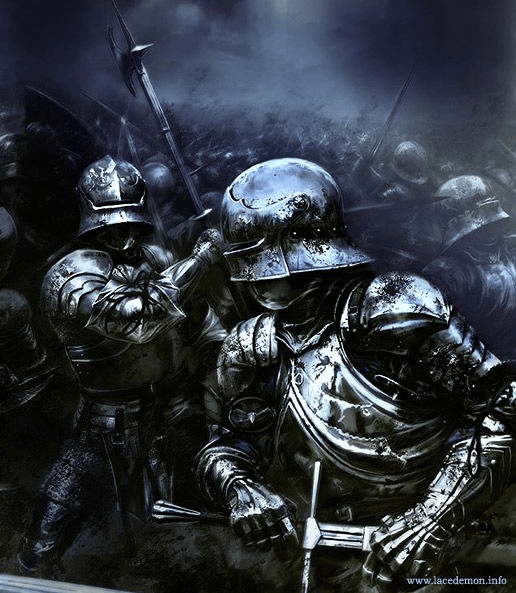
The days preceding the departure are charged with an electric tension, almost tangible in the crisp air of the protected forest. The group dedicates every hour to the meticulous preparation of their equipment: blades are sharpened into razors, armor is oiled to prevent even the slightest creak, and Waldemar works feverishly with mortar and pestle, distilling healing herbs and potent salves to counter corruption. Not far away, the Black Arrows bid farewell to their loved ones with the solemnity of those who know they may never return, while Sigrid imparts final orders with the coldness of a veteran general.

During one of these nights, Wolfgang, having retreated in prayer to an isolated clearing, is overwhelmed by a vision: through the mists, a monumental black horse manifests, its eyes burning with a feral light. The druid follows it in a dream until he glimpses the imposing silhouette of Castle Wittgenstein; at the sight of the mansion, the steed neighs with such violence that it shakes the very foundations of the earth, kicking furiously against the cursed air. Wolfgang wakes up drenched in sweat, but with an unshakeable certainty: nature itself is screaming its condemnation, demanding the total destruction of the fortress and the warpstone that corrupts its womb.

On the third day, after a frugal breakfast consumed in deathly silence, destiny sets out on its march. It is Hilda who leads them, for she knows every nook and cranny of those hills. Above them, the sky is a leaden ceiling that seems intent on crushing the world; strange black clouds, like dense smoke, spiral directly above the castle towers. An infernal wind begins to blow from the mountains, bringing with it the scent of ozone and imminent rain.

"At the signal, we unleash hell," Fredrich whispers, referring to the flaming arrow that must pierce the darkness to signal the assault of the Black Arrows. The two groups part ways.

After two hours of forced marching through the sickly forest, Hilda stops before a fissure in the rock. The entrance is a fetid wound spewing a stench of death so thick it is suffocating. Only Waldemar’s potent balsamic ointments, carefully smeared under their nostrils, allow the group to avoid succumbing to bouts of vomiting by numbing their sense of smell. Hilda greets them with a solemn nod and vanishes among the trees to rejoin the resistance.

Gripping their weapons, Fredrich leads the group into the bowels of the mountain.

The interior immediately reveals itself for what it once was: an abandoned old mine. Rotting and broken wooden beams precariously support irregular ceilings from which cobwebs hang like funeral veils. Rusted carts lie overturned among piles of debris and old tools corroded by time. Drumin, stroking the rock, notices with a start the unmistakable marks of dwarven chisels: "Here the hammers of my fathers once sang," he grumbles, "but why they dug beneath this pile of misery eludes me, and I do not like it at all."

The group decides to follow a thin trickle of water running along the stone floor. As they advance into the darkness pierced only by torches, the tunnel grows steeper. But then the impossible happens. The water, which now reaches their ankles, begins to respond to laws that do not belong to this world: instead of flowing downward, the stream forcefully rises up the steps the group is climbing, defying gravity with a sinister murmur.

Waldemar and Paolino, pale as rags, frantically trace the sign of the hammer on their chests. "Chaos is distorting reality itself," the druid whispers with a trembling voice.

Finally, they reach a vast underground lake. Drumin hypothesizes it is a massive leak that has flooded an old extraction chamber. The water is black, oily, covered by a slimy patina that reflects the torchlight in a distorted way, looking like petroleum mixed with blood. Numerous white bones stand out against the dark mud of the shores: human skulls and animal remains, all piled up unnaturally. It is the lair of a predator.

Fredrich and Paolino try throwing rations to lure "the thing" out, but the water's surface remains motionless, save for a few large, greasy bubbles that burst on the surface with a disgusting sound. Fredrich decides on a desperate move: he ties a meat ration to a rope and scatters a few drops of his own blood on it, casting it like bait into the oily darkness.

For long moments, nothing happens. Then, the rope snaps taut.

In an instant, the tension becomes unbearable. "Pull! All together!" Fredrich yells. Just as the rope is about to break, the lake explodes in a maelstrom of black foam. From the waters emerge enormous pinkish tentacles, covered in pulsating suckers and purulent sores, lashing out at the heroes.

The skirmish is brief and brutal. Wolfgang and Drumin cleave through the air with their weapons, lopping off the slimy extremities that try to entwine them. The creature’s blood, black as pitch and corrosive, stains the water while an underwater shriek makes the cavern walls vibrate.

"Now or never!" Paolino cries, pointing to the opposite shore.

Without looking back, the group plunges into the black water up to their knees, crossing the lake with hearts in their throats as the remaining tentacles lash the surface behind them. They reach the far shore where the rock gives way to solid dwarven masonry, a sign that the upper structure is near.

Panting and smeared with grime, they climb a narrow spiral staircase that seems to never end, until they find themselves before a heavy wooden trapdoor. From above, muffled by the massive wood, come the familiar and blessed sounds of a real storm: the roar of thunder, the whistle of the wind, and the violent lashing of rain.

They have arrived. Castle Wittgenstein awaits them.

Before them opens the outer court, a place that retains only a distorted and terrifying echo of the Wittgensteins' noble glory. The space is vast, enclosed by cyclopean walls that seem to ooze a blackish humor under the pouring rain. In the center of the parade ground, there are no soldiers in formation; instead, a squalid and labyrinthine shantytown has arisen. It is a chaotic jumble of hovels made of salvaged wood, rotted burlap, and rusted sheet metal, grown like a cancer upon the uneven cobblestones.

Among the puddles of yellowish mud and piles of waste, sparse figures of beggars move slowly. They are the inhabitants of the village, or what remains of them: human shadows wrapped in filthy rags, trudging with hunched backs under the weight of the rain and despair. Someone scrounges through the debris, others stare into the void with dull eyes; no one looks up at the group.

To the right, the castle structure becomes more massive and functional. Thanks to Fredrich’s military experience, his gaze immediately identifies the primary objective: the gatehouse.

"Down there," Fredrich whispers, pointing to the imposing dark stone structure overlooking the main gate. "The walls there are thicker and the loopholes are manned. That’s where they control the portcullis winch. If we want to let the Black Arrows in, we must take that gatehouse and throw the doors open."

From the inside, the view of the gate is oppressive: enormous oak doors reinforced with bands of corroded iron that seem to seal the world of the living away from that hell. Above them, the battlements are shrouded in mist and appear deserted.

In the distance, beyond the shantytown, the group’s gaze is caught by an even more sinister vision: the castle's inner court, perched on a higher level of rock, connected by a drawbridge that looks like a wooden tongue suspended over the abyss. Up there, amidst the black clouds charged with chaotic electricity, Etelka’s central tower stands like an accusing finger toward the sky.

Wolfgang (gripping the hilt of his sword): "We’re in. But between us and that gate is a nest of armored vipers."

Drumin: "And time is not on our side. That storm up there promises nothing good. We must move now, before someone realizes the guests have arrived from the cellar."

Fredrich: "Wolfgang, stay in the shadows between the shacks. Waldemar, Paolino, be ready. We must reach the gatehouse without being noticed by the wretches... if one of them screams, we’re finished."

Wolfgang and Drumin move like specters through the long shadows of the stable, where the Von Wittgensteins' master carriage—a mass of black wood, rotted velvet, and blackened silver trimmings—shimmers sinisterly under the leaking rain. Paolino follows at a short distance, short of breath but light of foot. In a few moments, the trio reaches the heavy oak door leading to the ground floor of the gatehouse.

Above them, Fredrich and Waldemar act with the precision of those who have no time to lose. After luring away a handful of beggars with a piece of dried meat thrown into the mud—sparking a silent and desperate brawl among the mendicants—the two quickly climb the stone stairs leading to the ramparts. Fredrich throws a few stones against the door of the upper tower, hoping to draw some guards out, but no sound comes from within, only the whistle of the wind through the loopholes.

On the ground floor, Drumin waits no longer. "Move aside," he grunts. He puts his weight into his massive legs and delivers a powerful kick to the door of the winch room. The wood groans but does not yield on the first strike, giving the guards inside time to draw their swords. At the second impact, the lock shatters and the door slams against the wall.

The ensuing clash is a whirlwind of claustrophobic violence.

The space is tiny, dominated by the large gears and greased chains of the portcullis. Two guards in rusted chainmail plant themselves before the entrances, blocking Drumin on one side and Fredrich—who has since rushed down from the upper stairs—on the other. The sergeant, seeing the determination in the "visitors'" eyes, wastes no time on honor: he exchanges a quick glance with a subordinate, and the two vanish through a side door leading to the lower levels on the other side of the gatehouse.

"Cowards!" Drumin roars. The guard in front of him tries a low thrust, but the dwarf parries the blade with his shield and, with a fluid and brutal movement, smashes the guard's kneecap with his hammer. As the soldier collapses, the finishing blow comes swiftly: a descending hammer strike that crushes the helmet and the skull beneath with a dull thud of crumpled metal.

On the other side of the room, Fredrich fights with lethal grace. He uses the recoil of his blade against the guard's to close the distance; in such a narrow space, the enemy's longsword is an encumbrance. Fredrich grabs the soldier by the gorget and thrusts the point of his own blade directly into the visor's slit. The guard emits a muffled gurgle, while the stench of rotting flesh suddenly grows more intense.

The last remaining guard, seeing his companions down, seems animated by some insane programming rather than courage. He attempts a desperate slash at Drumin, but the dwarf is a rock. Parrying the blow, Drumin seizes the soldier's arm and hurls him against the winch mechanism. Before the enemy can recover, Drumin’s hammer falls one last time, ending his resistance with definitive violence.

Silence returns to the room, broken only by the dripping of dark blood on the floor and the metallic rattle of the chains.

Fredrich (wiping his blade on the rags of one of the guards): "The sergeant got away. He’ll raise the alarm if we don’t hurry. Wolfgang, Drumin, to the winches! We must raise this cursed portcullis before reinforcements arrive from the inner castle."

Waldemar (looking at the bodies with revulsion): "Do you smell that? It’s not just death... it’s as if they rotted inside their armor long before we even got here."

Paolino (peering out the window facing the outside): "Hurry!"

After ensuring the other guard tower was also clear, the group throws themselves at the two enormous oak winches. Under the strain of tensed muscles, the mechanism begins to turn with a harrowing metallic screech that tears through the sound of the rain. With agonizing slowness, the heavy iron portcullis begins to rise, inch by inch.

Meanwhile, Paolino, having quickly descended to check the perimeter for any flanking maneuvers, pops back in, face pale: "Two guards! They ran into the stone building on the left! They’re raising the alarm!"

There is no more time for caution. The group rushes down the stairs at breakneck speed, reaching the ground floor. Joining forces in a single, desperate effort, they lift the massive locking beam and fling open the heavy wooden gates. At the very moment the doors swing open, the door of the stone barracks across the courtyard is literally kicked off its hinges. A large squad of iron guards pours into the square, led by a figure Fredrich recognizes with horror: Sergeant Kratz.

Fredrich nearly faints: "It’s impossible... I cracked his skull at the inn! How can he be standing?" But there is no time for questions. From the forest, like a dark wave, the Black Arrows emerge. Sigrid is at the front, sword drawn, with a battle cry that defies the thunder.

The impact is brutal. A volley of heavy crossbow bolts fired by Kratz’s guards cuts down the first outlaws to cross the threshold, but the charge does not stop. In seconds, the center of the parade ground turns into an open-air slaughterhouse. Under a torrential rain that turns the pavement into a trap of mud and blood, the melee becomes chaotic: the Black Arrows fight with the desperation of those who have nothing to lose, using axes and knives against the rusted but relentless armor of the guards, who respond with methodical and inhuman slashes.

"We must get to the central gatehouse!" Fredrich yells over the din of weapons. "If they raise those drawbridges, we’ll be trapped out here!"

The group sprints at full speed, dodging the individual duels infesting the square, but their run is abruptly cut short. From a side tower, a second contingent of guards emerges, led by a colossus in full plate armor whose face is hidden by a featureless iron mask: the dreaded Lieutenant Doppler. Beside him, Kratz snarls orders with a voice that sounds like ground gravel.

The final battle of the courtyard begins. Wolfgang lunges at Kratz, seeking to finish what Fredrich had started, while Drumin faces the imposing bulk of Doppler. The rest of the group tries to hold off the guards escorting the two officers.

The fight is fierce. Wolfgang takes several hits, but thanks to the providential intervention of Paolino, who distracts the sergeant with quick and pestering movements, he finally finds an opening in Kratz’s guard, piercing his throat and ending his unholy existence—this time for good.

On the other side, Lieutenant Doppler is a war machine. With a fluid and devastating motion, he swings his heavy flail: the spiked ball strikes Drumin full in the face. The dwarf collapses like a sack of stones, unconscious. Seeing their companion fall, the group closes in on the masked colossus. It is Waldemar who performs the feat: seizing a moment of imbalance from Doppler, the young druid thrusts his spear with surgical precision into a small gap in the mail near the throat. The tip sinks deep; Doppler emits a metallic gurgle and crashes to the ground, motionless.

Exhausted, drenched in rain, and covered in blood, the heroes recover Drumin's body. As they drag him toward the central gatehouse, the situation in the parade ground shifts: the melee between the Black Arrows and the Wittgensteins reaches a bloody stalemate. The remaining guards barricade themselves inside the stone barracks, turning it into a fort, while the outlaws retreat into nearby buildings to seek cover.

Among the rebels, the group sees with anguish Sigrid, wounded and bleeding, carried away in the arms of her companions. In a few moments, the parade ground becomes a deadly "no-man's-land": crossbow bolts whistle from the barrack loopholes, to which the Black Arrows respond with swarms of arrows.

Having taken refuge inside the gatehouse nearest to the one separating the two courtyards, the companions finally have a moment to catch their breath. The smell of blood mixes with that of wet iron and mud. They are all wounded: Fredrich's breath is shallow from a cracked rib, Drumin wipes blood that still blurs his vision, and Waldemar's hands shake as he tries to plug the deepest wounds.

"We must move," Drumin hisses, tightening an improvised bandage. "If we stay here, we'll bleed out or be crushed."

The situation is dramatic, but one last, desperate effort is needed. The central gatehouse towers before them, a monolith of black stone governing access to the inner court. Gathering their last scraps of energy, the group lunges out, aiming for the drawbridge.

As soon as their boots touch the waterlogged wood, a metallic moan pierces the air: someone inside is operating the winches. The bridge begins to rise.

"Quick! Run!" Fredrich screams.

As they climb up the increasingly steep incline, a rain of crossbow bolts hisses from the side loopholes. Steel tips chip the wood and bounce off armor. With the strength of desperation, they reach the upper gallery before the bridge closes completely and hurl themselves against the reinforced door. Drumin and Wolfgang break it down with a coordinated shoulder charge, but the welcome is brutal.

Wolfgang, the first to cross the threshold, is hit by two crossbow bolts fired at point-blank range. One pierces his shoulder, the other sinks into the leather of his jerkin. The man staggers, letting out a stifled groan.

Before them, in the gloom of the winch room, stands a horror that freezes the blood. It is not men defending this post, but skeletons. In the center, wrapped in the remains of ceremonial armor and with a cloak reduced to dusty tatters, sits the infamous Captain Hegel. His empty sockets glow with a cold, malevolent light as he grips a rusted sword.

Contemptuous of danger and driven by an adrenaline that defies his stature, Paolino breaks the deadlock. With a sharp cry, the halfling lunges at the first skeleton, striking the dry bones with his blade. Waldemar and Fredrich follow immediately, driven by the need to survive.

However, the terror of the supernatural freezes the other two. Drumin hesitates, gripping his hammer with white knuckles, while Wolfgang, wounded and shaken by the blasphemous sight of Hegel, remains paralyzed by fear. To the druid, these beings are the antithesis of all that is natural: empty shells animated by a perverse will.

The clash is brief but of unheard-of ferocity. Hegel moves with unnatural speed; his skeletal figure is barely distinguishable from the others amidst the shadows and torch smoke. He tries to strike Waldemar with a lethal thrust, but the young druid, guided by pure survival instinct, parries the blow and responds with a series of rapid slashes. Waldemar's blade finds a gap between the undead’s ribs, shattering Hegel's spine, who collapses into an inert heap of bones and old metal.

Seeing their captain fall, the other skeletons also seem to lose vigor. Drumin finally shakes his head, roars an insult in Khazalid, and joins the fray, crushing the remains of the enemies with heavy blows.

Finally, silence falls. The only sound is the ticking of the rain and the hum of the stationary winches.

Fredrich throws himself to the ground, panting, with his back against the cold wall. They are exhausted. Through one of the loopholes, he looks toward the outer court: the situation is a bloody stalemate. The guards are locked in the barracks, besieged by the Black Arrows, but neither side has the strength to deliver the final blow.

On the other side, however, the inner court looms. Black, silent, and shrouded in a mist that seems to possess a life of its own. Castle Wittgenstein now appears as a massive, diseased organism waiting to devour them.

Drumin and Waldemar try to treat the wounds as best they can. There is no time for surgery: they apply bandages soaked in Valerian extract to dull the searing pain, but they know it is only a palliative. They must focus on the will to end this battle, whatever the cost.

Just as Waldemar is tightening the bandage on Wolfgang's shoulder, a deep roar rises from the depths of the mountain. The floor vibrates, the winch chains swing violently, and the castle shakes to its foundations, as if a giant were tossing in its sleep.

Wolfgang looks up, his pale face a mirror of resignation. "And now?" he asks in a hoarse, dejected voice. "By Sigmar, what is going to happen next?"

From the depths, a dull rumble seems to answer, promising that the worst is yet to come.

------------------
I giorni che precedono la partenza sono carichi di una tensione elettrica, quasi tangibile nell’aria frizzante della foresta protetta. Il gruppo dedica ogni ora alla preparazione certosina dell’equipaggiamento: le lame vengono affilate fino a diventare rasoi, le armature oliate per non emettere cigolii e Waldemar lavora febbrilmente con mortaio e pestello, distillando erbe curative e potenti unguenti per contrastare la corruzione. Poco distante, le Frecce Nere salutano i propri cari con la solennità di chi sa che potrebbe non tornare, mentre Sigrid impartisce gli ultimi ordini con la freddezza di un generale veterano.
Proprio durante una di queste notti, Wolfgang, ritiratosi in preghiera in una radura isolata, viene travolto da una visione: tra le nebbie si manifesta un cavallo nero monumentale, i cui occhi ardono di una luce ferale. Il druido lo segue in sogno fino a scorgere l’imponente sagoma di Castel Wittgestein; alla vista della magione, il destriero nitrisce con una violenza tale da far tremare le fondamenta della terra, scalciando furiosamente contro l’aria maledetta. Wolfgang si risveglia madido di sudore, ma con una certezza incrollabile: la natura stessa sta urlando la sua condanna, esigendo la distruzione totale della fortezza e del meteorite che ne corrompe il grembo.
Al terzo giorno, dopo una colazione frugale consumata in un silenzio tombale, il destino si mette in marcia. È Hilda a guidarli, poiché conosce ogni anfratto di quelle colline. Sopra di loro, il cielo è un soffitto plumbeo che sembra voler schiacciare il mondo; strane nuvole nere, simili a fumo denso, si attorcigliano a spirale proprio sopra le torri del castello. Un vento infernale inizia a soffiare dalle montagne, portando con sé l’odore di ozono e pioggia imminente.
“Al segnale, scateniamo l’inferno,” sussurra Fredrich, riferendosi alla freccia infuocata che dovrà squarciare l’oscurità per dare il via all’assalto delle Frecce Nere. I due gruppi si separano.
Dopo due ore di marcia forzata attraverso la foresta malata, Hilda si ferma davanti a una fenditura nella roccia. L’ingresso è una ferita fetida che sputa un odore di morte così denso da risultare soffocante. Solo i forti unguenti balsamici di Waldemar, spalmati con cura sotto le narici, permettono al gruppo di non soccombere ai conati di vomito, anestetizzando l’olfatto. Hilda li saluta con un cenno solenne e svanisce tra gli alberi per ricongiungersi alla resistenza.
Stringendo le armi, Fredrich guida il gruppo nel ventre della montagna.
L’interno si rivela subito per ciò che era un tempo: una vecchia miniera abbandonata. Travi di legno marce e spezzate sostengono a fatica soffitti irregolari da cui pendono ragnatele spesse come veli funebri. Carrelli arrugginiti giacciono rovesciati tra cumuli di detriti e vecchi attrezzi corrosi dal tempo. Drumin, accarezzando la roccia, nota con un sussulto segni inconfondibili di scalpelli nanici: “Qui un tempo cantavano i martelli dei miei padri,” brontola, “ma il motivo per cui abbiano scavato sotto questo cumulo di maledizione mi sfugge, e la cosa non mi piace affatto.”
Il gruppo decide di seguire un sottile rivolo d’acqua che scorre sul pavimento di pietra. Man mano che avanzano nell’oscurità squarciata solo dalle torce, la galleria si fa più ripida. Ma poi accade l’impossibile. L’acqua, che ora arriva fino alle caviglie, inizia a rispondere a leggi che non appartengono a questo mondo: invece di scorrere verso il basso, il flusso risale con forza i gradini che il gruppo sta salendo, sfidando la gravità con un mormorio sinistro.
Waldemar e Paolino, pallidi come cenci, tracciano freneticamente il segno del martello sul petto. “Il Chaos sta distorcendo la realtà stessa,” sussurra il druido con voce tremante.
Infine, arrivano a un vasto lago sotterraneo. Drumin ipotizza che si tratti di una perdita massiccia che ha allagato una vecchia camera di estrazione. L’acqua è nera, oleosa, coperta da una patina limacciosa che riflette la luce delle torce in modo distorto, come se fosse petrolio misto a sangue. Numerose ossa bianche spiccano contro il fango scuro delle rive: teschi umani e resti di animali, tutti ammucchiati in modo innaturale. È la tana di un predatore.
Fredrich e Paolino provano a lanciare delle razioni per attirare “la cosa”, ma lo specchio d’acqua rimane immobile, se non per alcune bolle grosse e viscide che scoppiano in superficie con un suono disgustoso. Fredrich decide per un gesto estremo: lega una razione di carne a una corda e vi sparge sopra alcune gocce del proprio sangue, lanciandola come un’esca nel buio oleoso.
Per lunghi istanti non accade nulla. Poi, la corda scatta.
In un attimo la tensione diventa insostenibile. “Tirate! Tutti insieme!” urla Fredrich. Quando la corda è sul punto di spezzarsi, il lago esplode in un tripudio di schiuma nera. Dalle acque emergono enormi tentacoli rosacei, coperti di ventose pulsanti e piaghe purulente, che si abbattono verso gli eroi.
La mischia è breve e brutale. Wolfgang e Drumin fendono l’aria con le loro armi, mozzando le estremità viscide che cercano di avvilupparli. Il sangue della creatura, nero come la pece e corrosivo, tinge l’acqua mentre un grido subacqueo fa vibrare le pareti della caverna.
“O adesso o mai più!” grida Paolino indicando la riva opposta.
Senza guardarsi indietro, il gruppo si getta nell’acqua nera che arriva alle ginocchia, attraversando il lago con il cuore in gola mentre i tentacoli rimasti sferzano la superficie alle loro spalle. Raggiungono la riva opposta dove la roccia lascia il posto a una solida muratura nanica, segno che la struttura superiore è ormai vicina.
Ansimanti e sporchi di melma, risalgono una stretta scalinata a chiocciola che sembra non finire mai, finché non si ritrovano davanti a una pesante botola di legno. Da sopra, attutiti dal legno massiccio, giungono i suoni familiari e benedetti di una tempesta reale: il fragore dei tuoni, il fischio del vento e lo scrosciare violento della pioggia.
Sono arrivati. Castel Wittgestein li aspetta.
Davanti a loro si spalanca la corte esterna, un luogo che della gloria nobiliare dei Wittgenstein conserva solo un’eco distorta e spaventosa.
Lo spazio è vasto, racchiuso da mura ciclopiche che sembrano trasudare un umore nerastro sotto la pioggia battente. Al centro della piazza d’armi non si schierano soldati in parata, ma sorge una squallida e labirintica baraccopoli. È un ammasso caotico di tuguri fatti di legno di recupero, tele di sacco marcite e lamiere arrugginite, cresciuto come un cancro sul selciato sconnesso.
Tra le pozze di fango giallastro e i cumuli di rifiuti, sparute figure di cenciosi si muovono lentamente. Sono gli abitanti del villaggio, o ciò che ne resta: ombre umane avvolte in stracci lerci che arrancano con la schiena curva sotto il peso della pioggia e della disperazione. Qualcuno fruga tra i detriti, altri fissano il vuoto con occhi spenti; nessuno alza lo sguardo verso il gruppo.
Sulla destra, la struttura del castello si fa più massiccia e funzionale. Grazie all’esperienza militare di Fredrich, il suo sguardo individua immediatamente l’obiettivo primario: il corpo di guardia.
“Laggiù,” sussurra Fredrich, indicando l’imponente struttura in pietra scura che sovrasta il cancello principale. “Le mura lì sono più spesse e le feritoie sono presidiate. È da quel posto che controllano l’argano della saracinesca. Se vogliamo far entrare le Frecce Nere, dobbiamo prendere quel corpo di guardia e spalancare il portone.”
Dall’interno, la vista del cancello è opprimente: enormi battenti in quercia rinforzati da fasce di ferro corroso che sembrano sigillare il mondo dei vivi fuori da quell’inferno. Sopra di loro, il camminamento di ronda è avvolto dalla nebbia e sembra deserto.
In lontananza, oltre la baraccopoli, lo sguardo del gruppo viene catturato da una visione ancora più sinistra: la corte interna del castello, arroccata su un livello superiore della roccia, collegata da un ponte levatoio che sembra una lingua di legno sospesa sull’abisso. Lassù, tra le nuvole nere cariche di elettricità caotica, la torre centrale di Etelka svetta come un dito accusatorio verso il cielo.
Wolfgang: (Stringendo l’impugnatura della spada) “Siamo dentro. Ma tra noi e quel cancello c’è un nido di vipere in armatura.”
Drumin: “E il tempo non gioca a nostro favore. Quella tempesta lassù non promette nulla di buono. Dobbiamo muoverci ora, prima che qualcuno si accorga che gli ospiti sono arrivati dalla cantina.”
Fredrich: “Wolfgang, rimani nell’ombra tra le baracche. Waldemar, Paolino, state pronti. Dobbiamo raggiungere il corpo di guardia senza farci notare dai cenciosi… se uno di loro urla, siamo finiti.”
Wolfgang e Drumin si muovono come spettri tra le ombre lunghe della scuderia, dove la carrozza padronale dei Von Wittgenstein – un ammasso di legno nero, velluto marcio e fregi d’argento annerito – brilla sinistramente sotto le infiltrazioni della pioggia. Paolino li segue a breve distanza, il fiato corto ma i passi leggeri. In pochi istanti, il terzetto raggiunge la pesante porta di quercia che conduce al piano terra del corpo di guardia.
Sopra di loro, Fredrich e Waldemar agiscono con la precisione di chi non ha tempo da perdere. Dopo aver allontanato un manipolo di cenciosi con un pezzo di carne secca lanciato nel fango – scatenando tra i mendicanti una rissa silenziosa e disperata – i due salgono rapidi le scale di pietra che portano al camminamento di ronda. Fredrich lancia alcuni sassi contro la porta della torre superiore, sperando di attirare qualche guardia allo scoperto, ma dall’interno non giunge alcun suono, solo il fischio del vento tra le feritoie.
Al piano terra, Drumin non aspetta oltre. “Spostatevi,” grugnisce. Carica il peso sulle gambe massicce e sferra un calcio poderoso alla porta della stanza degli argani. Il legno geme ma non cede al primo colpo, dando il tempo alle guardie all’interno di sguainare le spade. Al secondo impatto, la serratura schiatta e la porta sbatte contro la parete.
Lo scontro che segue è un turbine di violenza claustrofobica.
Lo spazio è minuscolo, dominato dalle grandi ruote dentate e dalle catene unte della saracinesca. Due guardie in maglia di ferro arrugginita si piantano davanti agli ingressi, bloccando Drumin da una parte e Fredrich – che nel frattempo è piombato giù dalle scale superiori – dall’altra. Il sergente, vedendo la determinazione negli occhi dei “visitatori”, non perde tempo in onore: scambia uno sguardo rapido con un sottoposto e i due svaniscono attraverso una porta laterale che conduce ai livelli inferiori,dall’altra parte del corpo di guardia.
“Vigliacchi!” ruggisce Drumin. La guardia davanti a lui prova un affondo basso, ma il nano devia la lama con lo scudo e, con un movimento fluido e brutale, gli fracassa la rotula con il martello. Mentre il soldato crolla, il colpo di grazia arriva rapido: una martellata discendente che schiaccia l’elmo e il cranio sottostante con un suono sordo di metallo accartocciato.
Dall’altro lato della stanza, Fredrich combatte con una grazia letale. Sfrutta il rimbalzo della sua lama contro quella della guardia per accorciare le distanze; in uno spazio così stretto, la spada lunga del nemico è un impaccio. Fredrich afferra il soldato per la gorgiera e conficca la punta della propria lama direttamente nella fessura della celata. La guardia emette un gorgoglio strozzato, mentre quel puzzo di carne putrida si fa improvvisamente più intenso.
L’ultima guardia rimasta, vedendo i compagni a terra, sembra quasi animata da una folle programmazione piuttosto che da coraggio. Tenta di colpire Drumin con un fendente disperato, ma il nano è una roccia. Parato il colpo, Drumin afferra il braccio del soldato e lo scaglia contro il meccanismo dell’argano. Prima che il nemico possa riprendersi, il martello di Drumin cala un’ultima volta, ponendo fine alla sua resistenza con una violenza definitiva.
Il silenzio torna nella stanza, rotto solo dal gocciolio del sangue scuro sul pavimento e dal rumore metallico delle catene.
Fredrich: (Pulendo la lama sugli stracci di una delle guardie) “Il sergente è scappato. Darà l’allarme se non facciamo in fretta. Wolfgang, Drumin, agli argani! Dobbiamo sollevare questa maledetta saracinesca prima che arrivino i rinforzi dal castello interno.”
Waldemar: (Guardando con ribrezzo i corpi) “Sentite questo odore? Non è solo morte… è come se fossero marciti dentro le loro armature molto prima che noi arrivassimo.”
Paolino: (Affacciandosi alla finestra che dà sull’esterno) “Sbrigatevi!”
Dopo essersi sincerati che anche l’altra torre di guardia fosse sgombra, il gruppo si lancia con foga sui due enormi argani di quercia. Sotto lo sforzo dei muscoli tesi, il meccanismo inizia a girare con uno stridio metallico straziante che lacera il suono della pioggia. Con una lentezza esasperante, la pesante saracinesca di ferro inizia a sollevarsi, centimetro dopo centimetro.
Nel frattempo, Paolino, sceso rapidamente a controllare il perimetro per evitare accerchiamenti, sbuca fuori col volto pallido: “Due guardie! Sono corse dentro l’edificio di pietra a sinistra! Stanno dando l’allarme!”
Non c’è più tempo per la cautela. Il gruppo scende le scale a rotta di collo, raggiungendo il piano terra. Unendo le forze in un unico, disperato sforzo, sollevano la massiccia trave di blocco e spalancano i pesanti portoni di legno. Nello stesso istante in cui i battenti si aprono, la porta della caserma in pietra dall’altra parte della piazza d’armi viene letteralmente scardinata. Un nutrito manipolo di guardie di ferro si riversa sulla piazza, guidate da una figura che Fredrich riconosce con orrore: il Sergente Kratz.
Fredrich ha un mancamento: “Non è possibile… gli ho spaccato il cranio alla locanda! Come può essere in piedi?” Ma non c’è tempo per le domande. Dalla foresta, come un’onda scura, emergono le Frecce Nere. Sigrid è in testa, con la spada sguainata e un grido di battaglia che sfida il tuono.
L’impatto è brutale. Una salva di pesanti quadrelle di balestra scagliate dalle guardie di Kratz falcia i primi fuorilegge che varcano la soglia, ma la carica non si ferma. In pochi secondi, il centro della piazza d’armi si trasforma in un mattatoio a cielo aperto. Sotto una pioggia torrenziale che trasforma il selciato in una trappola di fango e sangue, la mischia si fa caotica: le Frecce Nere combattono con la disperazione di chi non ha nulla da perdere, usando asce e coltelli contro le corazze arrugginite ma implacabili delle guardie, che rispondono con fendenti metodici e disumani.
“Dobbiamo arrivare al corpo di guardia centrale!” urla Fredrich sopra il fragore delle armi. “Se alzano quei ponti levatoi, saremo intrappolati qui fuori!”
Il gruppo scatta a perdifiato, schivando i combattimenti singoli che infestano la piazza, ma la loro corsa viene interrotta bruscamente. Da una torre laterale emerge un secondo contingente di guardie, guidato da un colosso in armatura completa il cui volto è celato da una maschera di ferro priva di espressione: il temuto Tenente Doppler. Al suo fianco, Kratz ringhia ordini con una voce che suona come ghiaia macinata.
Lo scontro finale della piazza ha inizio. Wolfgang si scaglia contro Kratz, cercando di finire ciò che Fredrich aveva iniziato, mentre Drumin affronta la mole imponente di Doppler. I restanti del gruppo cercano di tenere a bada la scorta di guardie che circonda i due ufficiali.
La lotta è feroce. Wolfgang subisce diversi colpi, ma grazie all’intervento provvidenziale di Paolino, che distrae il sergente con movimenti rapidi e fastidiosi, riesce finalmente a trovare un varco nella guardia di Kratz, trapassandogli la gola e ponendo fine, stavolta per sempre, alla sua empia esistenza.
Dall’altra parte, il Tenente Doppler è una macchina da guerra. Con un movimento fluido e devastante, fa roteare il suo pesante flagello: la palla chiodata colpisce Drumin in pieno volto. Il nano crolla a terra come un sacco di pietre, privo di sensi. Vedendo il compagno cadere, il gruppo si stringe intorno al colosso mascherato. È Waldemar a compiere l’impresa: sfruttando un attimo di sbilanciamento di Doppler, il giovane druido affonda la sua lancia con precisione chirurgica in un piccolo pertugio della maglia di ferro scoperto vicino alla gola. La punta penetra in profondità; Doppler emette un gorgoglio metallico e stramazza al suolo, immobile.
Sfiniti, fradici di pioggia e coperti di sangue, gli eroi recuperano il corpo di Drumin. Mentre lo trascinano verso il corpo di guardia centrale, la situazione nella piazza d’armi muta: la mischia tra le Frecce Nere e i Wittgestein raggiunge uno stallo sanguinoso. Le guardie rimaste si asserragliano dentro la caserma in pietra, trasformandola in un fortino, mentre i fuorilegge si ritirano negli edifici vicini per cercare riparo.
Tra i ribelli, il gruppo vede con angoscia Sigrid, ferita e sanguinante, portata via a braccia dai suoi compagni. In pochi istanti, la piazza d’armi diventa una “terra di nessuno” mortale: quadrelle di balestra fischiano dalle feritoie della caserma, alle quali le Frecce Nere rispondono con sciami di frecce.
Rifugiatisi dentro il corpo di guardia, a un passo dal cuore difensivo che separa le due coorti, i compagni hanno finalmente un momento per riprendere fiato. L’odore del sangue si mescola a quello del ferro bagnato e del fango. Sono tutti feriti: Fredrich ha il respiro corto per una costola incrinata, Drumin pulisce il sangue che ancora gli offusca la vista, e Waldemar ha le mani che tremano mentre cerca di tamponare le ferite più profonde.
“Dobbiamo muoverci,” sibila Drumin, stringendo una fasciatura improvvisata. “Se restiamo qui, moriremo dissanguati o schiacciati.”
La situazione è drammatica, ma serve un ultimo, disperato sforzo. Il corpo di guardia centrale svetta davanti a loro, un monolite di pietra nera che governa l’accesso alla coorte interna. Raccogliendo le ultime briciole di energia, il gruppo si lancia fuori, puntando al ponte levatoio.
Non appena i loro stivali toccano il legno fradicio, un lamento metallico squarcia l’aria: qualcuno, dall’interno, sta azionando gli argani. Il ponte inizia ad alzarsi.
“Presto! Correte!” urla Fredrich.
Mentre salgono lungo il piano che si fa sempre più inclinato, una pioggia di quadrelli di balestra sibila dalle feritoie laterali. Le punte d’acciaio scheggiano il legno e rimbalzano sulle armature. Con la forza della disperazione, raggiungono il ballatoio superiore prima che il ponte si chiuda del tutto e si scagliano contro la porta rinforzata. Drumin e Wolfgang la abbattono con una spallata coordinata, ma l’accoglienza è brutale.
Wolfgang, il primo a varcare la soglia, viene investito da due quadrelli scagliati a bruciapelo. Uno gli trapassa la spalla, l’altro si conficca nel cuoio del farsetto. L’uomo barcolla, emettendo un gemito soffocato.
Davanti a loro, nella penombra della stanza degli argani, si staglia un orrore che gela il sangue. Non sono uomini a difendere quel posto, ma scheletri. Al centro, avvolto nei resti di un’armatura cerimoniale e con un mantello ridotto a brandelli polverosi, siede l’infame Capitano Hegel. Le sue orbite vuote brillano di una luce fredda e maligna mentre impugna una spada arrugginita.
Sprezzante del pericolo e mosso da un’adrenalina che sfida la sua statura, Paolino rompe gli indugi. Con un grido acuto, il mezzuomo si lancia contro il primo scheletro, colpendo le ossa secche con la sua lama. Waldemar e Fredrich lo seguono immediatamente, spinti dalla necessità di sopravvivere.
Tuttavia, il terrore del sovrannaturale blocca gli altri due. Drumin tentenna, stringendo il martello con nocche bianche, mentre Wolfgang, ferito e scosso dalla visione blasfema di Hegel, rimane paralizzato dalla paura. Per il druido, quegli esseri sono l’antitesi di tutto ciò che è naturale: sono gusci vuoti animati da un volere perverso.
Lo scontro è breve ma di una ferocia inaudita. Hegel si muove con una rapidità innaturale, la sua figura scheletrica è difficilmente distinguibile dagli altri tra le ombre e il fumo delle torce. Cerca di colpire Waldemar con un affondo letale, ma il giovane druido, guidato da un istinto di pura sopravvivenza, devia il colpo e risponde con una serie di fendenti rapidi. La lama di Waldemar trova un varco tra le costole del non-morto, frantumando la colonna vertebrale di Hegel, che crolla in un ammasso di ossa inerte e metallo vecchio.
Vedendo cadere il loro capitano, anche gli altri scheletri sembrano perdere vigore. Drumin scuote finalmente la testa, ruggisce un insulto in Khazalid e si unisce alla mischia, sbriciolando i resti dei nemici con colpi pesanti.
Finalmente, cala il silenzio. L’unico suono è il ticchettio della pioggia e il ronzio degli argani fermi.
Fredrich si getta a terra, ansimando, con la schiena contro la parete fredda. Sono stremati. Da una delle feritoie, guarda verso la corte esterna: la situazione è uno stallo sanguinoso. Le guardie sono chiuse nella caserma, assediate dalle Frecce Nere, ma nessuno dei due schieramenti ha la forza per dare il colpo di grazia.
Dall’altra parte, però, si affaccia la coorte interna. Nera, silenziosa e avvolta in una nebbia che sembra dotata di vita propria. Castel Wittgenstein appare ora come un enorme organismo malato che aspetta di divorarli.
Drumin e Waldemar provano a curare le ferite come possono. Non c’è tempo per la chirurgia: applicano fasciature intrise di estratto di Valeriana per attenuare il dolore lancinante, ma sanno che è solo un palliativo. Devono concentrarsi sulla volontà di finire questa battaglia, costi quel che costi.
Proprio mentre Waldemar sta stringendo il bendaggio sulla spalla di Wolfgang, un cupo boato risale dalle profondità della montagna. Il pavimento vibra, le catene degli argani oscillano violentemente e il castello trema fin dalle fondamenta, come se un gigante si stesse scuotendo nel sonno.
Wolfgang solleva lo sguardo, lo specchio della rassegnazione sul volto pallido. “E adesso?” chiede con voce roca e sconsolata. “Cosa per Sigmar sta per succedere ancora?”
Dalle profondità, un rombo sordo sembra rispondere, promettendo che il peggio deve ancora venire.


Leave a Reply