Putting their few bags down at “The Happy Man” inn, the group holds a brief meeting to plan their next moves. The exhaustion is still evident, but the need to act prevails.
“Listen,” Drumin declares, slamming his fist on the table. “Waldemar has his new calling, and I understand the urgency. But I have a debt of honor. We must inform the Greathammer clan in Grissenwald about the death of their heir. It is the right thing to do. Then, we will deal with the Sapherists.”
Everyone agrees. The Dwarf’s duty is given priority. They decide to stay for a full day to rest, eat well, and gather as much information as possible on both their future destinations.
Investigation into the Sapherists of Unterbaum
Regarding the druids, Paolino sets about interviewing some of the families in Kemperbad who have “lost” their children. His persuasive skills open a few doors.
“It’s strange,” Paolino reports, returning to the table. “Those who left did so of their own free will. A genuine vocation of faith. Some families went to Unterbaum to try and bring their children back, but the young people refused; they are convinced of their choice. There was no violence or coercion from Gregorius, their leader.”
Further investigation reveals that these recruitments are not limited to Kemperbad but extend eastward into the Reikland and have been going on for about two years at a steady pace.
Regarding Grissenwald, the information is more fragmented. The town is known to have prospered on trade and the coal mining of the nearby Black Peaks, but it is now being depopulated for two main reasons.
The first is that the river route between Grissenwald and Kemperbad no longer offers any safe docking since Wittgendorf fell into disgrace. “They say some sickness, or who knows what, is afflicting that town and the related Barony of Wittgestein,” explains Wolfgang, “but no one stops there, so details are scarce.”
Fredrich, interested in the mention of Wittgestein, discovers that the Barony enjoys a strange and almost absolute independence from the Reikland, dating back to a vaguely defined “service rendered to the nation in security matters” back in 1719. No one knows exactly what that service was.
The second and more unsettling piece of information is that mutant corpses are being fished out of the river stretch between Grissenwald and Kemperbad with alarming frequency.
Finally, Fredrich asks for information about his hometown, Auerswald. He gets very little, except for confirmation that, following the attack by mutants, bandits, or who knows what, the area has become too dangerous. “The Kemperbad council stopped patrolling the road running to Diesdorf because it’s too risky,” they are told. “Mutants and bandits are pouring out of the Reikwald. Almost no one ventures there anymore.”
Having concluded their investigations, the group loads new provisions onto the boat the next morning and sets sail for Grissenwald.
The journey lasts a full day and is unusually quiet; they encounter very few boats. The silence on the river is almost unnatural, broken only by the murmur of the water and the sound of the oars.
In the afternoon, the landscape changes. As they reach Wittgendorf, the air becomes heavy, and the Reik water is fetid. Birdsong ceases; animals seem to be avoiding this area. The surrounding forest looks sickly, with deformed trees and unnaturally colored undergrowth. They spot a small, completely abandoned and deserted dock.
As the sun begins to set, painting the sky red and orange, the group catches sight of the imposing Wittgestein Fortress. The structure looms above them, perched on a cliff overlooking the Reik, a mute and menacing stone monolith dominating the accursed bend.
“Whatever happened here,” Wolfgang mutters, “it was no common disease.”
Drumin eyes the fortress with suspicion. “Bad place. Very, very bad place. Let’s not linger.”
At sunset, the ship reaches Grissenwald.
Stepping off the ship in Grissenwald at dusk, the group immediately notices something strange. Despite the size of the town, very few people are out and about. Furthermore, those who cross their path cast hostile glances at Drumin and switch to the other side of the street. It’s clear: Dwarfs are not welcome here.
Reaching the Marketplatz, they take refuge in the first inn they find. The innkeeper, a suspicious man with a thin beard and worry in his eyes, makes no secret of his discomfort with the Dwarf’s presence.
“I don’t want any trouble here, strangers,” he begins, vigorously wiping the counter. “Especially not with Dwarfs.”
Drumin glares, but Wolfgang intervenes to calm things down and prompt the man to speak. The innkeeper, taking a breath, explains the nature of the problem:
“A few months ago, a group of Dwarfs arrived and bought the coal mines here in the Black Peaks. They claimed there was gold, not coal. But things did not go as planned. More and more Dwarfs were showing up at the inn, in a state of confusion, demanding only wine, and then routinely refusing it because it wasn’t good. No wine satisfied them—only wine, never beer. They started causing trouble in town… brawls and assaults. The patrol had its hands full. Then, all of a sudden, they vanished.”
The story turns darker. “Since they vanished,” the innkeeper continues, lowering his voice, “punitive raids on the farms outside the walls began. Burned houses, families killed. Naturally, everyone here immediately started suspecting the Dwarfs.”
The man explains that, although there is no formal accusation yet, two farms have already been ransacked, and people are growing tired. “Count Bruno Pfeifraucher has been informed, but I fear things might soon be settled ‘the old-fashioned way’,” he concludes, hinting at mob violence.
After hearing the story, the group asks for the name of the most famous notary in town, hoping to trace the sale between Etelka Herzen and the Dwarfs. The inquiry proves to be a dead end: there is only a record of the previous owner selling to the Dwarfs, and nothing more.
For safety, the group decides to sleep aboard the ship. In the morning, the decision is unanimous: they must reach the Dwarfs. Fearing the worst and preparing for an imminent confrontation, they properly equip themselves.
The mines should be about a two-hour walk from Grissenwald, not far from the main road to Nuln. After about an hour of marching, the group leaves the main road, turning onto a small, faint path that leads directly to the Black Peaks, which loom impressively before them.
The mountains are an austere, angular sight: the rocky flanks are grey and dark, punctuated by patches of black vegetation and struggling dwarf pines. The air grows cooler and thinner, and the shadow cast by the stone giants over the surrounding landscape is long and cold.
Fredrich, leading the way, carefully examines the ground but confirms there are no fresh tracks. However, just before leaving the main road, the group spots the blackened outline of one of the burned farms about a mile away—a silent warning of the danger that awaits them.
The group continues the ascent, leaving the infested plains behind. Reaching the lower slopes of the mountain, the path becomes a steep scree slope. It is here that Waldemar notices something sinister: two boots resting upside down, partially hidden among the rocks.
Everyone immediately goes on guard, fearing an ambush. Fredrich, Paolino, and Wolfgang form a defensive perimeter, ready to draw weapons, while the others cautiously approach. The grim truth is soon obvious: the boots contain the feet of what appears to be a Dwarf, buried vertically, head down.
Disgusted but determined to find out what happened, the three start digging. After a good half-hour of hard work, the Dwarf’s body is extracted. The beard is white, the clothes poor and worn, but what is striking is that he is completely blackened by dried blood.
Drumin kneels to examine the corpse. “He’s quite old,” the Dwarf declares, “which doesn’t make sense with these worn miner’s clothes. He wasn’t a common laborer.”
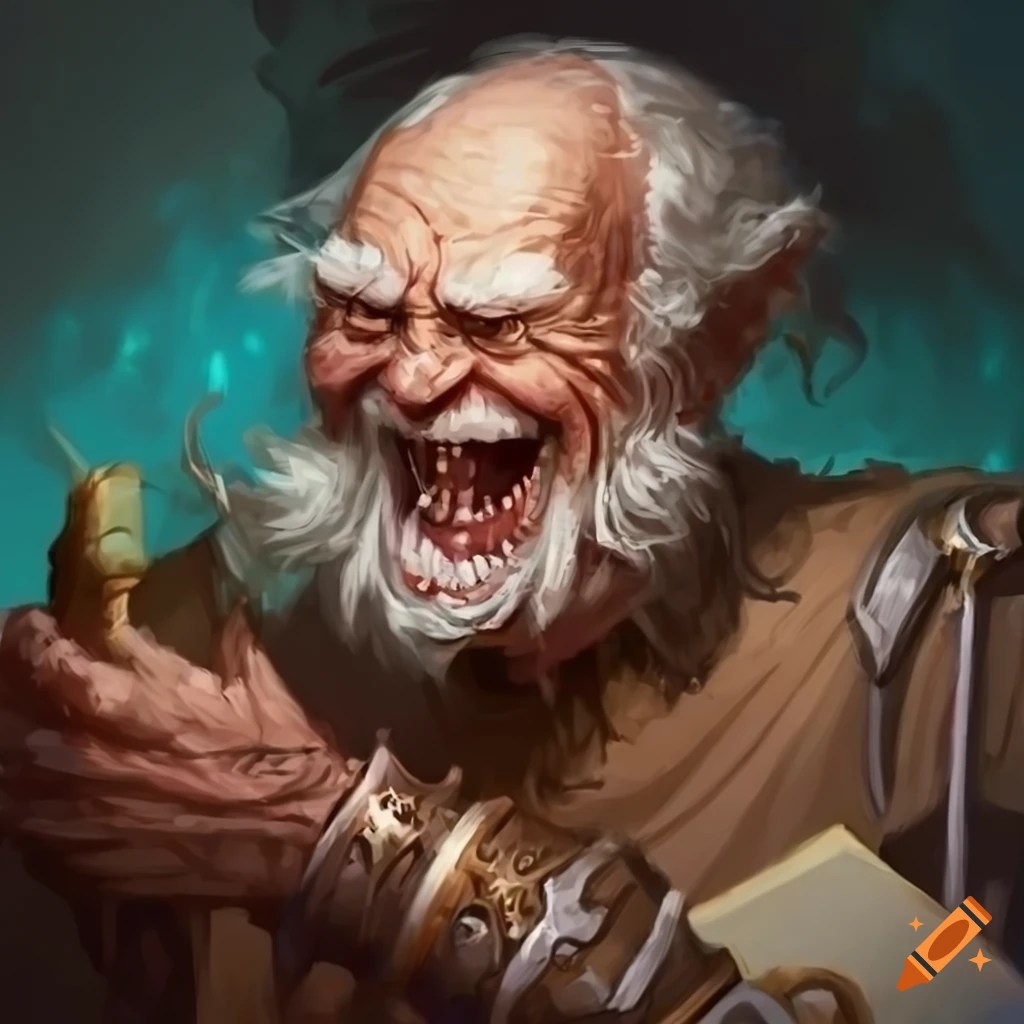
But what most disturbs the entire group is the Dwarf’s face: it is contorted in a sly grin, as if he died laughing. An expression of horror and amusement forever fixed on his blackened skin.
“What… what the devil happened here?” Paolino mutters, feeling sick.
“Whatever it is, it’s not an honorable death,” Drumin replies, his voice hoarse and full of disgust. “It’s a disgrace.”
Unable to find a plausible explanation for the macabre scene, they decide not to linger. Drumin performs a brief but solemn Dwarven ceremony for the unfortunate soul. They bury the Dwarf’s body, this time horizontally and with respect, and resume their journey, the image of the smiling Dwarf buried upside down etched into their minds. The mystery of the mines grows ever darker and more unsettling.
Soon after burying the Dwarf, the view opens onto a Dwarven settlement in a clear state of abandonment. The mountain is pierced in several places, with what were once adorned cavern entrances, now visibly decaying. Ruined barracks lie scattered about. The silence of the mountain is broken only by a voice speaking loudly in Khazalid (Dwarven). The only word Drumin can clearly distinguish is: “Nothing.”
Warily, the group creeps toward the large stone bridge that connects the hill to the mountain, crossing a natural, dry moat. In front of what appears to be a pitch-black fissure in the rock—evidently the main access—surrounded by the remains of a construction site, sits a Dwarf. His legs are bent at an unnatural angle, as if they were broken and never treated.
The Dwarf is talking to himself, loudly: “There is nothing! There is nothing!” and laughs coarsely, a laugh devoid of joy.
At the sight of Drumin, the Dwarf stops and stands up, dragging himself with the aid of a battered axe used as a cane. Drumin greets him, but the Dwarf responds by calling him “the Nothing.”
“The Nothing has finally arrived! Look!” he shouts at the top of his lungs. “Call King Grunni!”
The stench emanating from the Dwarf is nauseating, even by Dwarf standards.
From the mountain fissure, a figure emerges that chills everyone to the bone, especially Drumin. An emaciated, completely naked, and pale Dwarf crawls out on all fours. In a sickly sweet manner, he invites them inside to speak with King Grunni…
“After freeing the incautious Waldemar from the bounty hunter’s clutches, we found ourselves wandering the Reikland again, essentially looking for trouble. And we found it… oh yes, we did. Upon reaching Grissenwald to allow the Dwarf to observe his customs, we were confronted by a sight none of us were remotely prepared for…” – Excerpt from The Enemy Within, anonymous, Krofulzh-Rauchen Printing Press, Nuln, 2514.
Appoggiati i pochi bagagli alla locanda “L’Uomo Felice”, il gruppo si riunisce per pianificare i prossimi passi. La stanchezza è ancora evidente, ma la necessità di agire prevale.
“Ascoltate,” dichiara Drumin, battendo il pugno sul tavolo. “Waldemar ha la sua nuova vocazione, e capisco l’urgenza. Ma ho un debito d’onore. Dobbiamo informare il clan Greathammer a Grissenwald della morte del loro erede. È la cosa giusta da fare. Poi, ci occuperemo dei Sapheristi.”
Tutti concordano. La priorità è data al dovere del nano. Decidono di fermarsi un giorno intero per riposare, rifocillarsi e raccogliere quante più informazioni possibili su entrambe le loro future mete.
Per quanto riguarda i druidi, Paolino si dedica a intervistare alcune delle famiglie di Kemperbad che hanno “perso” i figli. Le sue doti persuasive aprono qualche porta.
“È strano,” riferisce Paolino, tornando al tavolo. “Quelli che se ne sono andati, lo hanno fatto di loro spontanea volontà. Una vera e propria vocazione di fede. Alcune famiglie sono andate a Unterbaum per cercare di riportarli indietro, ma i ragazzi hanno rifiutato, sono convinti della loro scelta. Non c’è stata violenza o forzatura da parte di Gregorius, il loro capo.”
Proseguendo nelle indagini, emerge che questi reclutamenti non si limitano a Kemperbad, ma si estendono verso est del Reikland e sono attivi da circa due anni, con un ritmo costante.
Indagini su Grissenwald e Wittgendorf
Riguardo a Grissenwald, le informazioni sono più frammentarie. La città è nota per aver prosperato sul commercio e sull’estrazione carbonifera dei vicini Picchi Neri, ma ora si sta spopolando per due ragioni principali.
La prima è che la tratta fluviale tra Grissenwald e Kemperbad non offre più alcun approdo sicuro da quando Wittgendorf è caduta in disgrazia. “Dicono che una malattia, o chissà cosa, stia attanagliando quella città e la relativa baronia del Wittgestein,” spiega Wolfgang, “ma nessuno si ferma, quindi i dettagli sono pochi.”
Fredrich, interessato alla menzione di Wittgestein, scopre che la baronia gode di una strana e quasi assoluta indipendenza dal Reikland, risalente a un non meglio noto “servizio reso alla nazione in materia di sicurezza” nel lontano 1719. Nessuno sa esattamente cosa sia stato quel servizio.
La seconda e più inquietante informazione è che nel tratto di fiume tra Grissenwald e Kemperbad vengono pescati con allarmante frequenza cadaveri di mutanti.
Infine, Fredrich chiede informazioni sulla sua città natale, Auerswald. Ottiene pochissimo, se non la conferma che, dopo l’attacco di mutanti, banditi o chissà cosa, la zona è diventata troppo pericolosa. “Il consiglio di Kemperbad ha smesso di pattugliare la strada che corre fino a Diesdorf perché è troppo rischiosa,” gli riferiscono. “Dalla Reikwald escono mutanti e banditi in quantità. Quasi nessuno si avventura più lì.”
Concluse le indagini, il mattino dopo il gruppo imbarca nuove provviste e salpa alla volta di Grissenwald.
Il viaggio dura un giorno intero ed è insolitamente tranquillo; incrociano pochissime imbarcazioni. Il silenzio sul fiume è quasi innaturale, rotto solo dal mormorio delle acque e dal rumore dei remi.
Nel pomeriggio, il paesaggio cambia. Arrivati all’altezza di Wittgendorf, l’aria si fa greve e l’acqua del Reik è fetida. Il canto degli uccelli si spegne; gli animali sembrano evitare questa zona. La foresta circostante appare malata, con alberi deformi e un sottobosco di un colore innaturale. Avvistano un piccolo molo in stato di totale abbandono, deserto.
Mentre il sole inizia a calare, tingendo il cielo di rosso e arancio, il gruppo intravede l’imponente Fortezza Wittgestein. La struttura si staglia sopra di loro, arroccata su una scogliera a picco sul Reik, un monolite di pietra muto e minaccioso che domina l’ansa maledetta.
“Qualunque cosa sia successa qui,” mormora Wolfgang, “non è stata una malattia comune.”
Drumin guarda la fortezza con sospetto. “Cattivo posto. Molto, molto cattivo posto. Non indugiamo.”
Al tramonto, la nave raggiunge Grissenwald.
Scesi dalla nave a Grissenwald al calar della sera, il gruppo nota immediatamente qualcosa di strano. Nonostante le dimensioni della cittadina, ci sono pochissime persone in giro. Chi incrocia la loro strada, poi, lancia occhiate ostili a Drumin e cambia marciapiede. È chiaro: i nani non sono i benvenuti qui.
Arrivati alla Marketplatz, si rifugiano nella prima locanda che trovano. Il locandiere, un uomo sospettoso con una barba rada e gli occhi pieni di preoccupazione, non nasconde il suo disagio per la presenza del nano.
“Non voglio problemi qui, stranieri,” esordisce, pulendo con energia il bancone. “Soprattutto non con i nani.”
Drumin lo guarda in cagnesco, ma Wolfgang interviene per placare gli animi e spingere l’uomo a parlare. Il locandiere, dopo aver preso fiato, spiega la natura del problema:
“Qualche mese fa, un gruppo di nani è arrivato e ha comprato le miniere di carbone qui ai Picchi Neri. Dicevano che c’era oro, non carbone. Ma le cose non sono andate bene. Sempre più nani si presentavano in locanda, in stato confusionale, chiedendo solo vino, e poi puntualmente lo rifiutavano perché non era buono. Non c’era vino che li soddisfacesse, solo vino, mai birra. Hanno cominciato a creare problemi, risse e aggressioni. La ronda ha avuto un bel da fare. Poi, all’improvviso, sono spariti.”
Il racconto si fa più cupo. “Da quando sono spariti,” continua il locandiere, abbassando la voce, “sono iniziati i raid punitivi alle fattorie fuori dalle mura. Case bruciate, famiglie uccise. Ovviamente, tutti qui hanno iniziato subito a sospettare dei nani.”
L’uomo spiega che, sebbene non ci sia ancora un’accusa formale, due fattorie sono già state saccheggiate, e la gente è stanca. “Il Conte Bruno Pfeifraucher è stato informato, ma temo che presto si possa passare a risolvere la cosa ‘alla vecchia maniera’,” conclude, alludendo alla violenza popolare.
Dopo aver ascoltato la storia, il gruppo chiede il nome del notaio più famoso in città, sperando di seguire la traccia della compravendita tra Etelka Herzen e i nani. L’indagine si rivela un buco nell’acqua: c’è solo traccia della vendita del proprietario precedente ai nani, e nulla di più.
Per sicurezza, il gruppo decide di dormire a bordo della barca. Al mattino, la decisione è unanime: devono raggiungere i nani. Temendo il peggio e preparandosi a uno scontro imminente, si equipaggiano a dovere.
Le miniere dovrebbero trovarsi a circa due ore di cammino da Grissenwald, non troppo distanti dalla strada principale che porta a Nuln. Dopo circa un’ora di marcia, il gruppo abbandona l’arteria principale, svoltando su un piccolo sentiero poco battuto che punta direttamente ai Picchi Neri, che si stagliano imponenti di fronte a loro.
Le montagne sono una visione austera e spigolosa: i fianchi rocciosi sono grigi e scuri, punteggiati da macchie di vegetazione scura e pini nani che lottano per la sopravvivenza. L’aria si fa più fresca e sottile, e l’ombra proiettata dai giganti di pietra sul paesaggio circostante è lunga e fredda.
Fredrich, in testa, esamina attentamente il terreno, ma conferma che non ci sono tracce fresche di passaggio. Tuttavia, proprio prima di abbandonare la strada principale, il gruppo scorge a circa un miglio di distanza, la sagoma annerita di una delle fattorie bruciate, un monito silenzioso del pericolo che li attende.
l gruppo prosegue l’ascesa, lasciandosi alle spalle la pianura infestata. Raggiunte le pendici della montagna, il sentiero diventa una ripida sassaia. È qui che Waldemar nota qualcosa di sinistro: due scarponi appoggiati a testa in giù, parzialmente nascosti tra le rocce.
Tutti si mettono immediatamente in guardia, temendo un agguato. Fredrich, Paolino e Wolfgang formano un perimetro difensivo, pronti a estrarre le armi, mentre gli altri si avvicinano cautamente. La macabra verità è subito evidente: gli scarponi contengono i piedi di quello che sembra essere un nano, sepolto verticalmente, a testa in giù.
Disgustati ma decisi a scoprire cosa sia successo, i tre si mettono a scavare. Dopo una buona mezz’ora di duro lavoro, il corpo del nano viene estratto. La barba è bianca, i vestiti poveri e logori, ma ciò che colpisce è che è completamente annerito dal deposito di sangue.
Drumin si china per analizzare il cadavere. “È piuttosto anziano,” sentenzia il nano, “il che non ha senso con questi vestiti da minatore così consunti. Non era un operaio comune.”
Ma ciò che inquieta di più l’intero gruppo è il volto del nano: è distorto in un ghigno sornione, come se fosse morto ridendo. Un’espressione di orrore e divertimento fissata per sempre sulla pelle annerita.
“Cosa… cosa diamine è successo qui?” mormora Paolino, sentendosi male.
“Qualunque cosa sia, non è una morte onorevole,” risponde Drumin, con voce roca e piena di disgusto. “È un’onta.”
Non riuscendo a trovare una spiegazione plausibile per la macabra scena, decidono di non indugiare oltre. Drumin celebra una breve ma solenne cerimonia nanica per l’anima sfortunata. Seppelliscono il corpo del nano, questa volta orizzontalmente e con rispetto, e riprendono il cammino, la scena del nano sorridente sepolto a testa in giù impressa nelle loro menti. Il mistero delle miniere si fa sempre più oscuro e inquietante.
Poco dopo aver seppellito il nano, la vista si apre su un insediamento nanico in un palese stato di abbandono. La montagna è traforata in più punti, con quelli che un tempo dovevano essere ingressi di caverne adornate, ora in evidente disfacimento. Baracche distrutte giacciono sparse qua e là. Il silenzio della montagna è rotto solo da una voce che parla ad alta voce in nanico. L’unica parola che Drumin riesce a distinguere chiaramente è: “Nulla.”
Guardinghi, il gruppo si avvicina di soppiatto al grande ponte di pietra che collega la collina alla montagna, attraversando un fossato naturale e asciutto. Davanti a quella che sembra essere una fenditura nella roccia, nera come la pece e circondata dai resti di un cantiere, siede un nano. Le sue gambe sono piegate in una posizione innaturale, come se fossero state spezzate e mai curate.
Il nano parla da solo, ad alta voce: “Non c’è nulla! Non c’è nulla!” e ride sguaiatamente.
Alla vista di Drumin, il nano si blocca e si alza, trascinandosi con l’ausilio di un’ascia malconcia usata come bastone. Drumin lo saluta, ma il nano risponde appellandolo come “il Nulla”.
“Il Nulla è arrivato finalmente! Eccolo!” grida a squarciagola. “Chiamate Re Grunni!”
L’odore che emana il nano è nauseabondo, persino per gli standard del nano .
Dalla fenditura nella montagna, che evidentemente è l’accesso alla struttura, si affaccia una figura che gela il sangue a tutti, in primis a Drumin. Un nano emaciato, completamente nudo e pallido, emerge camminando a quattro zampe. Con fare mellifluo, li invita ad entrare per parlare con Re Grunni…
Dopo aver liberato l’incauto Waldemar dalle grinfie del cacciatore di taglie,ci ritrovammo nuovamente a vagare per il Reikland in cerca,sostanzialmente,di guai. E li trovammo..oh si che li trovammo. Raggiunta Grissenwald per permettere al nano di ottemperare le proprie usanze, ci ritrovammo davanti ad uno spettacolo a cui nessuno di noi era minimanente pronto..” – Excerpt from The Enemy Within, anonymous, Krofulzh-Rauchen Printing Press, Nuln, 2514.


Leave a Reply