The group meets up for a quick attempt to improve Paolino’s appearance for the dinner, but the nearest tailor scoffs at their request. “A suit for you? For an important meeting?” he says, sizing them up. “It would cost you a full year’s work each. Perhaps, and I say perhaps, that would be enough.” It is a cost that is widely out of reach, and so, defeated, they give up. “We’ll make do with what we have,” grumbles Wolfgang, clenching his teeth in anger. With a sense of resignation, they split up. “Be careful,” Waldemar warns them. “There’s something rotten about that man.” “Don’t worry, Waldemar,” Paolino replies with a forced smile. “If there’s a rat, a halfling will sniff it out before anyone else.” Fredrich, Wolfgang, and Paolino head towards the Adel Ring for dinner with Franz Steinhager, while Waldemar and Drumin are left with the break-in at the warehouses, a much riskier undertaking.
The Adel Ring is a city within a city, an island of cleanliness and opulence amidst the mud and ferment of Bögenhafen. The streets are paved and spotless, lined with carefully pruned trees and well-lit streetlights. Liveried valets move with ease, carriages pulled by thoroughbred horses speed by silently, and a cordon of city guards, impeccable in their uniforms, coordinates everything with iron discipline. In the center of this oasis is the Trota d’Oro, a classy restaurant nestled in a manicured park. The building, made of red brick and dark wood, exudes an aura of wealth and refinement. Valets greet guests with professional smiles and take their cloaks.
Franz Steinhager is already sitting at a table, sipping wine. His elegant figure stands out against the glow of the candles. Paolino, with his shabby clothes clashing with the environment, is escorted to the table and welcomed with impeccable hospitality. Fredrich and Wolfgang, with their armor and tired faces, wait outside under a pergola, relegated to the role of bodyguards. “Do you think they’re eating well in there?” Wolfgang asks, swallowing a spoonful of soup. “Of course not,” Fredrich replies as if to mock him with a bitter smile, “we’re eating soup so we don’t starve. They’re eating it to taste something new.” Their complaints about money get lost in the chatter of the other guards, while their meal, although nutritious, is an insult compared to what is being consumed inside.
Inside, Paolino and Franz talk about this and that. At a certain point, Franz stands up, with a smile that is half courteous and half mocking. “Paolino, I’d like to introduce you to some friends of mine who are heading to the private room for dinner.” Three figures appear behind the halfling. The first is a pale and gaunt man, with an almost sickly air. He is Johannes Teugen, and his handshake is as cold as marble, his speech a little slurred and slow. After him, a shrewd-looking businessman: Fredrich Magirius, a merchant and city councilor, whose quick eyes seem to evaluate everything and everyone. Finally, a younger man, with a sharp and unsettling face, whose eyes, an incredible hazel color, vivid and piercing, seem to almost burn from within. The three greet Paolino with a nod and head towards a private room, leaving the halfling at his table, his mind spinning.
The dinner proceeds smoothly and concludes around eleven, with Paolino not getting involved in any particular conversation to avoid arousing suspicion. The only thing he tries to extend a conversation about is the goblin. “Franz, forgive my indiscretion,” Paolino says, “I heard a curious story. A goblin, in your warehouses?” Franz, laughing, tells him: “Ah, that nasty rumor! Of course, a goblin. My night guard caught him stealing the other night and eliminated him. I kept it quiet, you know… I don’t want it to get around that my warehouses aren’t secure.” This, in Paolino’s mind, clashes with the version provided by Magistrate Richter about the crate that was supposed to have crushed the greenskin. The dinner ends with a tour of the Adel Ring’s villas, where Paolino mentally notes the locations of the most important villas.
Meanwhile, on the Ostdam, Waldemar and Drumin study the situation. The dock, usually bustling with people, is almost deserted after nine in the evening. “There it is, the patrol,” Drumin whispers. “We’ll have a clear field in an hour.” The two decide to stack some crates in the alley behind the warehouse to be able to look inside from a window. They make a little noise, a few cats scurry away hissing, but all in all they succeed in their intent without arousing particular suspicion. From the high window, Waldemar, with his legs trembling from vertigo, sees that there is a night guard with a dog, sitting on a stool. “An old man, and a dog… but it doesn’t seem dangerous,” Waldemar murmurs. The two then decide to go down and simulate a drunken Waldemar to lure the guard out. “Pretend to be drunk and that you want to sleep here,” Drumin says, “and I’ll hit him from behind. The dog will take care of the meatball.” Having retrieved a piece of meat from a nearby tavern, the two are ready to implement the plan around eleven thirty.
In the pitch dark, Waldemar begins to sing a terribly out-of-tune tavern song at the top of his lungs, and the dog immediately begins to bark furiously. The herbalist does not stop, and the guard, revealed to be an old man over sixty, comes out to shoo him away, holding the dog on a leash. In a flash, Drumin is behind him, but to his horror he manages to miss the man who dodges the blow at the last second, letting go of the dog’s leash and the lantern he was holding. A general scuffle breaks out, with Drumin doing everything he can to try and stun the guard who defends himself as best he can, while Waldemar, abandoning the role of the drunkard, fights with the dog. A great noise is created and at a certain point the guard begins to yell for help at the top of his voice. Waldemar chases the dog away without killing it and tries to help Drumin, but the guard, seeing that he is outnumbered, flees in a hurry. The herbalist throws himself in pursuit while Drumin rushes into the warehouse to retrieve as much evidence as he can.
Several office doors are locked, but the dwarf’s axe has no problem breaking all the locks. Breaking down the last door, Drumin enters the merchant’s office on the second floor. The office is in a half-light, illuminated only by a faint ray of moonlight that enters through the large windows overlooking the Bogen river. Here Drumin, forcing open a drawer, finds three irrefutable pieces of evidence: an Ordo Septenarius medallion, some blank sheets with the symbol of the goat and the pentacle, and the letter that Paolino and Waldemar had only glimpsed in the afternoon. He also finds a safe behind a painting, but it is too difficult to open it in a short time. Quickly, the dwarf runs down the stairs and vanishes into the dark to look for Waldemar, before the guard’s cries for help alert the patrol.
Chaos erupts on the dock. Waldemar, out of breath from the chase, catches up with the old guard and tackles him, starting a brawl worthy of a bar fight. Punches fly, bodies collide, and the man, despite being disfigured with bruises, does not give up, returning blow for blow to the herbalist. In the end, intimidated by some approaching voices, Waldemar lets go and runs away. “I don’t get a moment’s peace,” he mutters to himself. A few dozen meters later, the herbalist finally finds the dwarf. “Did you find anything?” Drumin asks, panting, clenching his fist. “He got away, but I have this,” Waldemar replies, with a sigh. “Let’s go.” Both, out of breath and with dirty clothes, pull off their makeshift hoods and wash themselves in the Bogen river, trying to get rid of the mud and sweat from the fight. Exhausted from stress and adrenaline, they walk towards the inn where the other members of the group are waiting for them, clutching the precious evidence they have collected in their hands.
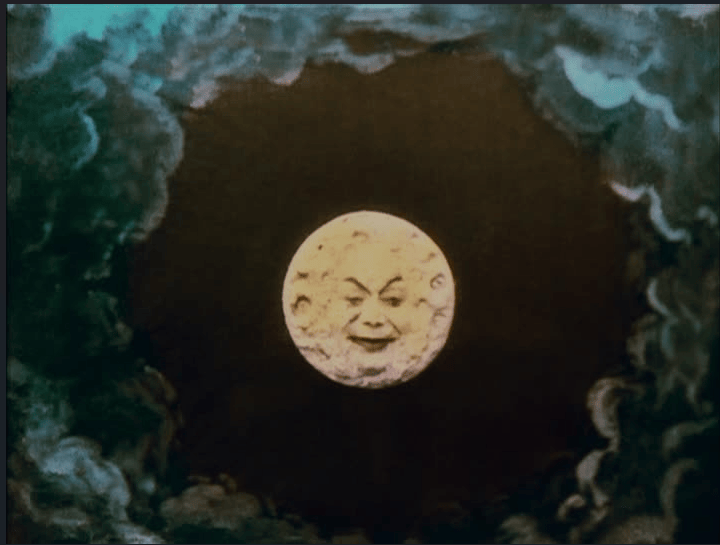
As they walk, they glance at the sky. “What… what is it?” Waldemar says, his voice trembling. In the night sky, next to the placid and silvery Manann, the other moon, the greenish Morrslieb, the chaos moon, seems to come alive, revealing a face! “Morrslieb…” Drumin whispers, his eyes wide. Its surface, once a pale rocky appendage, is now an unsettling and malicious face, with its thin mouth curved in a sinister smile and eyes that burn with an unnatural light. “It’s watching us,” Waldemar says, his voice just a whisper. “It’s watching us!” The two, in a state of religious terror, start running at a frantic pace, a final, desperate dash towards the refuge of the inn…
—-
Il gruppo si ritrova per un rapido tentativo di migliorare l’aspetto di Paolino in vista della cena, ma il sarto più vicino sghignazza alla loro richiesta. “Una mise per voi? Per un incontro importante?” dice, squadrandoli. “Vi costerebbe un intero anno di lavoro a testa. Forse, e dico forse, potrebbe bastare.” È un costo ampiamente fuori portata, e così, sconfitti, desistono. “Ci arrangeremo con quello che abbiamo,” borbotta Wolfgang, stringendo i denti per la rabbia. Con un senso di rassegnazione, si dividono. “State attenti,” li avverte Waldemar. “C’è qualcosa di marcio in quell’uomo.” “Non preoccuparti, Waldemar,” risponde Paolino con un sorriso forzato. “Se c’è un topo, un halfing lo annusa prima di chiunque altro.” Fredrich, Wolfgang e Paolino si incamminano verso l’Adel Ring per la cena con Franz Steinhager, mentre a Waldemar e Drumin toccherà l’irruzione ai magazzini, un’impresa ben più rischiosa.
L’Adel Ring è una città nella città, un’isola di pulizia e opulenza in mezzo al fango e al fermento di Bögenhafen. Le strade sono lastricate e senza macchia, costeggiate da alberi potati con cura e lampioni ben illuminati. Valletti in livrea si muovono con disinvoltura, carrozze tirate da cavalli purosangue sfrecciano silenziose, e un cordone di guardie cittadine, impeccabili nelle loro uniformi, coordina il tutto con una disciplina ferrea. Al centro di questa oasi si trova la Trota d’Oro, un ristorante di classe immerso in un parchetto curato. L’edificio, in mattoni rossi e legno scuro, emana un’aura di ricchezza e raffinatezza. Valletti accolgono gli ospiti con sorrisi professionali e portano via i loro mantelli.
Franz Steinhager è già seduto a un tavolo, intento a sorseggiare del vino. La sua figura elegante si staglia contro il chiarore delle candele. Paolino, con i suoi abiti dimessi che stonano in quell’ambiente, viene accompagnato al tavolo e accolto con un’ospitalità impeccabile. Fredrich e Wolfgang, con le loro armature e le loro facce stanche, attendono fuori sotto una pergola, destinati a fare la figura delle guardie del corpo. “Credi che stiano mangiando bene, là dentro?” chiede Wolfgang, ingoiando un cucchiaio di zuppa. “Certo che no,” risponde Fredrich come per schernirlo con un sorriso amaro “noi mangiamo zuppa per non farci morire di fame. Loro per assaporare qualcosa di nuovo.” Le loro lamentele sul denaro si perdono tra le chiacchiere delle altre guardie, mentre il loro pasto, seppur nutriente, è un’offesa rispetto a quello che si sta consumando all’interno.
Dentro, Paolino e Franz parlano del più e del meno. A un certo punto, Franz si alza in piedi, con un sorriso a metà tra il cortese e il beffardo. “Paolino, vorrei presentarti alcuni miei amici che stanno andando nella saletta privata per la cena.” Alle spalle dell’halfing si manifestano tre figure. La prima è un uomo pallido e scarno, con un’aria quasi malaticcia. È Johannes Teugen, e la sua stretta di mano è fredda come il marmo, la sua parlata un po’ strascicata e lenta. Dopo di lui, un uomo d’affari dall’aria astuta: Fredrich Magirius, mercante e consigliere cittadino, i cui occhi veloci sembrano valutare ogni cosa e ogni persona. Infine, un uomo più giovane, con un viso spigoloso e inquietante, i cui occhi, un incredibile color nocciola, vividi e penetranti, sembrano quasi bruciare dall’interno. I tre salutano Paolino con un cenno e si dirigono verso una stanza privata, lasciando l’halfing al suo tavolo, con la mente che frulla.
La cena prosegue senza intoppi e si conclude intorno alle undici, con Paolino che non si sbilancia in nessun discorso particolare per non dare adito a sospetti. L’unico elemento su cui prova ad allungarsi è quello del goblin. “Franz, perdonatemi l’indiscrezione,” dice Paolino, “ho sentito una storia curiosa. Un goblin, nei vostri magazzini?” Franz, ridendo, gli dice: “Ah, quel rumoraccio! Certo, un goblin. Il mio guardiano notturno l’ha sorpreso a rubare l’altra sera e l’ha eliminato. Ho taciuto la cosa, sai com’è… non voglio che giri voce che i miei magazzini non siano sicuri.” Questo, nella mente di Paolino, fa a pugni con la versione fornita dal magistrato Richter riguardo la cassa che avrebbe schiacciato il pelleverde. La cena si conclude con un tour delle ville dell’Adel Ring, dove Paolino si annota mentalmente la posizione delle ville più importanti.
Nel mentre, sull’Ostdam, Waldemar e Drumin studiano la situazione. La banchina, solitamente brulicante di gente, è quasi deserta dopo le nove di sera. “Eccolo, il drappello,” sussurra Drumin. “Fra un’ora avremo campo libero.” I due decidono di accatastare alcune casse sul vicolo nel retro del magazzino per poter guardare dentro da una finestra. Fanno un po’ di rumore, qualche gatto scappa via sibilando, ma tutto sommato riescono nell’intento senza destare particolari sospetti. Dalla finestra in alto, Waldemar, con le gambe che gli tremano per le vertigini, vede che c’è un guardiano notturno con un cane, seduto su di uno sgabello. “Un vecchio, e un cane… ma non sembra pericoloso” mormora Waldemar. I due decidono quindi di scendere e simulare un Waldemar ubriaco per attirare fuori il guardiano. “Fai finta di essere ubriaco e di voler dormire qui,” dice Drumin, “e io lo colpirò da dietro. Il cane si occuperà della polpetta.” Recuperato un pezzo di carne da una locanda vicina, i due sono pronti ad attuare il piano intorno alle undici e trenta.
Nel buio pesto, Waldemar inizia a cantare a squarciagola una stonatissima canzone di taverna e il cane inizia subito ad abbaiare furiosamente. L’erborista non smette e il guardiano, rivelatosi un vecchietto di più di sessant’anni, esce per scacciarlo, tenendo il cane al guinzaglio. In un baleno, Drumin gli è alle spalle, ma con orrore riesce a mancare l’uomo che all’ultimo secondo scarta il colpo, lasciando andare il laccio del cane e la lanterna che teneva in mano. Scatta una colluttazione generale, con Drumin che fa di tutto per provare a stordire il guardiano il quale si difende come può, mentre Waldemar, abbandonato il ruolo dell’ubriaco, combatte con il cane. Si scatena un gran rumore e a un certo punto il guardiano inizia a urlare aiuto con tutta la voce che ha. Waldemar scaccia il cane senza ucciderlo e prova ad aiutare Drumin, ma il guardiano, vedendo di essere in inferiorità numerica, si dà alla fuga precipitosa. L’erborista si getta all’inseguimento mentre Drumin si lancia dentro il magazzino per recuperare quante più prove può.
Diverse porte degli uffici sono chiuse, ma l’ascia del nano non ha problemi a rompere tutte le serrature. Sfondando l’ultima porta, Drumin entra nell’ufficio del mercante al secondo piano. L’ufficio è in penombra, rischiarato solo da un debole raggio di luna che entra dalle grandi finestre con vista sul fiume Bogen. Qui Drumin, forzando un cassetto, trova tre prove inconfutabili: un medaglione dell’Ordo Septenarius, alcuni fogli in bianco con il simbolo del capro e del pentacolo, e la lettera che Paolino e Waldemar avevano solo intravisto di sfuggita nel pomeriggio. Trova anche una cassaforte dietro a un quadro, ma è troppo difficile aprirla in poco tempo. Velocemente, il nano scende le scale e si dilegua nel buio a cercare Waldemar, prima che le grida di aiuto del guardiano allertino la ronda.
Il caos esplode sulla banchina. Waldemar, con il fiato corto per l’inseguimento, raggiunge il vecchio guardiano e lo atterra, dando inizio a una colluttazione degna di una rissa da bar. I pugni volano, i corpi si scontrano, e l’uomo, pur sfigurato dai lividi, non cede, rispondendo colpo su colpo all’erborista. Alla fine, intimorito da alcune voci che si avvicinano, Waldemar lascia la presa e scappa. “Non ho un attimo di pace,” mormora tra sé. Poche decine di metri dopo, l’erborista trova finalmente il nano. “Hai trovato qualcosa?” chiede Drumin, affannato, stringendo il pugno chiuso. “Lui è scappato, ma io ho questo,” risponde Waldemar, con un sospiro. “Andiamo.” Entrambi, affannati e con i vestiti sporchi, si sfilano i cappucci improvvisati e si lavano nel fiume Bogen, cercando di togliersi di dosso il fango e il sudore della battaglia. Stremati dallo stress e dall’adrenalina, si incamminano verso la locanda, stringendo nelle mani le preziose prove raccolte.
Mentre camminano, gettano uno sguardo al cielo. “Cosa… che cos’è?” dice Waldemar, con una voce che trema. Nel cielo notturno, affianco alla placida e argentea Manslieb, l’altra luna, la verdognola Morrslieb, la luna del caos,sembra animarsi, rivelando un volto! “Morrslieb…” sussurra Drumin, gli occhi sbarrati. La sua superficie, un tempo una pallida appendice rocciosa, è ora un volto inquietante e maligno, con la sua bocca sottile curvata in un sorriso sinistro e gli occhi che ardono di una luce innaturale. “Ci sta guardando,” dice Waldemar, la sua voce appena un soffio. “Sta guardando noi!” I due, in preda a un terrore religioso, si mettono a correre a perdifiato, un’ultima, disperata corsa verso il rifugio della locanda…


Leave a Reply